

Frequent daily contacts are taking place between Israel and Lebanon with US and French mediation. As part of those contacts, a three-way conversation was held in recent days among three senior officials, one Israeli, one Lebanese and one American, in an attempt to advance a comprehensive agreement between the countries.
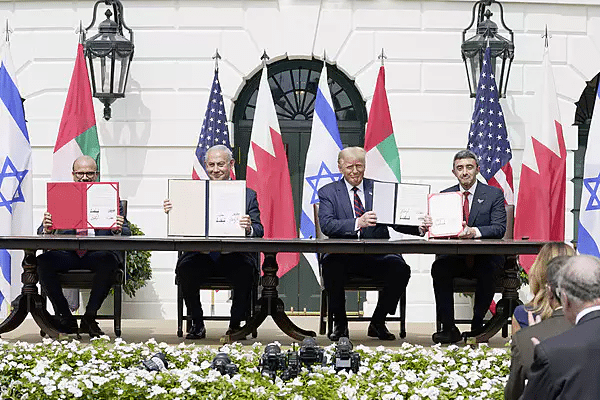
According to senior officials in the region and in the US, the talks have not yet led to formal, direct negotiations or to a ceasefire. However, three different frameworks are already on the table, one American, one French and one Lebanese. What they share is a single strategic goal: disarming Hezbollah and bringing Lebanon into the Abraham Accords, as part of a broader diplomatic arrangement for peace and normalization between Israel and Lebanon.
The three frameworks differ mainly on the timetable for implementing the arrangement and on the requirements for a ceasefire. The Lebanese and French proposals call for a halt to fire toward Beirut and toward areas with large civilian populations. France has also added a demand that Israel commit not to strike civilian infrastructure as a punitive measure. Both of those frameworks include a principled commitment to disarming the Hezbollah terrorist organization and ending fire toward Israel, but without an orderly, practical plan for carrying it out.

By contrast, the American framework, which is closer to the Israeli position, makes active intervention by Lebanon's security arms, headed by the Lebanese army, a basic condition for stopping Hezbollah fire toward Israel and fully disarming the group. In that context, the Americans are also proposing international assistance to implement the move.
Israel's basic position, according to those sources, is to preserve the Israel Defense Forces' freedom of action as long as Hezbollah continues to pose a threat, and not to agree to operational restrictions until the Lebanese government's commitments are implemented in practice.
Israel has also expressed satisfaction with the Lebanese government's official position and with the removal of Islamic Revolutionary Guard Corps personnel from Lebanese territory, and has made clear that it would be prepared to provide intelligence and military assistance, through the US, if the Lebanese army begins real operations against the Hezbollah terrorist organization. At the same time, officials in Jerusalem welcomed the ultimate goal of Lebanon joining the Abraham Accords and expressed willingness to cooperate in various fields במסגרת a future arrangement.

At the same time, the officials involved believe the contacts have not yet matured into direct talks between the sides. According to them, developments in Iran and the consequences of the war there are expected to directly affect the situation in Lebanon as well.
"If the regime in Iran falls or is forced to stop its intervention in Lebanon and its support for Hezbollah, it is only a matter of time before we hear of significant progress," a diplomatic source in the region said. "Even so, disarming Hezbollah will not be a simple task."


