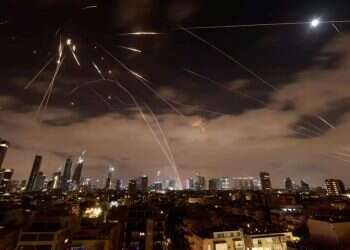
One of the most significant fronts in modern warfare is the battle for public perception, which in recent years has become a central component of conflicts between states and between states and terrorist organizations. In Israel, officials are still trying to understand how best to contend with that front, which seeks to shape how diverse audiences in the region and around the world perceive reality by constructing narratives. According to a newly released report examining the conduct of Iran's ayatollah regime, Tehran is investing enormous effort in "fueling" messages against Israel and the US in order to influence public opinion.
"In recent years, and especially since the Iron Swords war, we have seen growing use of psychological warfare and influence strategies by terrorist organizations such as Hezbollah and Hamas, and also by Iran, which is leading the resistance axis strategy not only on the military battlefield but also in the cognitive front," explained Danielle Haberfeld, a senior researcher at the International Institute for Counter-Terrorism at Reichman University, who has studied propaganda for more than 15 years. Together with her colleague Dr. Eitan Azani, the institute's acting director general, she co-authored a comprehensive report showing how, alongside the military fighting, Iran is running a sophisticated influence campaign on social media aimed at shaping perceptions of reality around Operation Rising Lion.
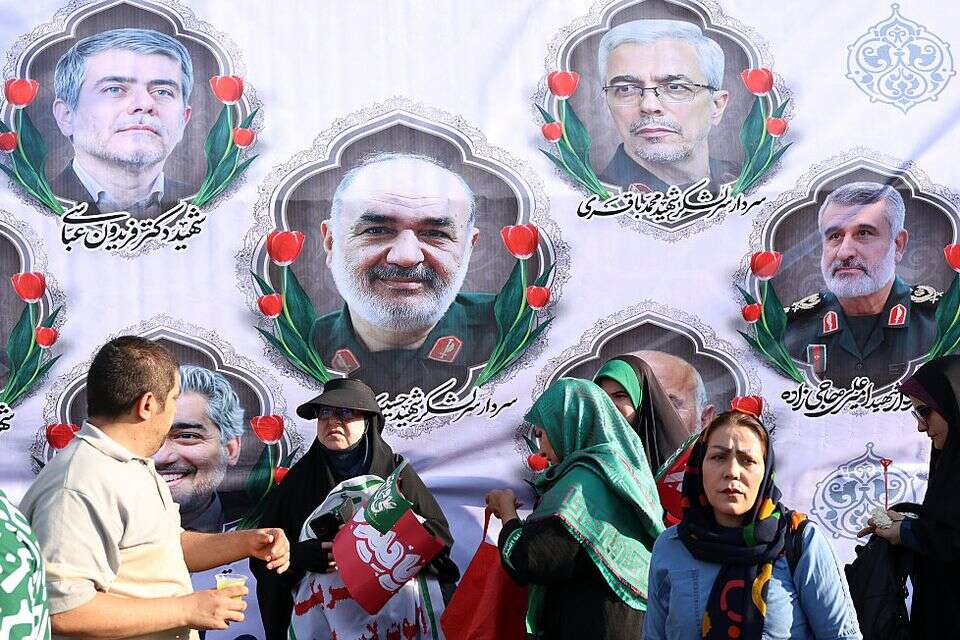
Iran's duel narratives
"Iran is playing on two fields at the same time," Haberfeld said. "On one hand, it projects a narrative of victory in order to deter and display power, and on the other it presents itself as the victim of what it calls 'disproportionate attacks' by the US and Israel, in order to gain international legitimacy and apply political pressure to stop the war." To do this, Iran has adopted a message aimed at international audiences, claiming that it did not initiate the confrontation and does not seek escalation, but is being forced to contend with Israeli-American aggression that is harming civilian infrastructure. This is the exact opposite of reality, in which Iranian strikes have hit, among other targets, hospitals, residential buildings and public institutions in Israel.
The experts argue that the victim narrative is linked to Shiite consciousness. "The Battle of Karbala and the death of Imam Hussein became symbols of sacrifice and struggle in Shiite consciousness. Since the Islamic Revolution in Iran, there has been an effort to turn that narrative into one of active resistance, with Hussein portrayed as a symbol of revolutionary struggle and not only of suffering." That, they say, is also one of the main reasons Iran combines its two overarching messages: victory alongside victimhood.
At the same time, recent attacks on oil facilities in Iran have been branded as "deliberate chemical warfare," while accounts identified with the regime have circulated visuals depicting bombings and atrocities in scenes reminiscent of Hamas' media spectacles during the war, when the terrorist organization exploited the media stage to influence global audiences who, in its view, would condemn only one side. "These two narratives may sound contradictory, but in practice they serve the same goal, tailored to different audiences through precise messaging," Haberfeld said.
The use of footage, fakes and artificial intelligence
At the same time, alongside the effort to appear as the victim, Iran is amplifying messages that it is capable of inflicting heavy damage on Israel, the US and their strategic assets. The report found that accounts identified with the regime used videos filmed here in Israel by civilians documenting impact sites and destruction. Through simple editing, the Iranians muted the original soundtracks and inserted Hebrew audio over the raw footage, supposedly featuring civilians shouting and pleading with Iran to stop the attacks. Iran has used similar propaganda against US allies, spreading countless rumors and fabricated footage of missiles and drones allegedly striking American forces or equipment, including material purporting to show soldiers captured by the Iranians.

Additional efforts can be seen in posts claiming that the launches against Israel are causing massive damage that Israeli authorities are hiding from the public. "These are recordings that sometimes have no basis in reality, and often they are created using artificial intelligence. Its use gives the Iranians a significant advantage in the battle for public perception, allowing them to quickly and easily generate large quantities of content, sometimes by reframing real events in a way that serves their narrative."
"When this content is distributed on platforms like TikTok, the algorithms do the rest and increase exposure. This is not something especially complex, but rather relatively simple methods that do not require a high level of expertise. That is why they are used both by the Iranian regime and by supporters of the regime and the resistance axis, at times even without direct guidance." According to the experts, these messages were being amplified even before the current campaign began, and gained extra force once it started.
A central part of the modern battlefield
According to Haberfeld, "it is now clear that this front is not secondary. Psychological warfare has become a central part of the modern battlefield." In the current case, she said, psychological warfare is helping the Iranian regime compensate for operational weakness, and it was built as part of a planned, cross-border effort. "The convergence exists here too. Hamas in Gaza, Hezbollah in Lebanon and the ayatollah regime in Iran are using similar elements, which may indicate a broad campaign directed at Arab, Israeli and global audiences, with each target audience receiving the messages intended for it."
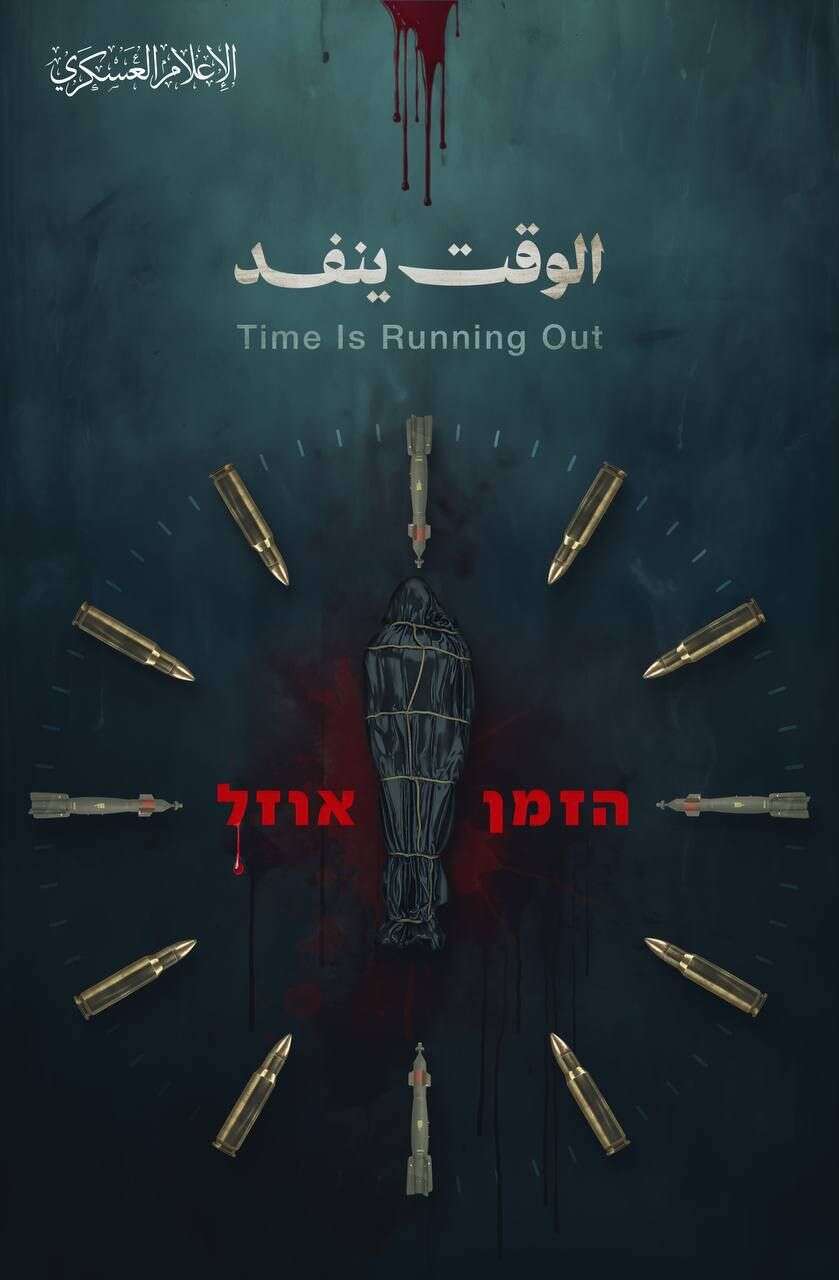
According to the experts, military achievements must be accompanied by strategic planning for the battle over public perception. In that context, it is important to note that Israel is indeed trying to influence this front as well, but at times it appears the game is lost in advance. The Israel Defense Forces, for example, are trying to tailor specific messages to different target audiences in order to reinforce the Israeli narrative, and the Foreign Ministry is doing the same. But facing the well-oiled machine of the axis of evil, that simply does not appear to be enough.
Still, the military does have an Influence Department dedicated specifically to this issue. Sources who spoke with Israel Hayom about the preparation of IDF forces for the current campaign in Iran said that one of the most significant components involved deception and influence operations. Some Israeli, international and even Iranian media outlets, they said, were "very significant players even before entering the front," influencing not only the Iranian side but also the Israeli one. "I hope we learn to focus on this essential front as well," Haberfeld concluded. "It is no less important than the other fronts."