


As these words are written, it remains unclear whether direct negotiations between the US and Iran will actually take place, despite statements by President Donald Trump.
A regional diplomatic source tells Israel Hayom contacts are underway through several channels between Washington and regime figures in Tehran, explaining that "there are several such regime elements that are not necessarily coordinated. Some are not willing to negotiate at all, and those who are try to hide it, at least publicly."

On the American side, officials are sticking to Trump's stated positions, albeit in a less overtly optimistic tone. A political source told Israel Hayom that the US positions are clear and unchanged. According to the source, entering negotiations would mean Iran has moved significantly closer to those positions. The source added that while some details could change in talks, several core principles remain.
He stated unequivocally that the nuclear issue would only be resolved through a complete shutdown of Iran's nuclear project, including all facilities, stockpiles and all uranium. "There will be no compromise on the nuclear issue. All uranium enriched to military levels, about 460 kilograms, will no longer be accessible to Iran, and every facility connected to the project will be shut down."
A source of optimism
According to information available, in ongoing contacts Iranian representatives have expressed willingness to consider compromises on nuclear issues they previously rejected. This likely explains the president's visible optimism, which is also intended to calm markets.
The US has set threshold conditions for negotiations that make it difficult for regime representatives to secure agreement from more hardline factions within the leadership of the Islamic Revolutionary Guard Corps. These factions also oppose including the ballistic missile issue in talks and demand formal control over the Strait of Hormuz, including the authority to collect transit fees from passing ships and tankers.

They are also demanding guarantees against future strikes by either the US or Israel. In addition, the Americans are demanding reductions and limitations on Iran's missile industry, particularly long range systems capable of carrying heavy and nuclear warheads, as well as a complete severing of ties with regional terrorist organizations. In other words, even if the sides reach the stage of formal talks, the gaps between them remain vast.
Jerusalem is skeptical
This assessment is shared in Jerusalem, where officials do not believe any Iranian regime faction has agreed to the US threshold conditions. An Israeli source told Israel Hayom: "This is essentially a surrender agreement if the Iranians accept these terms. Giving up enriched uranium, abandoning the nuclear program, halting the missile program and ending funding for proxy organizations. It is hard to believe Iran would agree. It does not sound realistic."
According to the source, "the regime's ideology is built on exporting the revolution, destroying Israel and maintaining an endless war against infidels, including the US. The American conditions contradict its entire worldview, and even the Muslim concept of taqiyya, concealing true intentions for strategic advantage, would not justify such concessions."

Still, from Israel's perspective, attention remains focused on developments, particularly the possibility of negotiations in which Israel is not directly involved. Close coordination between Jerusalem and Washington, and between Prime Minister Benjamin Netanyahu and Trump, allows for a degree of reassurance. Praise from all levels of the US administration for Israel and the IDF during the war has also contributed to this confidence.
The Americans are well aware of Israel's red lines and are largely aligned with them, including on addressing the nuclear program, missile capabilities, support for regional terrorist organizations and Iran's own global terrorist network. The main difference lies in approach. Israel believes only destabilizing the regime to the point of replacing it will prevent Iran from rebuilding its capabilities. The Americans believe a diplomatic solution should be given a chance, potentially shortening the war and reducing its damage.
Another possible interpretation of recent developments and statements is that they are intended to justify an escalation in military action against Iran, aimed at forcing full capitulation and removing threats to the Strait of Hormuz, Gulf states, Israel and the world.
A pressure lever
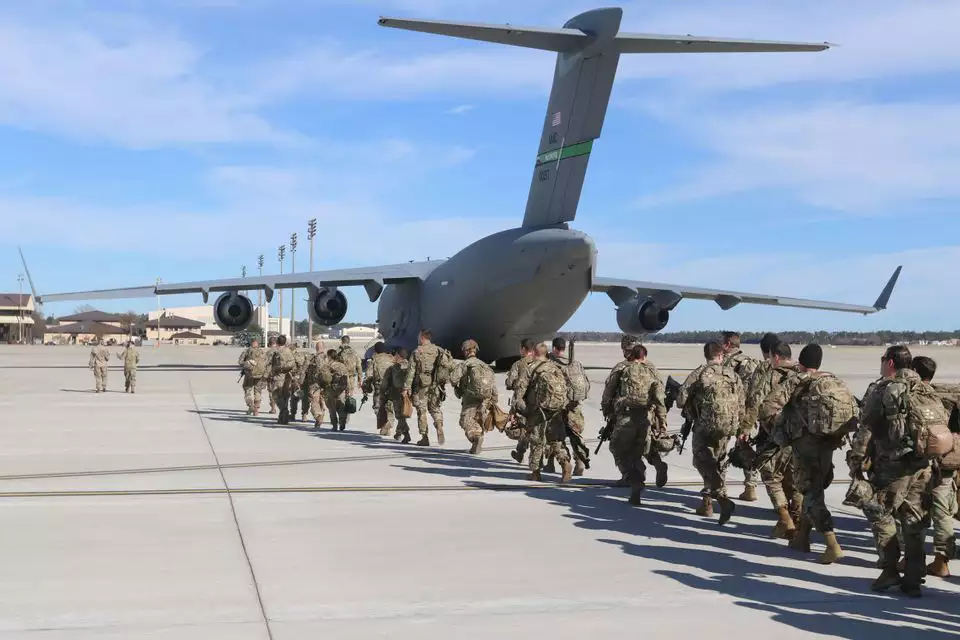
Israel Hayom reported that the headquarters of the US Army's 82nd Airborne Division has been ordered to deploy to the Middle East. The order given to division commander Maj. Gen. Brandon Tegtmeier and his staff comes amid preparations at the Pentagon and the White House for possible ground operations against Iran in the Persian Gulf region. These reportedly include the seizure of Kharg Island, whose oil terminal is responsible for exporting about 90 percent of Iran's oil.
At the same time, two additional US amphibious groups are en route to the region. The USS Tripoli, carrying about 2,200 Marines, and the USS Boxer, carrying about 2,500 Marines, are expected to arrive soon.
A senior security source told Israel Hayom that current military activity is focused on locating and destroying Iran's launch capabilities, including missiles, rockets and unmanned aerial vehicles, described as the last significant military threat remaining. Once these capabilities are reduced to a tolerable level, likely within days, the sides will move closer to a decisive point as the regime's leverage diminishes significantly.
"We are making every possible effort to ensure the night of the Seder is quieter, and hopefully completely quiet," the source said.


