

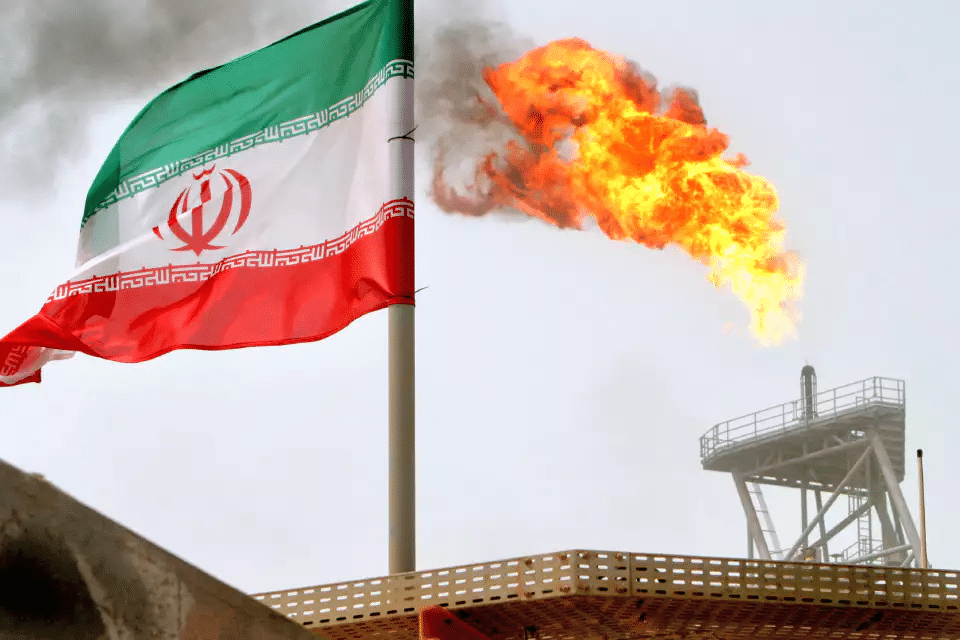
Contacts between Iran and the US are intensifying, along with Iranian efforts to find a way out of the economic stranglehold. Israel Hayom has learned from two diplomatic sources familiar with the details that the Iranians have again raised the possibility of allowing American companies to enter Iran's oil and gas industry, a proposal meant to serve as an economic "lure" for Washington.
According to the sources, this is a revival of a proposal that was already raised during talks on the nuclear agreement before the war. This time, however, the Iranians made it conditional on acceptance of their other demands, including an immediate ceasefire, a condition the Americans rejected out of hand. In Washington, officials believe that Iran's economic and military distress will push Tehran to accept the 15 American points within a matter of weeks.

Holding action against the Revolutionary Guards
The negotiations are currently being conducted by a handful of the senior Iranian leaders still in place, alongside President Masoud Pezeshkian and Foreign Minister Abbas Araghchi. The main obstacle, however, remains the Islamic Revolutionary Guard Corps. The US has demanded guarantees that the entire leadership, including whoever remains in command of the Guards, will accept the terms. At this stage, the Iranians have been unable to provide such guarantees because of the fierce opposition of Mohammad Vahidi, the current commander, to the very existence of the negotiations.
That is one of the main reasons US President Donald Trump has directly threatened Iran's energy facilities and power stations in his recent interviews. The move is being described as a "powerful endgame act" in the campaign, one that would be carried out if the regime refuses the terms, and only after most of Iran's strike capabilities have been neutralized.
"It is clear that a full military decision is complicated when facing a fanatical leadership, but when the money runs out, the thinking will change," a political source claims. "They are hoping Trump will break because of the crisis in the energy market, but the president appears confident, and the US has enough reserves to continue until a decision is reached."

The next target: the officials' 'pockets'
Alongside the military pressure, the US Treasury Department is working with Gulf states to freeze Iranian assets. In the United Arab Emirates, financial assets have in practice already been frozen, with the intention of using them as compensation for the damage caused by Iranian attacks against them.
In addition, the US is planning to impose harsh sanctions on two of the Revolutionary Guards' giant conglomerates: Jihad Nasr (infrastructure) and Khatam al-Anbiya (construction and real estate). These corporations, controlled by senior Guards officials who enriched themselves through them, are the primary target. The aim is to locate their accounts outside Iran and ban all dealings with them, a direct blow to the pockets of those holding up the agreement.


