


An hour and a half before we met, he landed from a strike in Iran. I asked what goes through a pilot's mind on the way there, and on the way back. What do they feel, and what do they see? He said there is one feeling on the way to Iran, during an operational flight over Syria and Iraq, with the breathtaking landscapes, the snowcapped mountains and the Tigris and Euphrates full of water, and there is another feeling once you cross the border eastward into Iran.
"You tense up, you sharpen your focus, you look at your formation, you search for missiles that could be launched at you, and above all you want to complete the mission and return home safely."
This was his seventh or eighth strike in Iran in this war. Although he commands an airbase and holds the rank of brigadier general, S. joins some of the sorties himself. I wondered whether that was really necessary, and he said yes. Only that way, he said, can he fully understand the missions, make sure they are being carried out properly, see how the battlefield is changing and what threats are emerging, and provide feedback to those planning the missions.
"I'm not doing this for fun," he said. "I'm doing it to bring operational value."
Constant operational alertness
The average person on the street, I told him, does not understand how complex and dangerous this is. He hears about another sortie over Tehran or Isfahan, and for him it has already become routine. S. said his job is to make sure it does not become routine, to maintain operational alertness so the mission is carried out properly and mistakes and malfunctions are avoided.
I asked whether he is afraid. He said yes. Fear is a wonderful thing. It keeps you alert, sharp and precise.
"Anyone who says he isn't afraid is lying," he said.
I asked what he is afraid of.
"Of failing to complete the mission," he replied. "That's what you were sent there to do."
There are other things to fear too, I said. The fear of not coming home. The fear of a technical malfunction. He replied that the aircraft are excellent, and the technical crews are excellent, "the best in the world, by far." And what about ejecting?
"I know the Air Force will make sure to bring our people home."
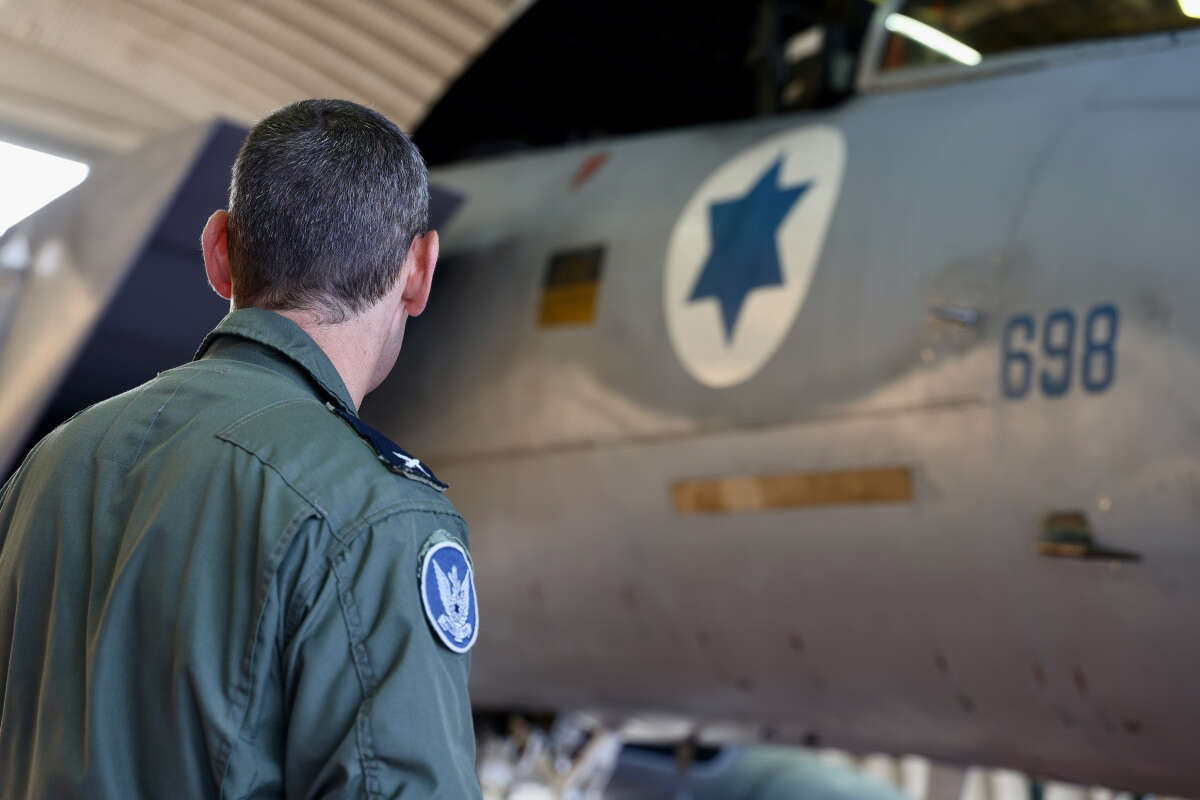
He says there are pilots who have already flown more than 30 strike sorties into Iran. One a day, and even more in the early days. Their aircraft, the F-15, is a serious workhorse: 50 years old, but large, powerful and still at the forefront of these missions. When that aircraft arrived, on a Saturday in April 1976, it brought down a government in Israel. We laughed that now it is trying to bring down the regime in Iran.
Speaking of the strain on the aircraft, he said that in an average month, the two fighter squadrons at his airbase log about 200 flight hours. In the past month they logged 5,200.
"The real heroes are the ground crews. They make this magic happen."
He praised cooperation with the Americans.
"If you have to choose a partner, it's this partner. The beauty of this relationship is that each side brings its relative advantages: they bring the power, the quantity, the scale, and we bring the flexibility, the familiarity with the theater, the operational experience. Together we are achieving very impressive results. They are a wonderful partner."
Like a boxing match
I asked what we had achieved so far. He said that strange as it may sound, things were proceeding according to plan.
"We began with a surprise opening blow that included decapitating the leadership and going after the missile array and surface-to-air missiles in order to achieve air superiority, and we are continuing with the systematic destruction of all military industry in Iran. We are taking away their production capabilities and their ability to recover."
I asked what distinguishes the current campaign from Operation Rising Lion. Back then, he said, it was a limited emergency operation intended to stop their dash to a nuclear weapon and take out as many surface-to-surface missiles as possible. And now?
"The rationale is different. This is about root-cause treatment. We are operating in a way that will make it very hard for them to recover from this. But it takes time. It requires patience. I compare it to a boxing match: you don't win in the first round, but after several rounds. That's what we're doing."
He says Iran is a serious enemy that must be given credit. It is an enemy trying to improve itself and find new methods, and it must not be underestimated or met with complacency.
"If we start underestimating them, we'll make mistakes. That must not happen, not in planning, not in command and control, not in intelligence and not in execution. You have to go into every sortie as if it were the first one, with the understanding that this is dangerous. Iran is 1,600 to 2,000 kilometers [about 1,000 to 1,240 miles] from Israel. It's far. The short sorties are three hours, and the long ones are more than five."
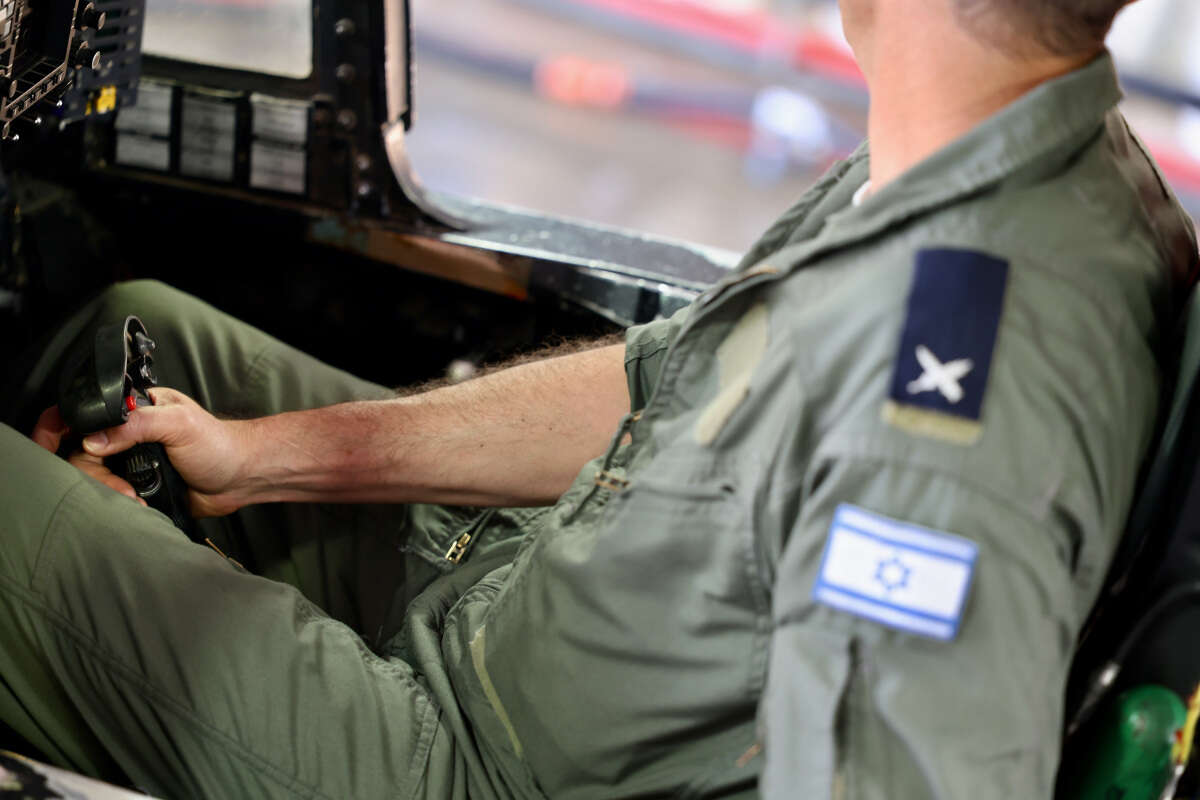
I asked what they do on the way there. How do they pass the time? How do they stay alert? He said they bring an isotonic drink or a protein bar. In a two-seat aircraft, you talk to the navigator. In a single-seat aircraft, you talk to yourself. You look at the instruments, check that all systems are operational, that the fuel is flowing properly, that there are no malfunctions, that the munitions are functioning properly and that there are no threats on the route. And when you land back at base, you give a big hug to the person who sent you off on the sortie, then you debrief and go to rest until the next one.
No Seder night at home
S. has commanded Tel Nof Air Force Airbase since last September. Tall, smiling, precise in his speech, he is in his 40s, married and the father of children he sees very little. From his flights he brings them home as souvenirs the arming wires that activate a bomb's fuse. His wife, he says, is the real hero.
"In the past we used to say the family supports us. Today it is clear that the family serves too, and is a full partner. It's impossible without them."
I asked what has surprised him in the war. He said it was the determination of the people in the air and on the ground. When he returned from his most recent sortie, he said, his navigator told him they were strong enough to keep going for as long as needed. I asked him to explain, because after all, the burden is insane.
"We understand that we are doing this so we won't have to go back a third time," he said. "And they are willing not to be home for this Seder night so that by next Passover Seder we can celebrate in peace."
I told him it sounded as though he was in dialogue with October 7. He replied that it is always there, for every one of them: the understanding that back then they failed to carry out their mission of protecting civilians. And today? I asked.
"We understood that if the enemy has the ability to harm you, you have to take that ability away as quickly as possible, because the longer you wait, the more complicated it becomes."
I asked whether we are winning, because we have a tendency to start celebrating before the ball is in the net. He replied that we need to remain humble.
"You don't see victory celebrations in the streets. You see us sharp, going out on missions every day, every night, very alert, showing respect. We do not get tired for a moment. You can see my camp bed here in the office. When needed, I lay my head down here."


