


Trading in New York opened Tuesday against a backdrop of mounting tension over President Donald Trump's ultimatum, as investors tried to assess developments in the hours before it expires.
Slowly but steadily, in a drip that above all reflects investors' frayed nerves, oil prices continue to climb. At this point, oil is up a little more than 2%, trading at around $115 a barrel. It should be noted that yesterday, at the start of trading, oil was trading at $112. In theory, a rise of $3 in oil prices at a time of such uncertainty is minor, but the direction is nevertheless clear: upward. And that is once again giving rise to near-apocalyptic forecasts for the global economy, at least in the short term.
In recent hours, the Israeli Air Force and US Air Force have operated to neutralize air defense systems on Kharg Island, which handles nearly 90% of Iranian oil and has storage capacity of just over 30 million barrels. According to estimates in media outlets that closely cover the energy sector, the island currently holds roughly 18 million barrels, which in principle constitute a strategic reserve for the Iranian government.
In principle, it is not clear what Trump intends to do on Kharg, but here, this is the Iranian regime's soft underbelly. For that reason, commentators are currently taking two approaches, and both are fueling nervousness in oil trading.
One view holds that the US will move to take actual control of the oil reserve, drain those 18 million barrels from storage and thereby increase supply, or at least clear a bottleneck in moving oil out of the Persian Gulf.
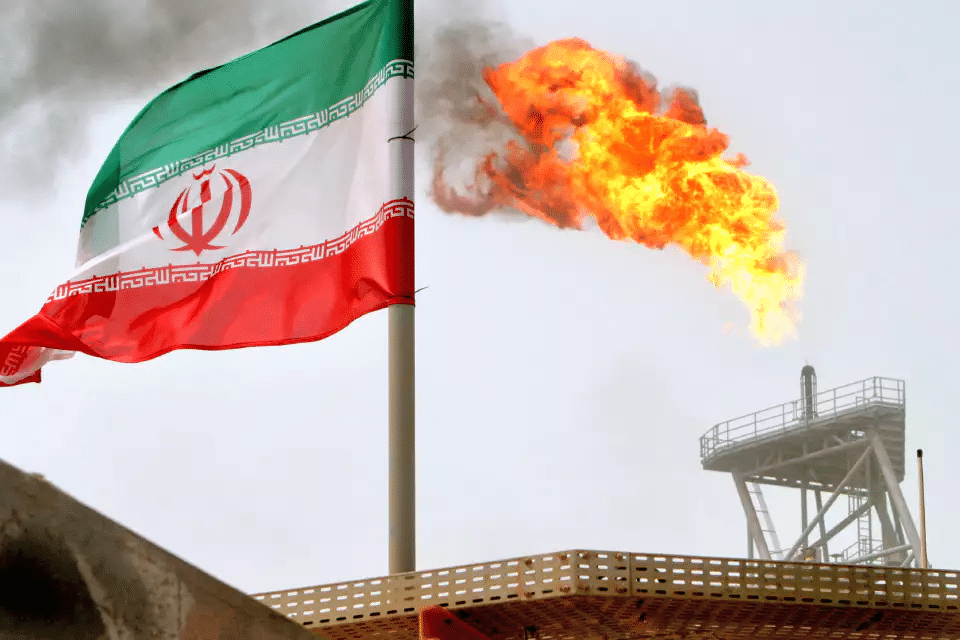
A second view holds that this is a real and serious threat, but that its ultimate purpose is to force Iranian flexibility in negotiations, which would lead to the reopening of the Strait of Hormuz and from there a return to control over oil prices. Between these two approaches stands the apocalyptic scenario of the mutual destruction of oil reserves and processing facilities, whether in Iran or in retaliatory strikes.
Of course, when we are talking about bankers, we are always talking about the apocalyptic scenario, and that brings in JPMorgan Chase CEO Jamie Dimon, who has said in interviews in the US that a scenario of $200 a barrel is not far-fetched. Beyond that, even oil stabilizing at high levels, Dimon did not give figures, but working assumptions at investment banks point to $120 and above, would exact a significant economic price from the world. That would mean stronger inflationary pressures and their persistence at elevated levels. It would weigh on the stock market to the point that the market itself would enter what is known as a bear market, meaning prolonged movement at low levels with recurring declines.
Dimon may be outlining a harsh scenario, but it can already be said, against the backdrop of Trump's ultimatum nearing its deadline, that this scenario is very much among the range of possibilities being considered by investors. That is why oil prices have been edging up for two days already, by roughly $1 every four hours.
An interesting figure worth watching is US government bond yields. As of yesterday, yields had been on a steady upward trend and had settled more or less at 4.33%, a high level reflecting growing risk to the real economy. But in recent hours, yields have in fact begun edging slightly lower, even before Trump's ultimatum expires. When yields drift downward and oil prices drift upward, the following conclusion suggests itself: as of this moment, everyone seems comfortable with oil at $115 a barrel. But there is a major caveat here. We are in a war in which oil is at the center, so everything is fluid. That is the picture as of now.


