


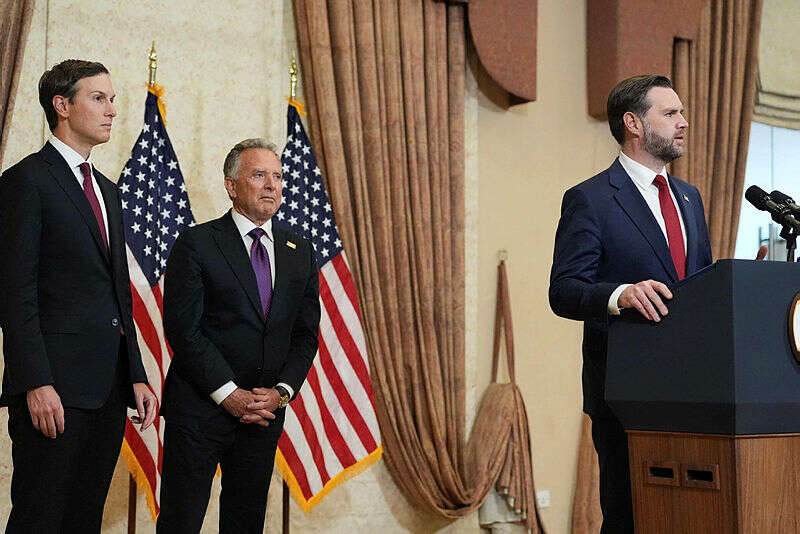
After long hours of discussions that stretched into the night in Islamabad, Pakistan's capital, US Vice President JD Vance took the podium Sunday morning and delivered a brief statement on the end of the talks between the US and Iran. An Iranian Foreign Ministry spokesman said there were disagreements on two major issues.
'Bad news for Iran'
"Good morning, everyone. I want to thank the prime minister of Pakistan and say that if these negotiations failed, it was not because of the Pakistanis, who did an amazing job and genuinely tried to help us and the Iranians bridge the gaps and reach an agreement.
.@VP in Islamabad, Pakistan: "We've had a number of substantive discussions with the Iranians. That's the good news. The bad news is that we have not reached an agreement — and I think that's bad news for Iran much more than it's bad news for the United States of America." pic.twitter.com/RLIQ30btO5
— Rapid Response 47 (@RapidResponse47) April 12, 2026
"We have been at this for 21 hours, and we've had a number of substantive discussions with the Iranians. That's the good news. The bad news is that we have not reached an agreement — and I think that's bad news for Iran much more than it's bad news for the United States of America," Vance said at the start of his remarks.
"So we are returning to the United States without having reached an agreement. We made it very clear what our red lines are, what issues we are prepared to show flexibility on, and what issues we are not prepared to show flexibility on. We made that as clear as we possibly could, and they chose not to accept our terms," Vance said.
The night in Pakistan that ended with the collapse of the talks had actually begun with a historic handshake: Iranian Parliament Speaker Mohammad Bagher Ghalibaf shook hands with Vice President JD Vance during the talks. It was the first high-level meeting between Iranian and American representatives since the 1979 Islamic Revolution.
About three hours before Vance took the podium, Tasnim, the news agency affiliated with Iran's Islamic Revolutionary Guard Corps, reported that "serious disagreements between the sides still remain." It also reported that after another round of talks, the sides exchanged draft documents. Iranian state television even said that the US and Iran had agreed to hold another round of face-to-face talks.
'The US was looking for an excuse to leave'
Iran's Fars news agency reported that a source close to the negotiating team told its correspondent in Pakistan that the American team "was looking for an excuse to leave the negotiating table." According to that source, the Americans appeared to need the talks in order to restore their image on the international stage and were unwilling to scale back their demands despite the failures and deadlock in the war against Iran. It was also reported that Iran has no plans for another round of talks.
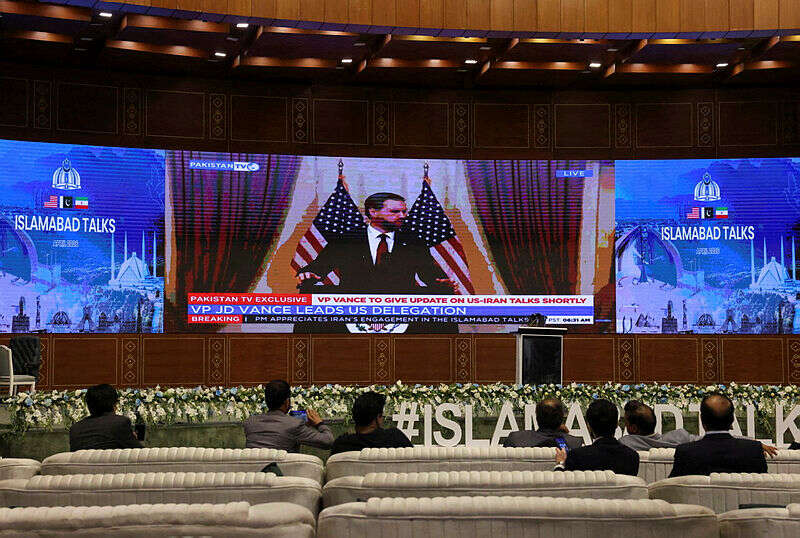
An Iranian Foreign Ministry spokesman said that the sides "reached agreement on several points during the talks, but there were disagreements on two important issues." He added that "contacts and consultations between Iran, Pakistan and our other friends in the region will continue."
Pakistan called on the US and Iran to continue honoring the two-week ceasefire between them. "The parties must continue to uphold their commitment to the ceasefire," Pakistani Foreign Minister Ishaq Dar said. "Pakistan has played, and will continue to play, its role in promoting dialogue between the Islamic Republic of Iran and the United States of America in the coming days."


