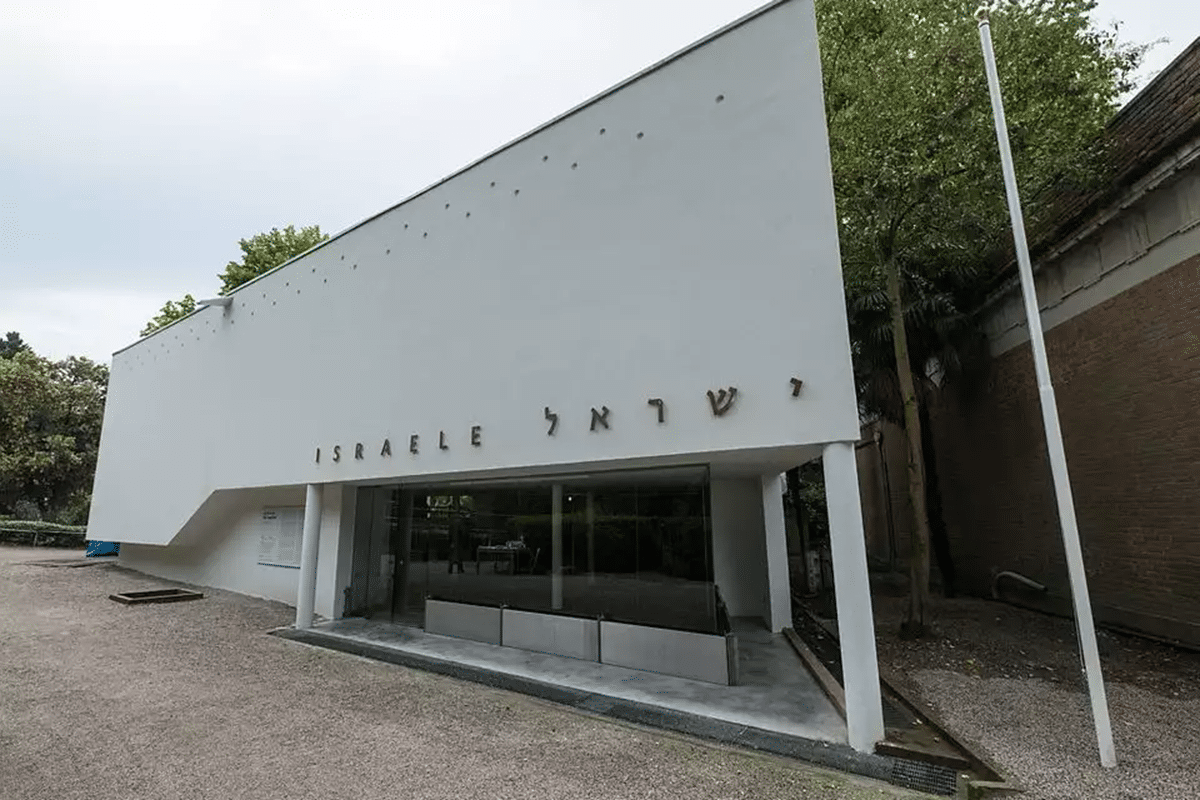
The 61st Venice Biennale, one of the most celebrated events on the global art calendar, opened Saturday under the shadow of an unprecedented crisis. All five members of the international jury resigned after refusing to award prizes to Israel and Russia, dozens of artists withdrew from the competition, and some 2,000 protesters clashed with police outside the Israeli pavilion. Prominent British artist Anish Kapoor described the atmosphere as "a politics of hatred and war," while the Israeli artist filed a legal warning alleging antisemitism.
On April 30, the international jury announced its mass resignation. Its declaration was unambiguous: the members would refuse to award prizes to any country whose government or leadership faced charges of crimes against humanity at the International Criminal Court in The Hague, with explicit reference to Israel and Russia. The announcement pointed to a deep crisis within an institution long regarded as a neutral island of art, and some critics argued, according to The Guardian, that the United States should have been included in that position as well.
The Biennale Foundation did not remain passive. Its leadership launched a new award called the "Visitor's Lions", allowing visitors at the Giardini and the Arsenale to vote in an Eurovision-style format for the best national pavilion and the standout artist in the central exhibition. But even that creative solution did not contain the wave of withdrawals: 54 artists in the international exhibition and 16 national pavilion teams pulled their candidacies, and nearly half the artists in the central exhibition also refused to compete for the new public prize. France, Ecuador, and the United Arab Emirates withdrew from the competition entirely. The traditional "Golden Lions" were not awarded at all and are now expected to be announced only on November 22, the final day of the event.
"Antisemitism and discrimination based on nationality"
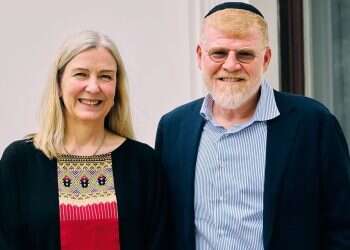
The crisis deepened when Belu-Simion Fainaru, the artist representing the Israeli pavilion, filed legal warnings. He argued that the criteria set by the jury constituted antisemitism and discrimination on the basis of nationality. The Biennale Foundation and the Italian government joined the pushback on principled grounds, arguing that the jury's decision injected politics and censorship into an institution that is meant to remain neutral. Russia's ambassador to Italy attacked the European criticism as "brutal dictatorship" and claimed that Europe was building "a new Iron Curtain" against Russian culture. At the same time, the European Union threatened to withdraw its contribution to the event
On the streets of Venice, the atmosphere was no less heated. Some 2,000 protesters demonstrated outside the Israeli pavilion over the war in Gaza and clashed with police. Twenty national pavilions remained closed after workers launched a solidarity strike protesting Israel's participation. Police reinforced patrols around the Israeli, Russian, and American pavilions. At the Russian pavilion, protesters chanted "Russia is a terrorist state," and in one of the event's more surreal moments, a man sprayed milk over the crowd following a Russian choir performance and hurled a chunk of Parmesan cheese into the air.
"Inviting violent criminals to a social event"
A march of some 200 women activists, led by Nadya Tolokonnikova of the protest art group Pussy Riot, wound through the streets of Venice, turning the Biennale into an ongoing statement against war and censorship. Ukraine's culture minister, Tetiana Brezhneva, compared Russia's presence at the Biennale to "inviting violent criminals to a social event" and noted that hundreds of Ukrainian artists had been killed in the war. The anger intensified when, concurrent with events at the Russian pavilion, it was reported that the city center of Kramatorsk in eastern Ukraine had been bombed on Tuesday, killing six people.
The British pavilion opened without the presence of a British arts minister, as a gesture of protest over Russia's participation. On display there is the exhibition "Predicting History: Testing Translation" by Turner Prize winner Lubaina Himid, which explores the dilemmas of immigrants through a series of paintings. Prominent British artist Anish Kapoor expressed frustration with the general atmosphere and called it "a politics of hatred and war" – a phrase that resonated widely.
Biennale president Pietrangelo Buttafuoco firmly defended the continued participation of all nations despite calls for boycotts. "Venice is meant to be a place of encounter, not separation," he said. "The pavilions should be judged by the works on display in them, not by the passports of the artists."