
Former Israeli Supreme Court President Professor Aharon Barak addressed the change he said had taken place in Prime Minister Benjamin Netanyahu's attitude toward the legal system during a panel at the Tel Aviv Conference at Tel Aviv University on Tuesday. "There has been a change in Netanyahu's attitude toward the legal system, and that is because of the trial," Barak said.
Barak added that he has "a very long account with the prime minister," while recalling other days. "I visited him at Balfour and we had lunch at his home. He always supported the court system," he said. Barak strongly defended Attorney General Gali Baharav-Miara. "As God is my witness, what do they want from the attorney general? She is so wonderful," he said. "I was very friendly with Netanyahu"
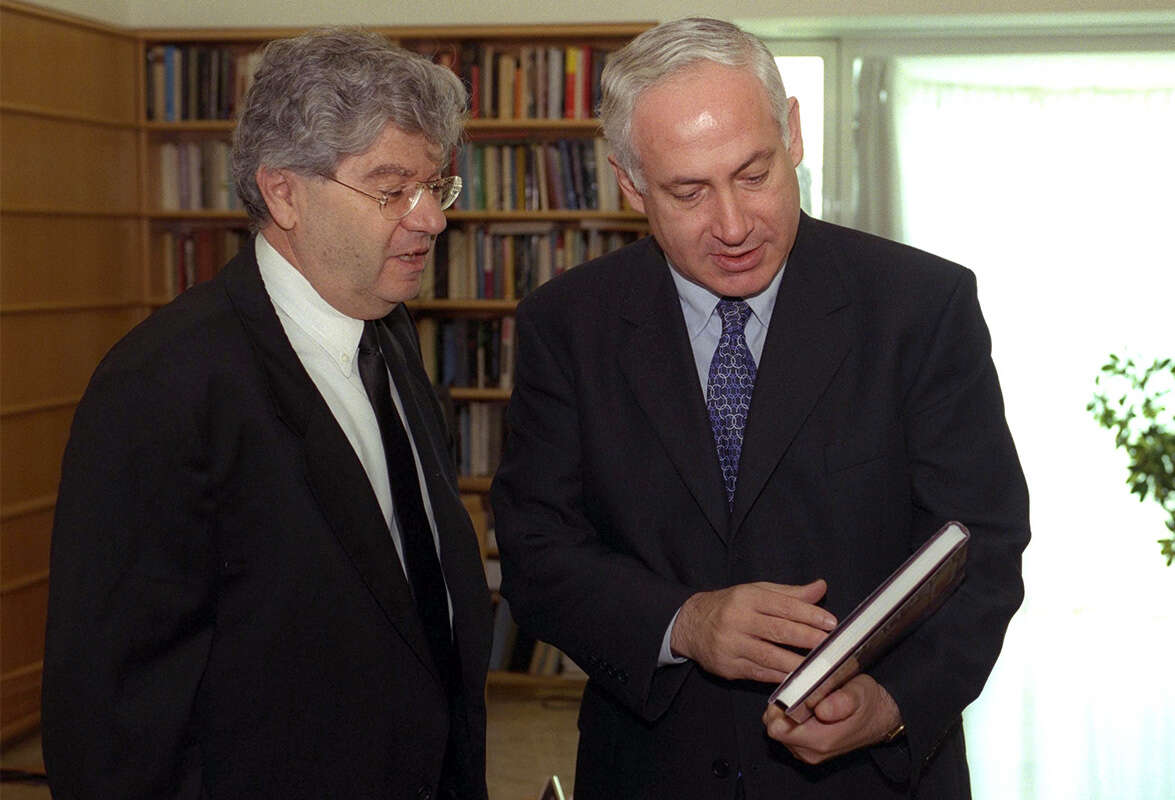
Barak did not hold back in expressing his view of the way Netanyahu changed his attitude toward the legal system. "There has been a change in Netanyahu's attitude toward the legal system, and that is because of the trial," he said. But he noted that it had not always been that way. "I was very friendly with Netanyahu when he was finance minister and when he was prime minister. He always supported the court system, like all prime ministers, even Rabin."
Barak also accepted some responsibility. "I was involved in the filing of the indictment. Mandelblit convened all the former attorneys general and asked whether he should announce the decision to file an indictment before or after the election. We all advised him that if he had reached a decision, he should announce it immediately. The public has the right to know whom it is voting for." Still, he did not hide his feelings. "I have a very long account with the prime minister," he said.
From the trial, Barak turned to the international arena, addressing the legal challenges facing the State of Israel and his own role in the effort. Barak, himself a Holocaust survivor, said he would travel to The Hague to defend Israel, not Netanyahu. "It is not easy to defend it, but I agree that what Israel did in Gaza is not genocide. I was a victim of genocide, as a Holocaust survivor, and I seek to defend my country, which is accused of genocide," he said.
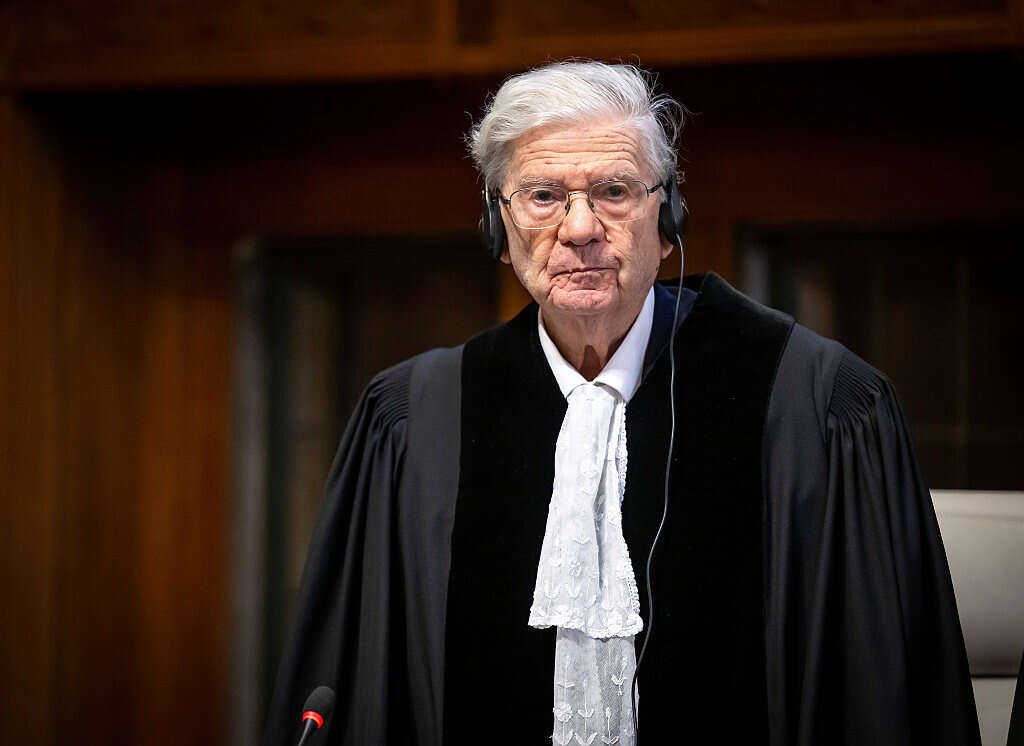
Barak reserved his sharpest criticism for the settlement movement. "The primary responsibility lies with the settler leadership, and with the army and the police, which must ensure the rule of law in the territories. If the government is not doing enough, it must be told: You need to do more," he said.
Speaking about polarization in society and Jewish terrorism, Barak said: "What characterizes today's polarization is the absence of dialogue. Each group has its own monologue. The army and police must ensure the law in the territories, and above them is the government. If the government is not doing enough, we must all act." Asked what gave him hope in these days, Barak answered in one word: "The elections."