According to reports, the proposed "Blue Homeland" plan would define Turkey's maritime jurisdiction zones and strengthen Ankara's long-standing claims regarding "gray zones" in the Aegean Sea, interpretations of the continental shelf beyond the core provisions of the United Nations Convention on the Law of the Sea and the 2019 Turkey-Libya maritime memorandum, which Athens, the European Union and other regional states view as baseless and illegal.
Such a move, if confirmed, would escalate tensions with Greece and Cyprus, among others, over maritime claims in the Aegean Sea and the eastern Mediterranean, as Athens has repeatedly cited what it says are baseless Turkish claims regarding maritime law over the past half-century. The implications would be that dozens of Greek islands, home to hundreds of thousands of residents, would find themselves surrounded by Turkish maritime territory. Moreover, the plan would create a maritime border between Turkey's territorial waters and Israel's exclusive economic zone.
Akdeniz'in en büyük donanması sahneye çıkıyor.
Başta Yunanistan olmak üzere Türk düşmanlarına güçlü bir mesaj verilecek…pic.twitter.com/RFPzktqTjM
— Tigin Bey (@Cooltiginn) May 15, 2026
Greek officials responded by stressing that unilateral maritime claims have no legal standing under international law. Meanwhile, Greek Foreign Minister George Gerapetritis emphasized this week that any attempt to impose maritime borders outside internationally recognized legal frameworks was "doomed to fail," stressing that the United Nations Convention on the Law of the Sea reflects binding customary international law, regardless of whether Turkey has ratified it.
Athens has consistently argued that the Greek islands have full sovereign and maritime rights, including the right to a continental shelf and exclusive economic zone provisions under international law. Greek officials also reject Turkish references to "gray zones" in the Aegean Sea, arguing that sovereignty over the islands is clearly defined by international treaties.
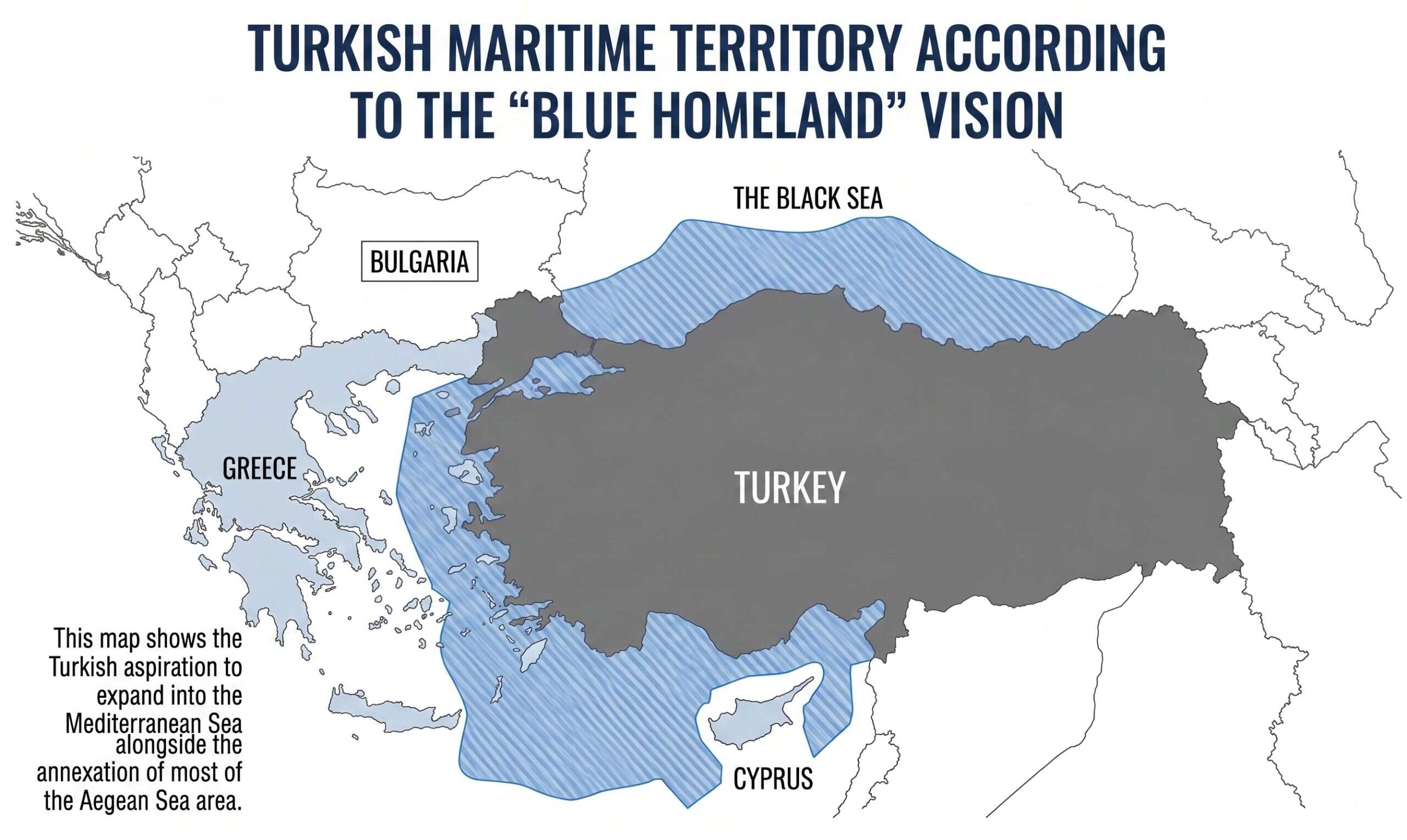
Greek media outlets have also linked the proposed legislation to broader Turkish revisionist claims in the region, particularly following recent tensions related to maritime activity between Astypalaia and Kos and the submission of maritime spatial planning zones to the European Union.
In the past, diplomatic circles and geopolitical experts on the Greek side have increasingly, and often derisively, linked Ankara's "Blue Homeland" doctrine to a concept disparagingly known as "Turkography," meaning what they describe as a deeper effort by official Turkey to institutionalize revisionist geopolitical narratives through domestic law, combining maritime strategy, energy claims and historical identity into a unified doctrine.