The Board of Peace report submitted to the UN Security Council on progress in implementing the ceasefire agreement, or Trump Plan, places the blame for blocking the Gaza Strip's reconstruction on Hamas. The report, obtained by Israel Hayom, says "The main obstacle to full implementation of the agreement is Hamas' refusal to disarm, which prevents the transition to civilian reconstruction in Gaza."
The report was written six months after the agreement was signed in accordance with UN Security Council Resolution 2803, and addresses all clauses of the agreement and their implementation. Among other things, the report refers to the release of all the hostages, the entry of humanitarian aid and the attempt to move from Hamas rule to rule by civil servants, which has stalled because of Hamas' control over the population and the territory.

According to the report, humanitarian aid to Gaza has increased by 70% in terms of supplies, including food, water, health care and basic infrastructure, with the partial restoration of bakeries and a hospital in Rafah. However, the board says humanitarian needs in the Strip remain extensive and most residents are still suffering from shortages of shelter, water, health care and employment.
So far, the report says progress has been made in recruiting an approved civilian police force and in training it in cooperation with Egypt, a step critical to replacing Hamas' control over the population. Hamas itself, however, still maintains terrorist structures, tunnels and weapons, and refuses to cooperate as required.
The Board of Peace's recommendation to the UN Security Council is to exert broad diplomatic pressure on Hamas to enable implementation of the road map regarding the replacement of the governing authority and continued reconstruction. According to data gathered by the board, $30 billion is needed for reconstruction. Full implementation of the plan would create 250,000 jobs within five years of the process being completed.
The report states clearly that Hamas' refusal to acknowledge and accept the process of disarmament, reform and the transition to civilian control has a significant effect on progress in the peace process. The statement notes that demilitarization is an integral part of implementing the plan, and that delaying it creates further delays and obstacles that prevent the achievement of the diplomatic and security goals needed to advance the entire peace process.

The report also reveals what is already well known in Israel: Hamas' commitments to restrain its military and policing activity do not exist, and their implementation is a basic condition for establishing civilian sovereignty, rebuilding the economy and achieving normalization.
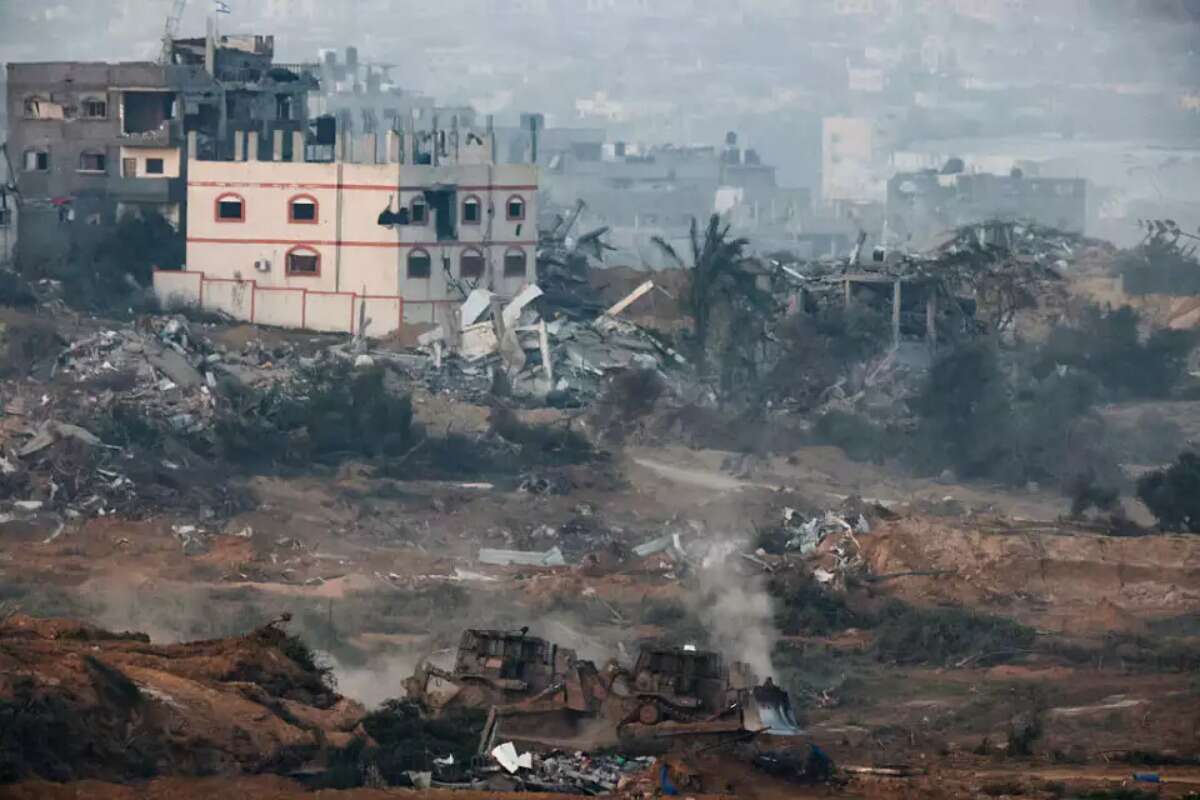
The danger, the report's authors warn, is escalation and a return to a broad confrontation with Israel. Meanwhile, according to the data cited in the report, some 85% of buildings and infrastructure in the Strip have been destroyed or damaged, 70 tons of munitions and rubble need to be cleared, some 350 kilometers (217 miles) of tunnels still require treatment and have not yet been dealt with, and more than 1 million people are without housing. By contrast, the report's authors note that since the agreement was signed, 300,000 tons of aid have entered the Strip.
To stabilize the Strip, the Board of Peace is demanding that the UN generate pressure and produce a binding document requiring Hamas to move toward disarmament, alongside the need to address and neutralize some 350 kilometers (217 miles) of tunnels as an integral part of the demilitarization process. As long as Hamas prevents the elements that depend on it, the risk of a return to conflict is more real than ever, the Board of Peace concludes.
Senior sources in the Palestinian terrorist organizations claimed that Board of Peace Director General Nikolay Mladenov was applying direct diplomatic pressure on them. All this is taking place under the heading of the "new road map for Gaza," in an effort to prevent the situation in the Strip from exploding.
Israel's Ambassador to the UN Danny Danon said, "This report exposes what has long been clear to everyone: Hamas has lied and continues to lie every step of the way. Even the body established to advance implementation of the agreement states unequivocally that the central obstacle to Gaza's reconstruction is Hamas' refusal to disarm and give up its rule of terror. Those who continued to echo Hamas propaganda instead of fighting it strengthened a murderous terrorist organization that is holding Gaza and its residents hostage."
Earlier this week, a security official told Israel Hayom that Hamas was working systematically to delay progress in negotiations on implementing the ceasefire agreement, which is supposed to include disarmament. According to the security official, the terrorist organization is presenting shifting positions and setting new conditions that make it impossible to reach understandings.