Greek officials have presented the Kasta Tomb in Amphipolis, northern Greece, for the first time, unveiling marble-lined corridors, complex architecture and refined sculptural details, including sphinxes that guarded the entrance to the site, Fox News reported.
The structure, dating to the 4th century BCE, surrounds a burial mound with a circumference of about 500 meters (1,640 feet). Greek officials described the site as unique in its vast scale. They noted that the site, now accessible to visitors, offers a rare glimpse into monumental burial practices from the period after Alexander the Great.
Weapons manufacturing found on the island of andros greece. During the time of alexander the great and other successors.
Macedonia greek history continueshttps://t.co/Rgj8EDfxQd
— ΑΛΕΞ K (@andros_sk_mari) May 13, 2026
"Kasta Tomb is a unique and magnificent Macedonian monument," Greek Culture Minister Lina Mendoni said, emphasizing its historical significance and value.
The nature of the design and decoration suggests the site was built for a member of the Macedonian elite or for someone very close to Alexander, possibly his mother, one of his wives or a loyal companion. This conclusion is supported by the structure's marble corridors and marble sculpture.
According to this assessment, the upheaval after Alexander's death and the breakup of his empire may have led to the construction of a grand commemorative structure for an exceptional high-ranking figure connected to the royal court.
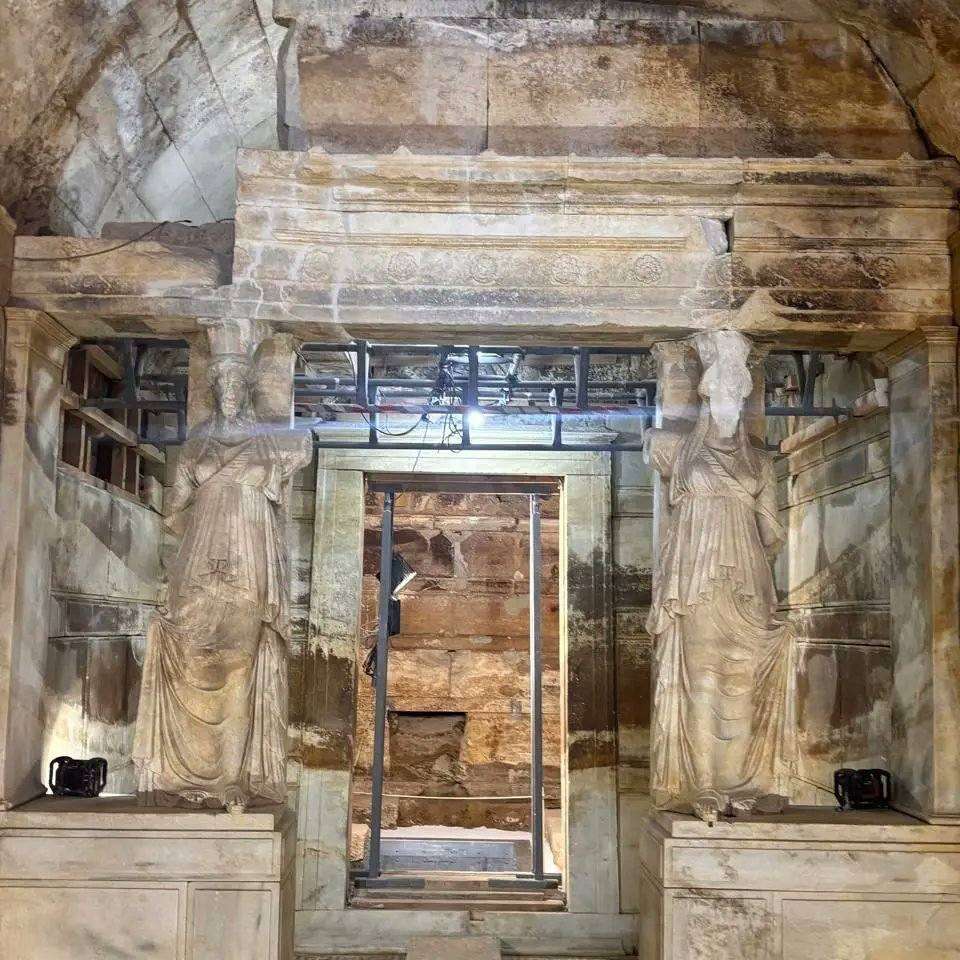
Amphipolis was a way station in the Wars of the Diadochi, the violent succession struggles that followed Alexander's death. Cassander imprisoned Alexander's wife Roxana and his son, Alexander IV, there, and later ordered their murder. Against the backdrop of political turmoil and the struggle over the continuation of the dynasty, the dimensions of the Kasta Tomb point to a project devoted to memory and prestige at a time when loyalty, lineage and legacy defined authority across the fragmented territories once ruled by Alexander.
The shape of the enclosure reinforces assessments regarding the site's unusual character, built in the 4th century BCE. The placement of sphinxes as gatekeepers at the entrance underscores the message of protecting the tomb.
The opening of the site's interior reflects the renewed examination of Alexander's legacy across the region. In southern Iraq, for example, the city of Alexandria, founded by Alexander the Great in the 4th century BCE, illustrates the geographic reach of Macedonian urban foundations and the networks that helped spread Hellenic culture to the Middle East.