Sufferers patience
On the streets of Israel, it's easy to spot the sourness and bitterness regarding the events on the northern front, from the children running to bomb shelters, to the devastating news from the drone fields across the border, and all the way to slamming the brakes on an attack in Beirut. The difficult conversation between Trump and Netanyahu didn't help the feeling that there is a plan, either. These feelings do not reach the upper floors of the Kirya. At the top of the military, they speak of an achievement unseen in years, and of an opportunity for peace and quiet for many long years. Reconciling these two pictures is impossible, but describing them is.
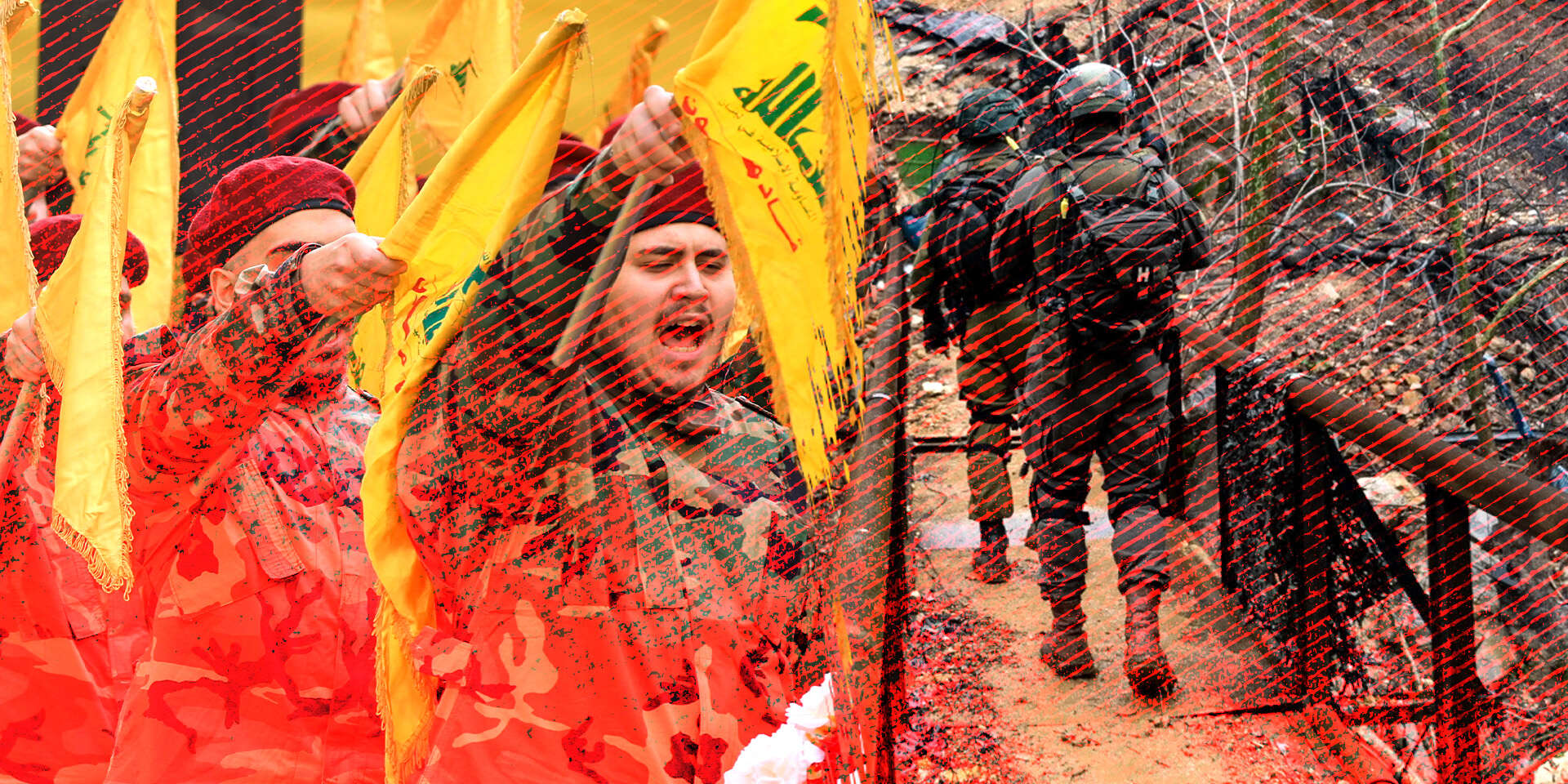
The IDF's top brass is convinced that Hezbollah is a semi-dismantled organization that has absorbed the hardest blow in its history. It had thirty thousand fighters on October 6, 2023; since then, 8,000 have been killed and about the same number wounded. "Even a jihadist enemy is dying for a ceasefire."
The Chief of Staff, for example, said in closed discussions that he is in favor, under the following conditions: One, Hezbollah's withdrawal beyond the Litani River. Two, the destruction of all its infrastructure, this time not by the impotent Lebanese army but by an Israeli-American mechanism. Three, an IDF presence on the Yellow Line, which includes, for example, the Beaufort Castle.

In retrospect, the IDF dislikes the phrase "Hezbollah fell into a strategic ambush," which a senior military official used on the day the organization came to Iran's aid at the start of "Roaring Lion" and opened fire. "Even before the war, we saw that the organization was increasingly struggling to absorb the Israeli blows; they were on the verge of responding even without Khamenei's assassination." The army was furious with reserve generals who went on television panels to criticize what they saw as an overly harsh Israeli response to a symbolic barrage in memory of the Supreme Leader. "They probably don't understand what we saw in the first week of March," they say there. "Hundreds of Radwan terrorists crossing the Litani. Why did they come? If there had been even one raid on a single community, we all would have had to pack our bags and resign. What were we supposed to do if not meet them on their own turf and kill them?"
Since then, Hezbollah has focused on its only success, drones. The defense establishment suggests managing expectations with the public: there will not be a single comprehensive solution for rockets, in the format of the Iron Dome. There will be many solutions that together will create a partial response. "No weapon introduced to the battlefield has ever disappeared, it only evolved. Tanks are here to stay, anti-tank missiles likewise, planes, and now drones."
However, they emphasize there, the agreement could be here within days to weeks. If they could, they would urge the residents of Kiryat Shmona and Nahariya to suffer for a few more weeks and receive an agreement that will bring peace for many long years. It's been a long time since I've seen such a gap between the harsh public sentiment and the sweeping optimism at the top. How long? Twenty years minus two months, at the end of the Second Lebanon War. Back then, the public was right that the war was a dismal failure and Hezbollah had grown stronger; hopefully, this time the decision-makers are right.
"There's going to be a raid," lookout Yael Leibushor told her replacement at the post at 4:00 AM on October 7. The replacement's name was Karina Ariev. A few hours later, Yael would be murdered in the Nahal Oz war room and Karina would be abducted to Gaza. Their friends, back home, said that when the war broke out, all Israeli citizens thought to themselves "What is this," but they thought: this is what we saw all along.
This story, and many others that haven't been told until today, appear in the important book by Haaretz commentator Amos Harel, titled "06:29." Surprisingly, it turns out that even before this hour, the attack had already begun. At 6:17, a terrorist on a paraglider had already landed in Israeli territory. An infiltration into Israel, yet no one saw and no one heard. The failure before the failure. This is the first eye-opening book that simultaneously paints a horrifyingly bleak picture. Harel didn't vote for Netanyahu but writes that Bennett and Lapid also did not change the destructive conception he led with the IDF; he covers the army but does not hesitate to slam it with harsh words like "rot."
But let's assume they had noticed the signs, and woken up the Prime Minister and the forces on the ground, and the attack was halted. We still would have ended the event with two Iranian commando divisions on our border, and it would have erupted eventually.
"Divisions whose importance we all downplayed," Harel replied. "But the question is the scale. When they say 'the defense line will eventually be breached' the meaning is tactical, not strategic like what happened. There is a difference between a localized success where five soldiers are killed and the resounding defeat and the massacre and the national trauma."
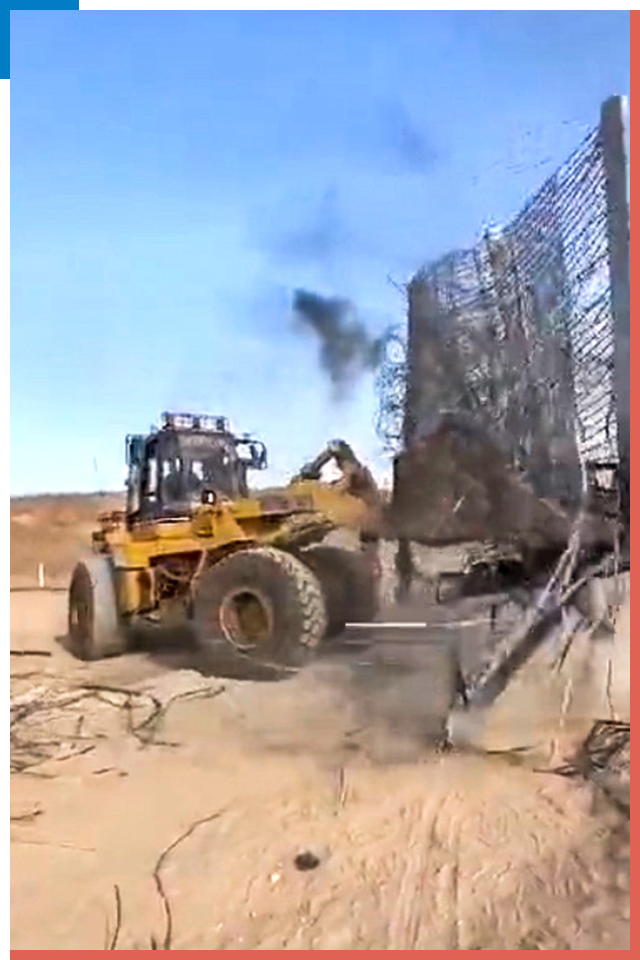
But this monstrous force grew on your borders. After all, in a parallel universe, where the Jericho Wall goes all the way up and the Prime Minister or the Chief of Staff or whoever it is, proposes a preemptive war, it would never have passed.
"True. They didn't want to. 'Didn't want to' includes the media, it includes me. Not out of protecting the Palestinians, but from the thought of 'you don't know how you'll end this', that you'll eventually get stuck. There was a saying that whoever defeats Hamas wins a prize—Gaza. And there is of course the fear of losing soldiers, and the lack of consensus, and a clear tension between Bibi and everyone below him. An officer who was involved told me: 'Let's tell the truth, none of us wanted to fight there.' He spoke about everyone including everyone. Even the Shin Bet and the Mossad who were more hawkish, in the end it's the army that buries its soldiers. After all, it's not Shin Bet or Mossad personnel who are killed."
Could Israel have lived with this thing on its borders over time?
"No. I didn't understand it like that in real-time because I didn't grasp the magnitude of the threat. But when you understand, on the one hand, what he built in terms of a defensive array that he probably planned for us to crash against at some point, and on the other hand offensive capabilities—it had to be dealt with at some point. You don't have to be right-wing to think that Israel, over time, has a difficulty with the building of two monstrous terror armies and you take no action. Look at that recording of the terrorist saying 'I have the blood of ten Jews on my hands, which I washed'. This is someone who was brainwashed from age zero, the Gazan education system invested in him for 20 years and it gives fruit."
I can't help but ask about the Disengagement. Even from a non-ideological perspective, unrelated to our right to the land and all that, ultimately, don't you have to be everywhere between the Jordan and the Sea?
"I do think that this project of holding an enclave of 9,000 people inside a million and a half Palestinians, over time we would have gotten some sort of Vietnam there. I admit that I underestimated the risk of the rockets and their range and the speed at which it would grow. But it would have been bleeding us dry in a different way. There are no good solutions here."
As disturbing as it sounds, October 7 could have looked much worse. The head of the Southern Command, Yaron Finkelman, said during the day that we "might meet two hundred thousand Gazans in our territory." Not to mention the northern border, where battalions were also at partial strength, an army on holiday leave and an enemy armed and equipped in its thousands, trained exactly for the scenario of invading Israel. The lesson for next time is the development of imagination. As a senior Military Intelligence officer is quoted in the book, they pictured our defeat and occupation in their imaginations, and we did not imagine that they were imagining it.