Herzi Halevi was not supposed to be awake that night at all.
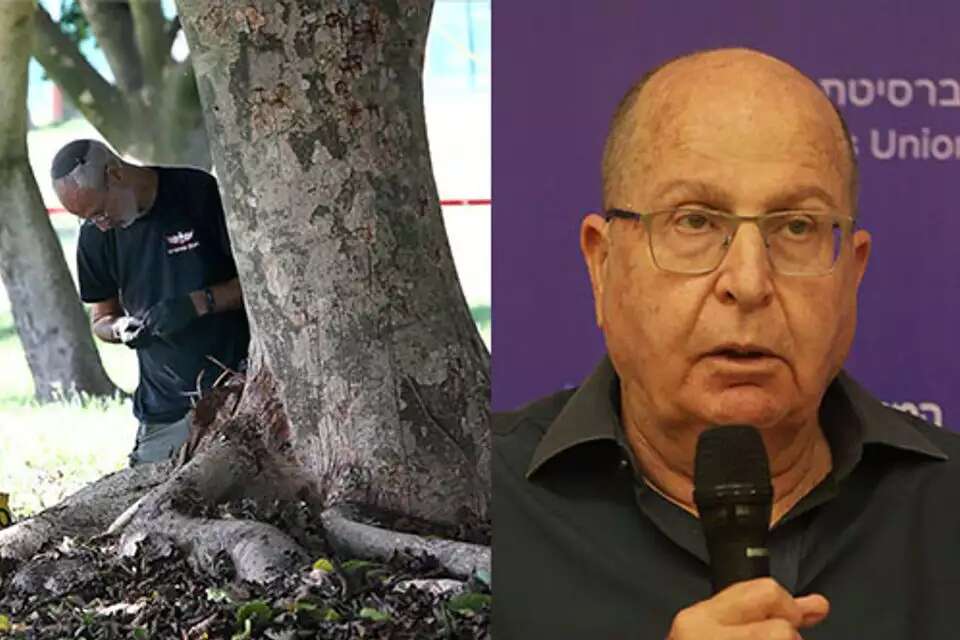
On one of the days before Oct. 7, in the late evening hours, the Israel Defense Forces' Intelligence Directorate received a very strange piece of intelligence: Hezbollah was about to assassinate Moshe (Bogie) Ya'alon. The information lacked context and was flimsy, but the Military Intelligence Directorate was not taking any chances. Its officials called the Shin Bet security agency, which quickly sent security guards to Ya'alon's home and ordered him not to go outside.
As Israel Hayom reveals here for the first time, the vague information also reached the chief of staff's office, but Lt. Gen. Herzi Halevi's team was not alarmed. The intelligence, as noted, was so murky that they saw no point in waking him. Some time later, in the early morning, an explosive device detonated in Tel Aviv's Yarkon Park, right on Ya'alon's regular cycling route.
When Halevi woke up and heard what had happened during the night, he was angry. "You should have woken me up," he told his people. A few weeks later, when the phones in the chief of staff's office began buzzing at night, the duty officers did not want Halevi to be angry with them again. So they called him.
At 3:20 a.m. on Oct. 7, the phone rang at Halevi's private home. On the line was his bureau chief, Lt. Col. Matan Feldman, who updated him for the first time about the activation of SIM cards belonging to Hamas Nukhba terrorists. "In recent hours, suspicious signs have been received from Hamas-Gaza," Feldman said, sounding not especially troubled. "Extensive checks were carried out. All intelligence officials are unanimous that Hamas is in routine mode and that nothing unusual is expected in the near future." In theory, Halevi could have gone back to sleep, but he asked for 10 minutes to wash his face. "In the meantime, get the Southern Command chief on the line," he said.
Halevi, who until recently had himself been head of Southern Command, knew the Gaza sector and Hamas' cunning very well. While waiting for the call, he sat down in his study and began scribbling several lines on a piece of paper. At the top of the page, Halevi wrote to himself: "Do not think this is nothing." Next, he tried to imagine what Hamas was plotting.
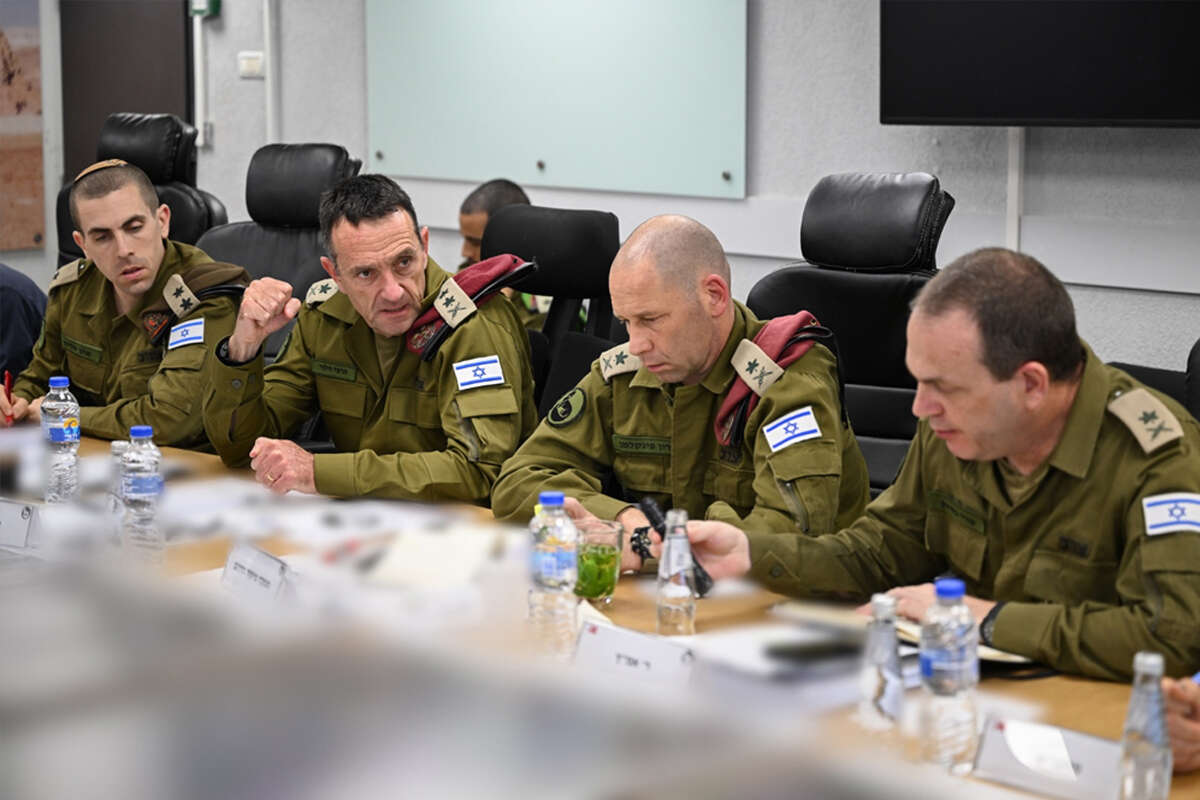
What happened in the following minutes is being published here for the first time, based on conversations with sources in Halevi's office and Southern Command, as well as officers intimately familiar with the raw material from the unpublished Oct. 7 investigations. The area that troubled the chief of staff more than anything else that night was Zikim Beach, or so, at least, he scribbled on the page.
In the time before Oct. 7, it had emerged that the IDF system for detecting divers in the water was not working well, and Halevi was very concerned that Hamas would exploit this and send a force of terrorists by sea. Halevi's second concern, also reflected on the piece of paper, related to an offensive Hamas tunnel in the southern Gaza Strip that penetrated Israeli territory. After the IDF discovered it, cameras and booby-trapped explosive devices were placed inside it, with the intention of blowing it up by surprise if a Nukhba platoon tried to pass through it. Hamas scouts were even observed several times walking inside the tunnel, reaching almost its end and then turning back. Halevi was concerned that Hamas had discovered the booby traps in the tunnel, neutralized them, and intended to use it to carry out an infiltration attack.
There was one scenario Halevi did not write on that piece of paper and also failed to imagine: a mass invasion by all the Nukhba forces into the Gaza Division. Several months later, when Halevi would return home for the first time since the outbreak of the war, the page would be waiting for him on the desk in his study.
4 a.m.
The IDF investigation materials show that Halevi, like all the other IDF officers and Shin Bet personnel who were awake that night, was not shaken by the intelligence flowing in from Gaza. In fact, he asked to speak with Southern Command chief Maj. Gen. Yaron Finkelman for a completely different reason.
Finkelman, young, sharp and brilliant, was highly regarded by Halevi, and was also his first significant appointment as chief of staff. To a large extent, it was a gamble: Southern Command was Finkelman's first posting as a major general. On Oct. 7, he had been in the role for less than 100 days. For Halevi, this was an excellent opportunity to drill his protégé.
At 3:30 a.m., the phone rang again at Halevi's home, heralding the beginning of the "chief of staff's situation assessment," perhaps the most fateful moment of Oct. 7. On the secure line, in addition to Halevi and Finkelman, were Operations Directorate chief Maj. Gen. Oded Basiuk, bureau chief Feldman and the chief of staff's intelligence aide. Finkelman did most of the talking. For about half an hour, the Southern Command chief detailed the suspicious signs, as well as the reassuring signs, coming from Gaza, and described how he had spoken with Military Intelligence personnel and the Shin Bet's southern district, and how everyone agreed that the likelihood of an attack in the coming hours was very low, almost zero.
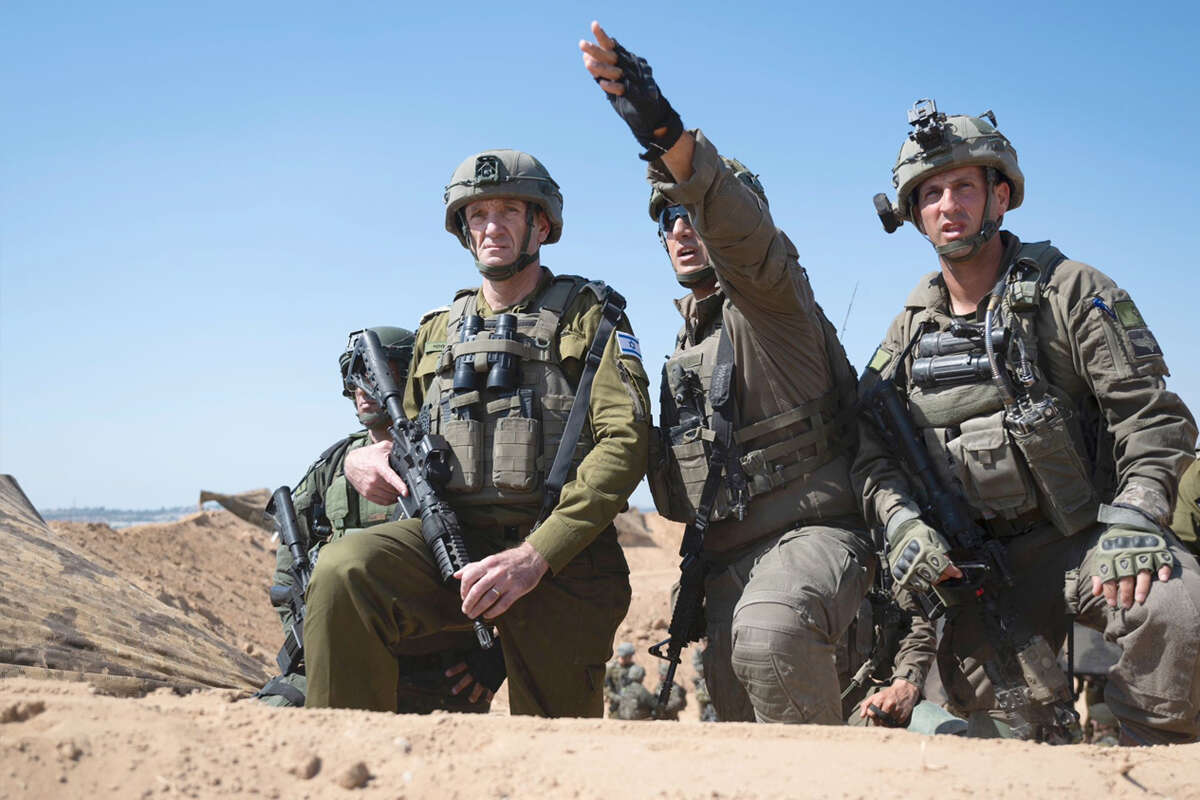
One of the Military Intelligence investigations would later state: "The unusual conduct (in Hamas-Gaza) was interpreted as a raising of alert due to an exercise, or due to preparations for an initiated Israeli military move... Following the unusual indications, an intelligence effort took place to clarify the context of the unusual signs, but it did not lead to the formation of a clear picture."
The Southern Command chief sounded in control. During the call, Finkelman added that so far, it had been decided to act cautiously vis-à-vis Hamas, so as not to expose to the enemy the existence of the intelligence sources, the SIM cards, and out of concern over miscalculation. The miscalculation warning came mainly from the direction of the Shin Bet.
Toward 4 a.m., Finkelman finished his update. Halevi glanced at his page and summarized the call. The chief of staff approved reinforcing the Gaza Division with an additional UAV. He asked Finkelman to reinforce Zikim Beach with a ground force by daybreak, and to send another force to the opening of the offensive tunnel in the southern Gaza Strip, the two places that worried him. Halevi also demanded that Finkelman add several more reinforcements to the sector himself, according to his own judgment and discretion. "One more thing," Halevi said. "If something happens, it will happen in the morning. Receive the morning forcefully."
Knowledge and power
Despite the instructions to reinforce forces and prepare for a surprise in the morning, the main message that emerged from the chief of staff's nighttime call, and that was also reflected in a call later that night between Finkelman and Gaza Division commander Brig. Gen. Avi Rosenfeld, was that the IDF needed to proceed cautiously, without Hamas noticing.
"Herzi's instruction was not to go to sleep, but also not to make a 'festival,' because then Hamas would understand that we were onto it," said a source familiar with the details. Basiuk, the Operations Directorate chief, captured the spirit of the matter well in the order he issued after the call with Halevi and Finkelman: "It is necessary to avoid security scratches and to ensure preparation is as cautious as possible in order to preserve the sensitive sources," meaning the SIM cards.
Halevi, Finkelman and Basiuk were not the only officers who instructed their people "not to make a festival." As we reveal for the first time, at 3:30 a.m., even before the chief of staff's call, the current head of Military Intelligence, Maj. Gen. Shlomi Binder, then a brigadier general who headed the Operations Division, called a senior Israeli Air Force official. "There are warning signs from Gaza," he told him. "Do not take any actions with a high signature, so as not to cause miscalculation and step on sources." The senior air force official went back to sleep. He woke up at 6:30 a.m., with the sirens.
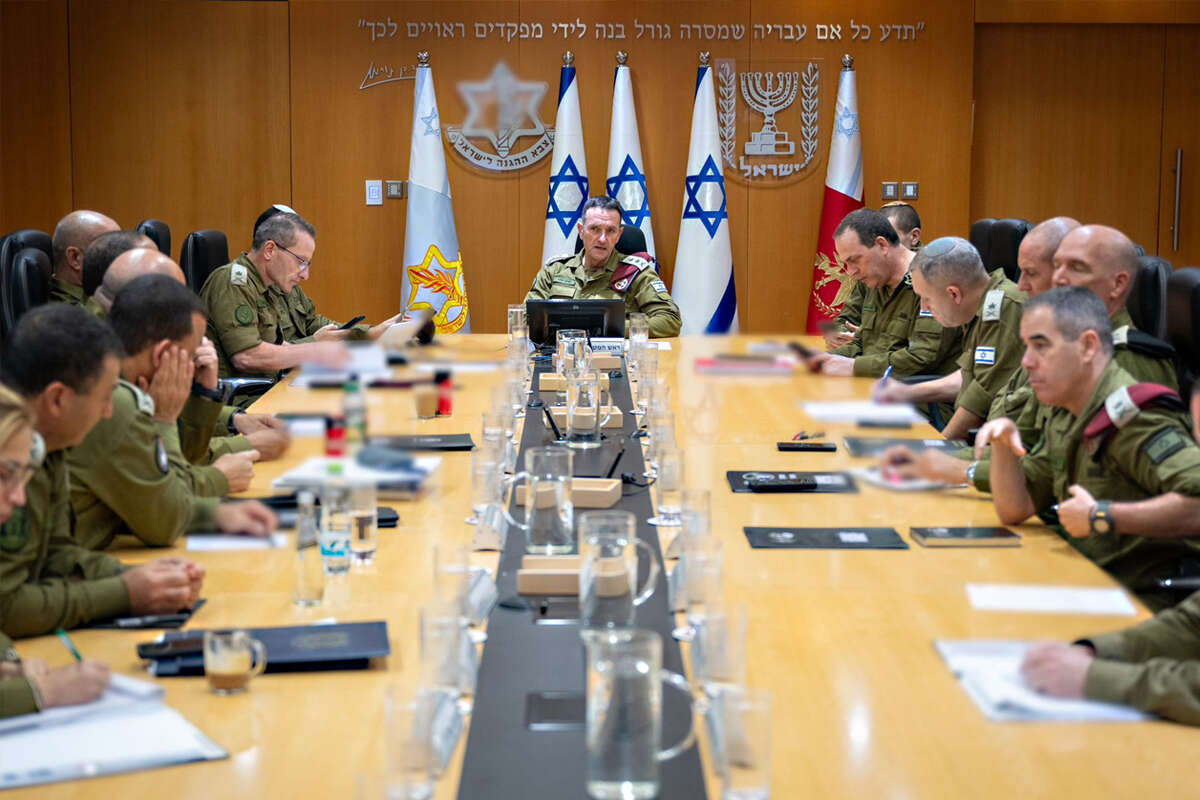
In effect, to the extent that the IDF had orders that night, they mostly concerned what must not be done. Instead of moving forces, putting the sector on alert, waking everyone up, the instructions flowing all the way from the chief of staff's office and the Operations Directorate were mainly to keep a low profile. As we will see later, even the few defensive actions that the chief of staff did ask to carry out were not fully implemented.
Why did Halevi act as he did that night? "With Herzi, knowledge is often power," said a former senior officer who spent many hours with Halevi. "I am telling you this from many close conversations with him, when he is prepared to risk intelligence sources because he believes it is the right thing to do, and when he does it in order to keep the cards close to his chest. Herzi that night was classic Herzi when there is an alert level being raised, the Herzi of 'knowledge is power.' When he says not to do anything that might endanger the sources, I translate that as: 'Do not do anything I have not approved.' I do not think that the leading consideration that night was source security, but rather his desire to hold everyone. Maybe that is the right thing to do when you are a company commander, but when you are the chief of staff, the wisdom lies in making the guys under you strong. In retrospect, Herzi used source security as a tool for his own purposes."
Is that really so? In recent weeks, we have spoken with people who know Halevi well, including people who served in the chief of staff's office, alongside a series of former Military Intelligence chiefs and intelligence officials in the IDF and the Shin Bet. The result is not only an analysis of the tragic and terrible chronology that led to IDF decision-making that miserable night. It is also a mini-professional biography of Halevi: commander of Sayeret Matkal, head of the Military Intelligence Operations Division, head of Military Intelligence, perhaps the officer with the deepest intelligence background in the IDF on the eve of Oct. 7, a man known throughout the IDF as someone for whom the security of intelligence sources was closest to his heart.
"Throughout his career, Herzi participated in and commanded dozens of super-sensitive intelligence operations," said a person who knows him well. "You would not believe the places he has been, how close he came to death in order to create intelligence access. When you understand the scale of the danger in such an intelligence operation, the amount of investment required, the effort involved in building the operation, you make a decision to 'burn' an intelligence source with a great deal of stomach pain."
The sources dilemma
Risk management in the realm of intelligence sources is an ancient issue. "It is one of the well-known and well-researched phenomena," said Col. (res.) Dr. Ofer Guterman, an intelligence researcher who had a long career in the Military Intelligence Directorate. "Troubling intelligence is received, for various reasons that are good in themselves caution is exercised in using the information, and this can lead to a delay in issuing a warning or to harm to our forces. This phenomenon has been researched extensively, because it is part of the tragedy of the victim."
The most dramatic event in this context, which came up repeatedly in almost every conversation we held, is the "Enigma" affair: During World War II, the British managed to decipher the sophisticated German code, which was operated through the Enigma encryption machine. Despite this, the British did not always use the information, and even allowed the Germans to attack their ships, so that the Germans would not suspect the code had been cracked. The Allies were prepared to sacrifice lives solely to preserve their intelligence advantage.
The sources dilemma, of course, did not pass Israel by. In the Yom Kippur War in 1973, the then-chief of Military Intelligence, Maj. Gen. Eli Zeira, refrained from using the "special means" that Military Intelligence had in Egypt, because of concern that activating them would lead to their discovery by the Egyptians. Col. Yoel Porat, commander of Unit 848, today Unit 8200, told the Agranat Commission that he had insisted to Zeira that he approve the activation of the "special sources," but to no avail.
"Among the gentiles in World War II, there were considerations of risking human life and preventing sources from being burned," Porat, a Holocaust survivor, told the commission, referring to the Enigma affair. "In the State of Israel, and rightly so, when it is possible to save people and the price is burning sources, we save people."
In its final report, the commission criticized Zeira and determined: "The existence of the sources is not an end in itself. If concern for their existence overrides the willingness to use them when needed, they lose all value, and an error that leads to the non-use of a vital intelligence source at the moment of greatest need is a serious professional failure."
Despite the commission's ruling, as far as we were able to determine, the IDF has not developed, from then until today, a doctrine regulating risk management regarding intelligence sources. "There is no orderly operational doctrine here, no formula with clear rules," said a former senior officer. According to one former Military Intelligence chief, "That is exactly why source-security considerations are decided at the highest levels. Because of the sensitivity and complexity, it usually goes up to the level of the head of Military Intelligence, the Mossad chief or the Shin Bet chief, whose judgment determines the matter." Another former Military Intelligence chief said: "Anyone who has not been inside the process itself cannot understand how complicated this dilemma is."
"There is no written doctrine on preserving sources," said Col. (res.) Ram Dor, former head of the Information Security Department in Military Intelligence, who dealt extensively with the issue in that role. "The more relevant definition is 'policy.' How do you decide what the policy is? The most basic level is the classification of the source. The higher the classification of the source, meaning the greater the operational and technological effort involved in obtaining it and the higher the value of its information, the higher its classification. And the higher its classification, the more compartmentalized it is and the fewer people are exposed to it."
Dor cites as an example an incident that occurred during the IDF's presence in southern Lebanon, when he was the intelligence officer of Division 91. "One day, intelligence was received about an explosive device planted by Hezbollah on the route leading to the Beaufort outpost," he said. "The method in those days determined that the validity of a warning about an explosive device lasted as long as the battery life keeping the device alive, because we knew that after a certain number of days the batteries would run down."
Following the information about the explosive device, all ground entries and exits to and from the Beaufort were halted completely. Supplies to the outpost were transported by helicopters, and soldiers did not go home. "After several weeks, an operation by the Shaldag Unit was carried out, which required inserting the unit's rescue force into the Beaufort outpost," Dor said.
"For that purpose, it was decided to open the route, on the assumption that the batteries of the explosive device had run down. As the opening of the route was underway, I was with the division commander, Effi Eitam, preparing for the operation at the Shaldag Unit. In the middle of it, someone from air force headquarters came up to me and said, 'Did you see the reports from yesterday?' The reports had not reached me at the division, because the information came from a very sensitive technological source to which I was not exposed. While I was running with the report in my hand to show the division commander, my beeper sounded. I discovered that the opening of the route had begun, and that an Oketz soldier and his dog had stepped on an explosive device. Both were killed. This is an example of unnecessary compartmentalization that cost lives and led to an adjustment in the policy for using sources."
The battle of wits over intelligence sources reached its peak in the IDF's struggle against Hezbollah, probably its most sophisticated enemy. As we reveal for the first time, during the Second Lebanon War in 2006, the Mossad provided information regarding the locations of the organization's long-range missiles, which could reach Tel Aviv. "In those days, Hezbollah had only a few dozen such missiles," said a senior Military Intelligence official from that period.
"If we had attacked them, we would have protected Tel Aviv, but with high probability Hezbollah would have understood how the information about the missile locations had leaked, and the Mossad was not willing to hear of that." At a certain point, Chief of Staff Dan Halutz, together with Military Intelligence chief Amos Yadlin, went to Prime Minister Ehud Olmert and demanded that he allow them to attack Hezbollah's missiles. Olmert approved it, to the displeasure of Mossad officials.
The issue of intelligence sources in Lebanon continued to trouble IDF intelligence officers in the following years. According to an officer who until recently served in a senior role in Military Intelligence, "I looked with reverence at sources into which many years had been invested, and I was very afraid they would be burned before we had managed to warn of the Third Lebanon War. I explained to decision-makers as best I could the importance of preserving them. Because let's say a strategic source whose purpose is to prevent a war suddenly gives you a warning about an attack, not even against an Israeli target. Do you risk it in order to save lives? It is a tragic decision, no matter which decision you make."
The solution
The person who dealt throughout his career with making these tragic decisions was Herzi Halevi. Sources who know him well say the formative event in his life in this regard took place in Lebanon, when he was commander of the Paratroopers' Orev unit.
In May 1993, a small force under Halevi's command set out to lay an ambush in steep, dense terrain near the Sujud outpost in southern Lebanon. After the force took up positions and morning came, Halevi and his men were hit by massive terrorist fire from several directions. One member of the force, Lt. Zohar Halmish, was struck by a terrorist bullet while lying right next to Halevi and was killed. Later, the commander of the rescue force, Lt. Tzur-Zvi Yisrael, was also killed. Halevi himself was struck in the face by shrapnel.
Only after they were evacuated from the area did it become clear that Halevi's force had laid an ambush inside an area well controlled by Hezbollah, what would later become known in the IDF as a "nature reserve." "Halevi entered a killing zone without intelligence," said one of his acquaintances. "It was seared into his flesh. He understood the importance of intelligence."

In the early 2000s, Halevi was appointed commander of Sayeret Matkal, the IDF's elite special forces unit, and led additional operations whose entire purpose was intelligence gathering. The main target he dealt with was Hezbollah, against which Halevi and his men worked extensively to bring in high-value intelligence that would give the IDF an advantage in its struggle against the terrorist organization, which was growing stronger with Iranian funding.
Halevi continued to focus mainly on Hezbollah when he was appointed head of the Military Intelligence Operations Division in 2009. As head of that division, the main Military Intelligence body responsible for managing the inventory of intelligence sources, he tore his hair out every time it became clear that Hezbollah had understood that the IDF had one kind of intelligence access or another. "Herzi knew Hezbollah was reading us," said a former source in the Operations Division, providing an example: "One time, we discovered through an intelligence source that Hezbollah wanted to fire anti-tank missiles from the Naqoura area at the navy's Dabur patrol boat as it patrolled along the border. The information reached the navy, and the Dabur immediately withdrew. Hezbollah saw that and responded accordingly."
On another occasion, intelligence was received about a rocket barrage Hezbollah was planning to fire at the Galilee. The information was passed from Military Intelligence to Division 91, and the division intelligence officer decided to send text messages to all the local security coordinators in the area to warn them of what was expected. "The problem is that Hezbollah knows how to intercept text messages, and it understands that we are sitting on one of its operational channels," the same source said. "Again, the channel was shut down. Herzi thought he was going to lose his mind."
Halevi is a practical person. As head of the Operations Division, the central Military Intelligence official responsible for managing the stock of intelligence sources, he began developing a new method designed to protect the Intelligence Directorate's most important assets. To this day, Halevi is the IDF officer most closely identified with this method, which for our purposes we will call here "the mechanism."
"The mechanism was born as a solution to the problem of burning sources," explained a former intelligence official. "The idea is to use intelligence, but in a cautious, smart way, in order to preserve an advantage over time. If, for example, I know that tomorrow a rocket barrage will be fired at Shlomi, and at that moment I put the entire sector on alert, Hezbollah understands that I am onto it. Next time, I will not have that day to give Shlomi an early warning. The mechanism means using intelligence today, but also tomorrow."

As part of "the mechanism," which was developed and managed in the Operations Division under Halevi, a person was assigned in each theater whose job was to mediate the intelligence flowing from Military Intelligence to the field ranks, sometimes only partially, so that the existence of the intelligence sources would not be exposed to the enemy. Not everyone liked Halevi's approach. Once Operations Division personnel prevented sensitive information from reaching the field ranks, including even division commanders and senior officials, they were perceived as people trading in information. Senior IDF officers even marked Halevi at the time as someone using his position and the knowledge he had accumulated through it to advance in the military hierarchy.
"Herzi made sure to compartmentalize the commands and divisions in an extreme way," said a senior IDF officer from those days. "He argued that 'the commands are not responsible and they will endanger our sources.' As head of Military Intelligence, when one of the major generals would come to a General Staff meeting and start talking about intelligence materials, Herzi would go crazy. He would leave the meeting and shout, 'How can this be?' There were those who argued to him that it was good for the major generals to know the intelligence, but Herzi's worldview was completely different." Another source who worked with Herzi confirmed: "Herzi was seen as very anxious about intelligence sources, even paranoid."
Other sources who spoke with Israel Hayom claim that precisely during his tenure as head of Military Intelligence, from 2014 to 2018, Halevi was more permissive about the use of intelligence, or "pluralist," as they put it. During that period, the IDF was waging the campaign between the wars, and Military Intelligence made increasing use of sensitive intelligence information in order to strike sophisticated equipment being transferred to Hezbollah from Iran. From Halevi's point of view, the risk management justified it.
"As head of Military Intelligence, Herzi saw how Military Intelligence sources were burned one after another," said a source who held a very senior role in the system at the time. "He came to Oct. 7 with that sour feeling."
One bright spot
If Military Intelligence had excellent intelligence sources inside Hezbollah in the period leading up to Oct. 7, "we knew their invasion plan well, we were sitting on them hard," as a senior Military Intelligence official from those days put it, the situation vis-à-vis Hamas was entirely different. "Hamas was the body from which we had the hardest time getting intelligence, both HUMINT (human intelligence) and SIGINT (signals intelligence)," the senior official admitted.
"Gaza is closed, small, dense. The ability to carry out special operations inside is very limited, and it is hard to be creative. In addition, counterintelligence is everywhere. Mohammed Deif was very aware of this issue, extremely cautious." Halevi, who became head of Military Intelligence after Operation Protective Edge in 2014, understood the Gaza blind spot very well. "He took enormous risks as head of Military Intelligence in order to carry out special operations inside the Strip."
The intelligence picture in Gaza did not change much when Halevi was appointed chief of staff in January 2023. We now reveal for the first time that after he entered the role of chief of staff, a special intelligence operation in Gaza was presented to Halevi. The operation, which was complex and therefore required prolonged activity, had to be carried out during the long winter nights. Despite the great risks, and despite the fact that he had just entered the position, Halevi approved the operation, which had dragged on during the tenure of the previous chief of staff, Aviv Kochavi. "The alternative was to wait another year to carry out the operation," said a person familiar with the details of the operation.
Even after this operation, the intelligence picture did not improve much. The ability of the Shin Bet and Military Intelligence to penetrate Hamas in the Gaza Strip almost did not exist. "The reason is that the IDF did several stupid things, Hamas understood that we had access, and the intelligence source fell," said a former senior officer.
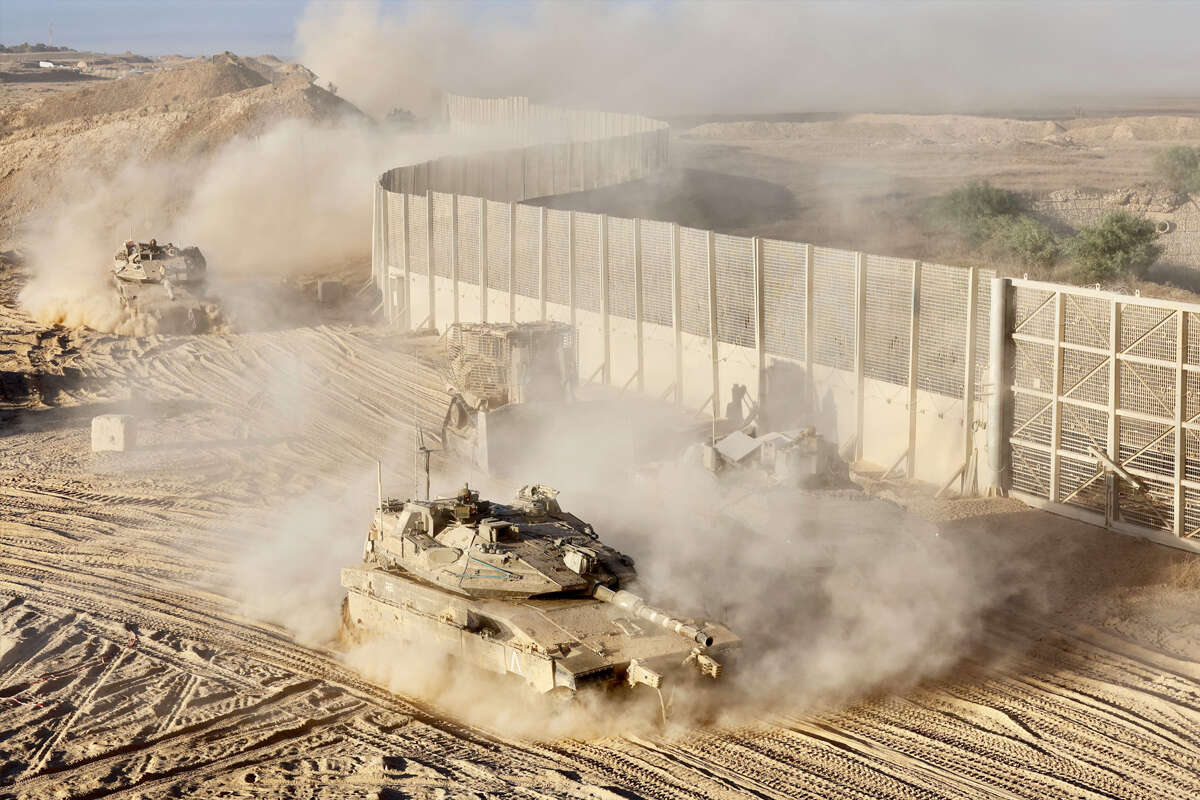
"The clearest example was during Operation Guardian of the Walls, when Halevi was between positions. At a certain point, two Nukhba platoons went down into approach tunnels. The two tunnels were attacked and everyone was killed. The problem is that no one thought about preserving the intelligence source: If there are dozens of approach tunnels suitable for a Nukhba platoon, you are supposed to attack 15 of them, not only the two in which there are terrorists. Hamas is not stupid." According to another former senior official, in the period before Oct. 7, "Hamas was very careful, it was hard for us."
But amid the great intelligence darkness surrounding the Gaza Strip, there was one bright spot: the Nukhba SIM cards. Not all the details can be told, but it can be said that the operation to plant Israeli SIM cards inside Gaza was run by the Shin Bet, was reminiscent in its characteristics of the Hezbollah pager operation, and gave Israel an insurance policy against Hamas' Nukhba forces, the organization's "special forces."
"This source was not the only one the Shin Bet had in Gaza, but its value was definitely high. Very high," said a former senior security establishment official. "The SIM operation required a very complex, long and expensive operation," said another source familiar with the details. "It was a yearslong investment. You do not burn something like that lightly."
True, the decision not to put the sector on alert on the night of Oct. 7 did not stem only from the desire to protect intelligence sources. The political echelon's instructions to preserve calm opposite the Strip, the conception that Hamas was restrained, Yahya Sinwar's brilliant deception exercise, all of these had a deep impact on the decision-making process. And still, when one understands the background, one also understands why the entire IDF walked on tiptoe that night.
"Think about it," said a former senior officer. "Herzi and Binder, Sayeret Matkal; Finkelman, Maglan; Gaza Division commander Rosenfeld, Shaldag. They all grew out of special units. They know what it means to enter the lion's den, and they understand the significance of an intelligence operation and the need to preserve its achievements."
And there was another event that preceded Oct. 7 that may provide an additional explanation for the failure of the IDF and Halevi that night. In March 2023, Military Intelligence received intelligence from a sensitive source about an attempted infiltration by two Hezbollah terrorists from Lebanon into Israel. Chief of Staff Halevi treated the intelligence with great seriousness. He went up to Northern Command and personally supervised the preparations to thwart the infiltration. In the discussions, the possibility was raised of only disrupting the infiltration, based on the understanding that killing the terrorists could lead to a round of escalation with Hezbollah. Halevi decided to thwart the infiltration completely, meaning to kill the terrorists, based on the understanding that such an infiltration into Israeli territory was crossing a red line.
As we publish for the first time, Halevi, who as usual wanted to respond without exposing intelligence sources, ordered several ambushes to be placed along the border fence, and for this to be done only after nightfall, so they would not be exposed. At the same time, he demanded that roadblocks be set up on the roads leading south from the border fence as quickly as possible. These roadblocks were meant to be deployed inside Israeli territory, in an area not accessible to Hezbollah observation, and therefore Halevi approved placing them in daylight.
As fate would have it, the terrorist sent by Hezbollah crossed the border fence at last light, moments before the ambushes were set, carrying a folding electric scooter and an explosive device. The second terrorist, incidentally, got cold feet and returned home. Despite Halevi's orders, Northern Command delayed setting up the roadblocks on the roads leading south from the border. The terrorist, who was not identified when he crossed the fence, spent the night in a forest inside Israeli territory, and early the next morning, before the roadblocks were set up, rode the scooter all the way to the Megiddo Junction and detonated the device there. The grave incident ended with one person seriously wounded, and the terrorist was killed after a chase as he tried to return to Lebanon.
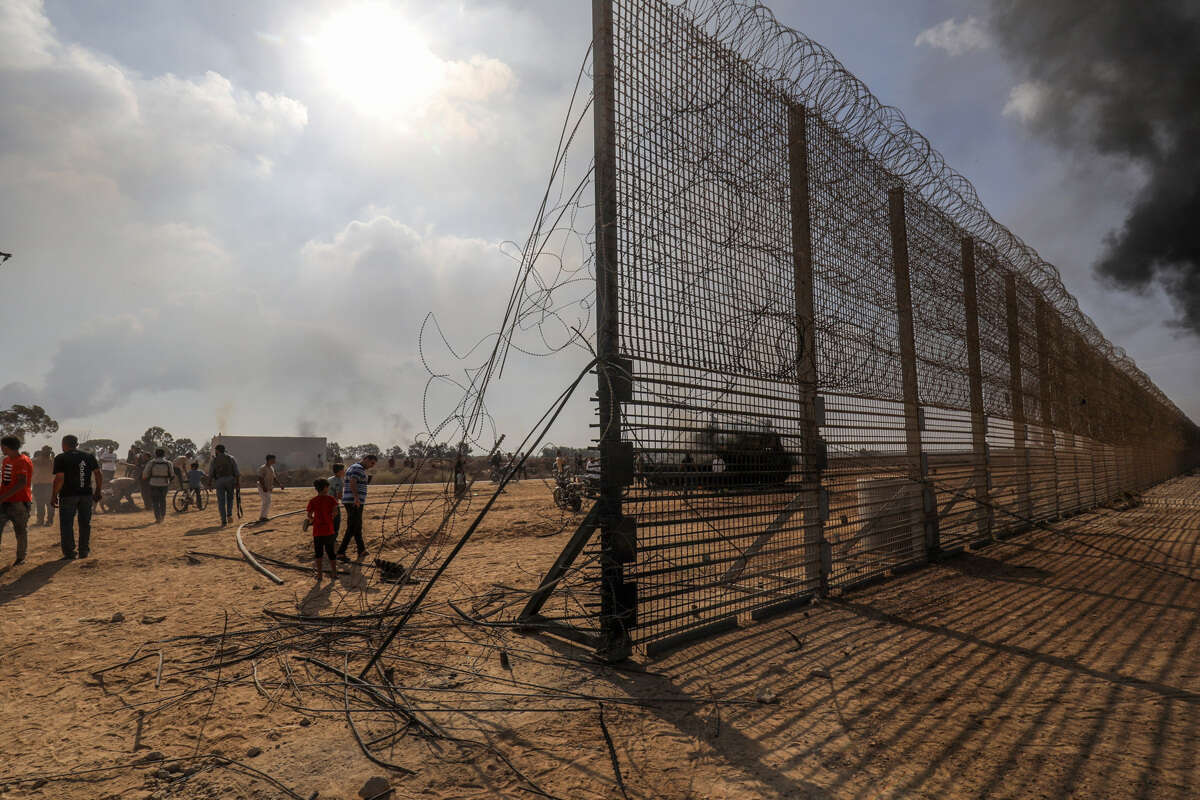
As noted, on Oct. 7 as well, some of the orders Halevi issued were not carried out. For example, no ground force was sent to the opening of the tunnel in the southern sector, as he had demanded. No reinforcement was sent to Zikim Beach either, after a check by Finkelman found that a squad from the Golani Brigade was in the sector, reinforcing the beach routinely every morning. That squad, according to IDF investigations, "did not seek contact" when Hamas' attack began, and by the end of the day 19 people had been killed at the beach. Halevi's instruction to "receive the morning forcefully" was also not translated into action on the ground.
A source familiar with the IDF investigations claims that Halevi's emphases were conveyed by Finkelman to division commander Rosenfeld in a phone call, but Rosenfeld sounded complacent during the call. "Rosenfeld and his intelligence officer insist that nothing will happen. Throughout the entire night, Rosenfeld did not even enter the intelligence operations room once," said a source familiar with the Oct. 7 investigations.
And yet, in the short time between the end of the chief of staff's call and the start of the attack, about two and a half hours in all, Rosenfeld did call the commander of Ashdod Naval Base and ask him for reinforcements for Zikim Beach, and he sent a small Tzora boat to the area. The division commander made one more decision himself: He assumed that if something did happen during the morning, it would be an explosive device planted on the fence, or an anti-tank missile fired at the division's forces while the route was being opened. Rosenfeld therefore instructed the brigade commanders under him, in a phone call held in the small hours of the night, not to open the route during the morning and not to approach the fence. Other than that, no commander in the division received any special instructions.
The rest is history.