Uranium approved
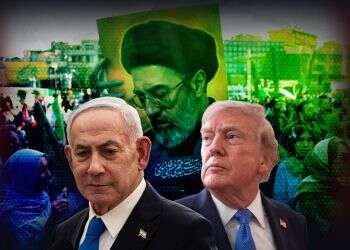
It wasn't October 7th, but June 7th that threatened to become the gravest threat to Netanyahu's future. Iran attacked with missiles, Trump demanded no retaliation and backed this up, in his usual fashion, with a barrage of phone calls, interviews, and tweets. And then came the phone call. "A man's gotta do what a man's gotta do," the Prime Minister told the President. Shortly thereafter, the planes were en route east.
Until April, Netanyahu enjoyed a massive advantage over his rivals regarding his relationship with Trump and the dividends it paid. The achievements of Operation "Am Lavi" in June 2025 were a matter of consensus, and near-total support accompanied the first weeks of "Shagat HeAri". When a ceasefire was declared, completely contrary to Israel's position, that advantage evaporated. The heavy toll in blood in southern Lebanon, the return of the state of emergency in the north, and growing Iranian audacity threatened to turn it into a liability. Opposition leaders are relentlessly hammering him over the lack of a strategy.
According to their logic, was Netanyahu supposed to say "no thank you" to a US President eager to act together against the most formidable enemy Israel has known since its founding? To refuse the stripping of 300 billion dollars from Iran's assets, including most of its military assets, nuclear facilities, and missile factories? One can also be skeptical of the claim that Israel should have destroyed the Dahiyeh at all costs, especially when it comes from those who suggested throughout most of the Gaza war to fold, halt, and bow to every American dictate.

There is, however, one critical turning point where things could—and should—have gone differently. This concerns the choice of the primary objective of the latest operation. Israel went to war after war to stop Iran's nuclearization process; toppling the regime was merely a welcome byproduct.
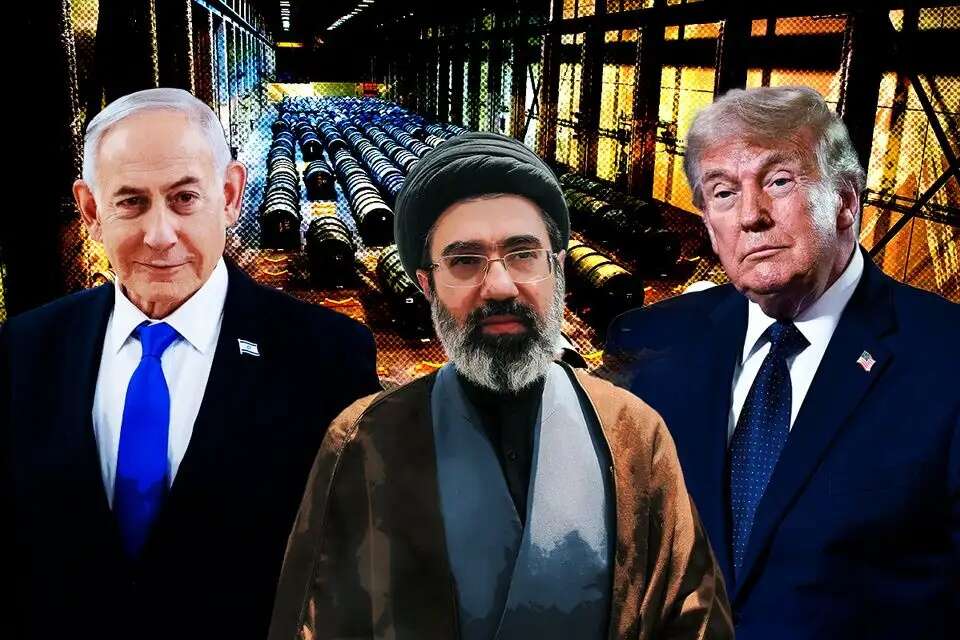
"We should have pushed much harder," two senior defense officials—one former, one current—said this week regarding a military operation to seize the enriched uranium. It was possible, it was well within our grasp, and it was on the drawing board. Instead, we spread ourselves too thin across massive, destructive strikes that failed to deliver total victory. Moreover, because we kept waiting for the possibility that such an operation would be approved, we refrained from other actions that would have damaged the nuclear program. Thus, we ended the war with the assassination of a few more nuclear scientists, undoubtedly important, but not a game-changer, yet without a massive, irreversible achievement. In that case, criticism over the inability to topple a regime from the air, along with and talk of various Kurdish uprisings, sounds entirely reasonable.
Imagine if we had done that, they say, and then ended the war with the sanctions in place, the Straits of Hormuz closed, and Samson's locks thoroughly shorn.
Is the window closed? Operationally, no. The obstacle was and remains the Republican post-trauma over boots on the ground. But the impossible limbo in which the President finds himself, between a justified and absolute refusal of an agreement that includes lifting sanctions and paying billions, and an understandable reluctance to resume fighting, could lead him to say that the uranium operation is a go.
Alignment of intentions
Netanyahu's advisor, Jonatan Urich, has tweeted against Naftali Bennett 58 times since the beginning of the year, and against Gadi Eisenkot only 14. But in the month of June alone, the tables turned: nine times against Eisenkot, and only seven against Bennett. Ladies and gentlemen, what a turnaround! It's a better indicator than Polymarket.
The content of the tweets is no less interesting than the recipient. "Get this through your heads," says the narrator, "Gadi has no way to form a government without the Arabs." So why him, and why this specific topic?
Because Likud under Netanyahu—and this is the 12th time it's happening—always boils down to three mega-campaigns. One: "A League of His Own" in diplomacy and security. Main features - posters of Netanyahu and foreign leaders towering ten stories high on Metzodat Ze'ev or along the Ayalon Highway. Two: Against the deep state and the media. Past examples – "They won't decide" featuring the faces of four journalists, or the forgotten yet effective "Netanyahu, Against All Odds." Three, the Arab angle: Tibi or Bibi. It worked in '96, there is no reason to think it won't work in '26.
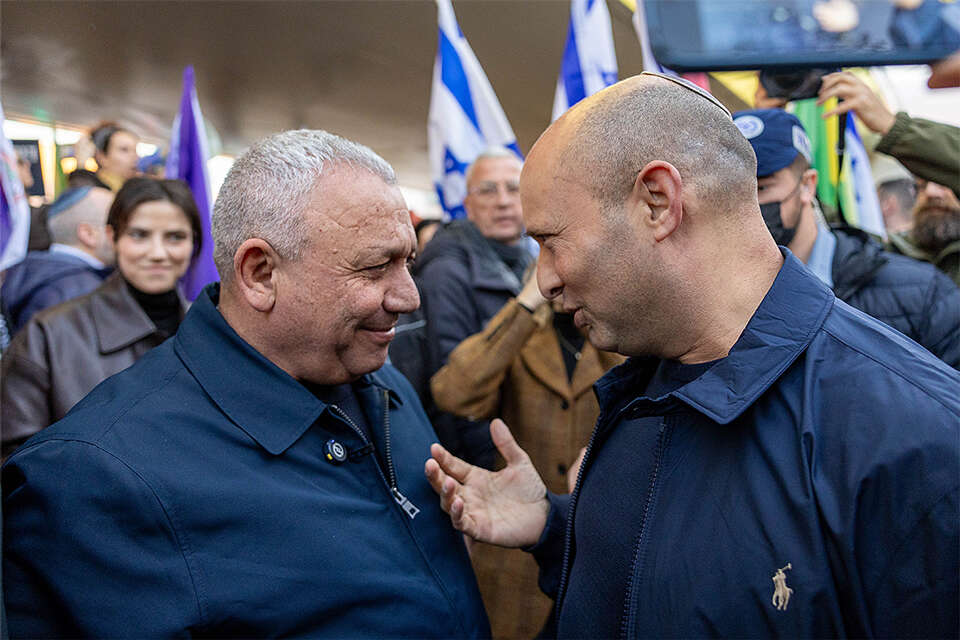
A campaign of the first kind was meant to be the crescendo of the current elections. A visit by the popular Trump, right before the elections, coupled with a heavy-handed campaign pushing for his election. But several things have happened since. Trump's stock has fallen as his enthusiasm to return to war with Iran waned. He is loved, but less so. In addition, the question of the campaign's effectiveness arose after a parallel failure in Hungary, where Viktor Orbán was defeated despite a massive endorsement campaign from the White House. And above all, it's very difficult to run such a campaign when every night at 1:00 AM, the President calls a journalist and explains that he alone calls the shots, that Netanyahu is just following orders, along with other insults disguised as compliments.
Moving on. The deep state narrative is a major preoccupation for a segment of the right, but not the part that is hesitating about whether to vote for the opposition. Yes, the next government will appoint an Attorney General and ten Supreme Court justices, but no, it's not a primary voter motivator.
We are left with the Arabs, who will serve as the main course of the upcoming election. Arabs for breakfast, Arabs for lunch, Arabs for dinner. Why Eisenkot? Because when it comes to Bennett, Likud has an easy path due to the former prime minister's history in a coalition with Ra'am. And primarily because this is the weak spot of the chairman of "Yashar!", who has already stated that if the bloc wins 58 seats, he will form a government ("with a Zionist majority") relying on the abstention of the Arab parties.
Bennett believes there is a multi-pronged effort to take him off the board: the left wants his votes because he is right-wing, while the right is hammering him because they prefer another generic, secular center-left Chief of Staff with enough problematic past statements to take him down. Eisenkot, for his part, actually welcomes the opportunity. As is well known, nothing gives an opposition candidate a bigger boost than negative attack ads from Likud.
Real Time
Judaism recognizes a principle known as "shchiv mera" (a dying man's deathbed declaration): what a person on their deathbed says is taken at face value, because they no longer have anything to hide.
In his current political incarnation, Benny Gantz fits this bill perfectly, a terminally ill patient who has yet to accept the announcements from all sides regarding his imminent departure. It is precisely there, below the electoral threshold, that he shares his truth about what he experienced during seven years in the political system, which equates to thirty years for any other politician from a more sane era. There, his new book is titled We, yet he is pictured on the cover completely alone.
In this uninhibited version, the one operating below the electoral threshold, Gantz goes on a score-settling spree with all his former partners in the bloc. He accuses Bennett of hypocrisy ("Are you out of your mind? Who said to conquer Gaza? Take it off the table," Bennett is quoted as saying during Operation Protective Edge). He characterizes Liberman as having a "disappointing and dangerous inability to separate the personal from security matters," and recounts how he sat across from Netanyahu like a scolded schoolboy, uttering just a single sentence so he could later issue a press release. He lashes out at the media, asserting that "the hatred of Netanyahu led journalists to publish delusional things purely out of a desire to hurt me." There is even a very sharp observation about Einav Zangauker and the way she was weaponized by the Hostages Forum for political reasons. Gantz describes how she begged him not to leave the government, only to immediately issue a press release demanding he do exactly that.
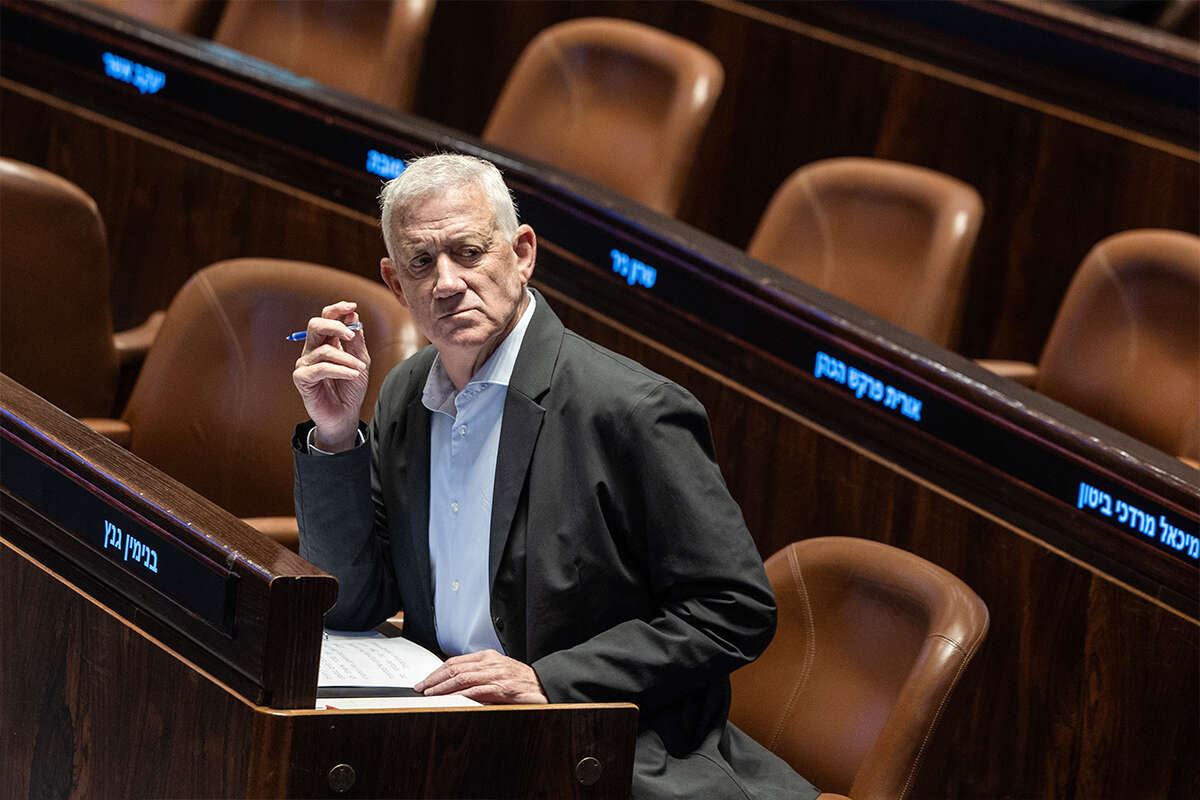
The most complex relationship of all is, naturally, with Netanyahu. Gantz does not regret entering the governments, only, perhaps, leaving the unity government. He is overly self-critical when he claims that his departure in June 2024 caused him to crash in the polls. In fact, the nosedive began even earlier, as the war grew more complicated and Bennett began plotting a comeback. What is surprising is that Gantz beats himself up for not joining a third time, following the right's landslide victory in the last elections. Perhaps that would have provided a counterweight to Ben-Gvir and Levin, and the country wouldn't have been torn apart.
"Don't accidentally trigger a war," he scribbled in a note to Netanyahu during the dramatic cabinet meeting on October 11, 2023, when both fought together to prevent a preemptive strike on Lebanon. When they parted ways, over a phone call, Gantz opted for Netanyahu's preferred language, English: "It was a hell of a ride," he told him. God willing, and if the alliance with Dedi Simchi, Aliza Bloch, and perhaps even Moshe Kahlon pans out successfully, they might just have one last dance.
Something non-political
When a person wakes up in the middle of the night to an early warning alert from the IDF Home Front Command, what crosses their mind? I, for one, suffered a panic attack over the real threat: Another month without childcare.
When we talk about war, everyone envisions something different. Most Israelis, for instance, aren't even worried about getting hurt—only 37% are primarily troubled by that. The rest fear, in descending order, the economic fallout (28%), the cancellation of schools and kindergartens (14%), and an upcoming vacation abroad falling through (11%). And as for the Iranian nuclear threat itself? Is nobody worried about that right now?
It's fascinating to see how material circumstances shape perspective. Men are far more preoccupied with financial damage than women (34% compared to 22%). The same goes for young adults under 30. Those in their thirties and forties primarily fear being stranded at home trapped with the kids, whereas among older demographics, the main concern is the risk of being hit by a missile or shrapnel.
Interestingly, on this particular issue, there is no major ideological divide between coalition and opposition voters, Jews and Arabs, secular and religious. If a difference exists, it is rooted purely in socio-economic and family status. Lo and behold, at long last, something non-political.