Neither history nor catastrophe
The things written in Israel run contrary to the overwhelming majority of texts about the agreement between the United States and Iran, both in their content and in their temperature. They are a cold, cool analysis, not fire and brimstone. They are based on a conversation with a highly knowledgeable source, deeply versed in Israel–United States relations. You don't have to accept them, but they're worth reading. On days like these, it won't hurt to take a deep breath and think.
It all begins with the US midterm elections, to be held in about four months. For Donald Trump they are especially decisive. If he loses the House to the Democrats, even if Republican control of the Senate is preserved, he'll spend the last two years of his term under endless investigations and an impeachment attempt. There's no doubt he'd be impeached, because in the House, unlike the Senate, only a simple majority is required. For Trump this would be the third impeachment. The fall of the regime in Iran or the removal of the uranium would help him partially, but a surge in energy prices means an almost certain loss in the elections.
The President of the United States had two decisive cards to play. The first: a ground operation to remove the uranium — but Trump believed that at the end of the road he could always get the material out via a deal. The second: destroying Iran's energy facilities. That's what he meant in April when he threatened to erase Iranian civilization. In Israel they used a different expression: in Tehran they'll go back to lighting their homes with candles.
The problem, the source says, is that in Israel there aren't even ten people thinking about what a global energy crisis would mean. For Trump, this is the main issue on his mind. Would Iran be dramatically weakened by such a strike? Certainly. Would it definitely fall before the first week of November 2026? No responsible person can guarantee that. What this means is that the Iranian retaliatory strike would cause an energy crisis with oil at two hundred dollars a barrel, and from there, like a rapid chain of dominoes — inflation, loss of the House, impeachment.
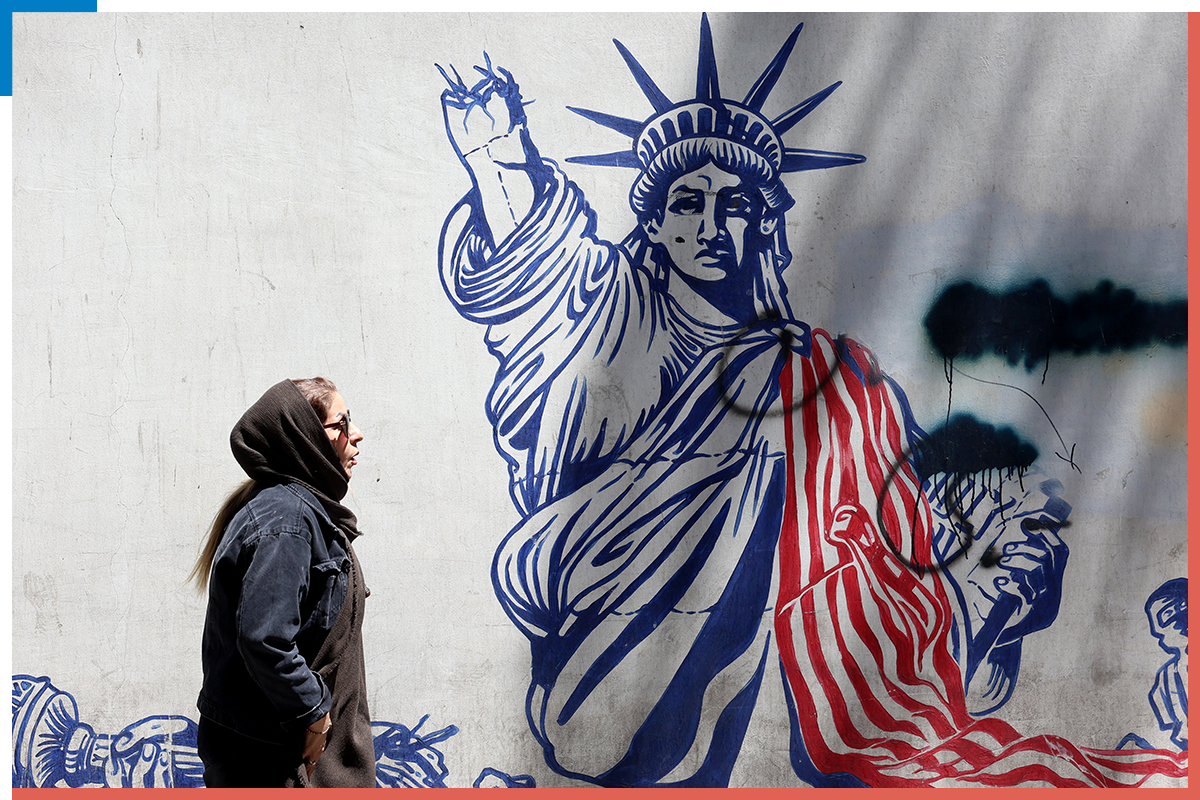
The same goes for the blockade: even assuming it continues to weaken Iran, it means fuel in America reaches six dollars a gallon and inflation climbs further, before the regime has even fallen.
So Trump is in fact fighting the Iranians with one hand tied — without the Kurdish invasion, without a ground operation, and without striking the energy infrastructure, at least until the elections.
And so the deal was born. This is not a nuclear agreement but a deal about Hormuz. And here, says the senior Israeli source, one must pay attention to something very significant regarding the clause that goes beyond Hormuz matters and into money: it's a temporary easing of the sanctions on Iran, not their permanent removal.
What this means is that from the moment of signing, one hundred percent of the economic pressure on the United States comes off, but only a few percent of the economic pressure on Iran. There's disagreement over what damage Iran suffered in the war — those who minimize it estimate three hundred billion dollars, those who maximize it, a trillion. Either way, the benefit to Iran is like filling an empty pool one cup at a time.
Senior figures in the Mossad expressed deep pessimism after the signing of the agreement about the chances of an uprising in Iran while the wind blows at the regime's back. The senior source is more optimistic: "It's worth remembering that even before this enormous damage, the masses went out into the streets with nothing to lose. What will Iran's citizens do in another six months when they understand the harsh economic situation is here to stay? What will the regime do?"
In the past week people have been comparing Trump's deal to Obama's agreement. The former president even needled the current one, saying it's worse. "It's not just that Israel has poor messaging, the Americans do too," the source replied. "The most important part is that the Iranians have now signed a commitment to freeze the nuclear program. That's dramatic. In a situation of 'no deal and no war,' as for example after Operation 'Lion's Roar' in June 2025, they kept advancing their nuclear program. Under Obama's deal they could continue, with permission and authority, with many elements of the nuclear program."
And as for Hormuz? For now everyone is finding workarounds. The weapon of closing the strait will only work for the Iranians if they use it and Trump does nothing. But what would happen, for example, if they closed the strait a month before the elections? One can only imagine the President's reaction. Here is the fundamental clash of interests between Trump and Netanyahu: both face elections in the fall. The first needs an agreement to keep his chances of winning; the second needs to avoid an agreement for that very same purpose. Trump, unsurprisingly, chose himself.
The Lebanon issue remains. The main difference now compared to the situation twenty years ago, at the end of the Second Lebanon War, and a year and a half ago, at the end of the previous round, is that the IDF is deep inside the territory. "Quiet will be answered with quiet" is not Israel's desired conclusion for the long term, but it is for the short term, because of Hezbollah's difficult condition and the complex situation of the US president.
"The Israelis have to understand that there is no scenario in which Israel alone dismantles Hezbollah without conquering all of Lebanon or Iran collapsing, and therefore until further notice the story is deterrence. You can create a situation in the coming months in which you've preserved the relationship with the US, let the agreement with Iran collapse on its own without giving an excuse, locked in the reality that no one fires into your territory, and the soldiers keep operating against military buildup in the new security zone. You need to wisely secure the American green light to act — not act nonstop and get cast as the neighborhood bully who has to be reined in.
"And in a broader view, the lesson of October 7th is to identify emerging threats not only in security but in policy, and to preempt them with initiatives. For initiative, you need room to maneuver. To say 'we'll stay forever in Lebanon or Syria' means Israel is marked as the bad guy and the pressure will be on you, that's the room the cabinet ministers must give the prime minister even in an election year." A day after we spoke, the defense minister and the national security minister said exactly that.
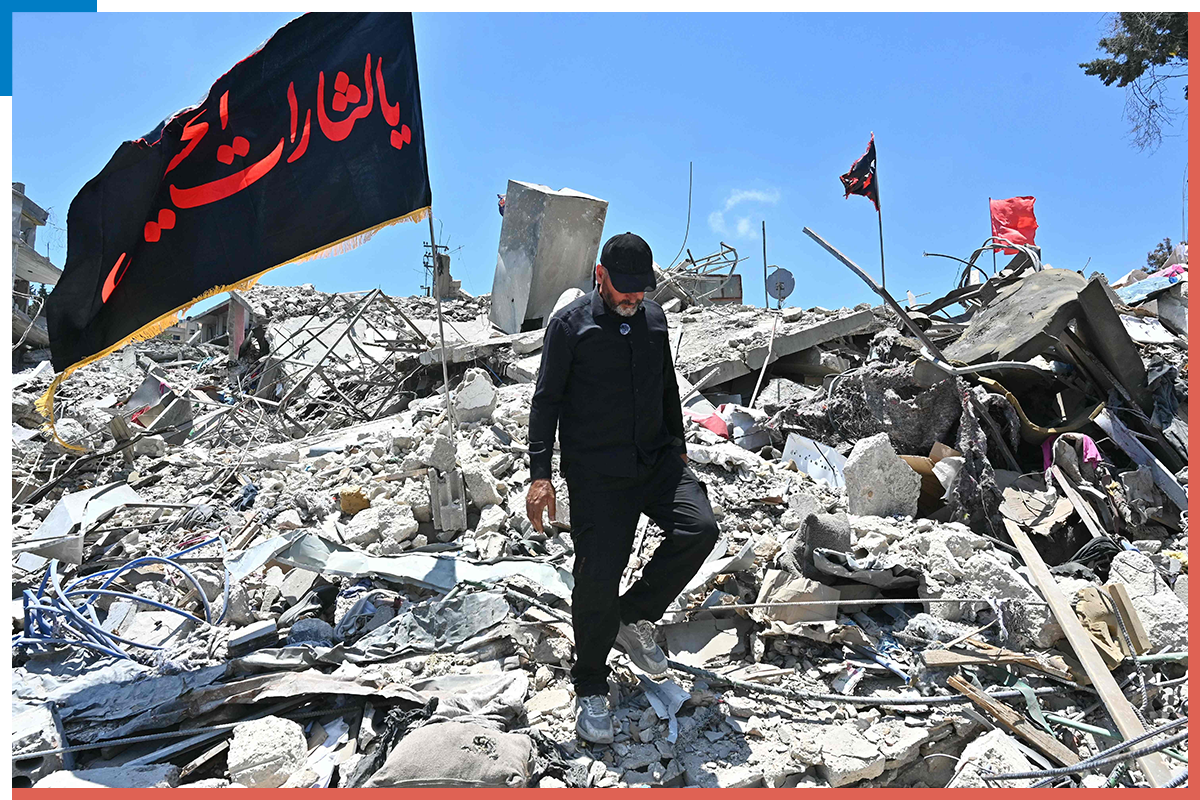
"And another lesson: it's never one and done, or in Hebrew 'one blast and we're finished.' After the Six-Day War the Messiah didn't come, and after Yom Kippur the state didn't end. We continue the struggle."
And let's look at the bigger picture, the source suggests before concluding. Two and a half years ago there was an existential threat to the state in the form of the nuclear program and the proxies. Now there isn't. Moreover, Israel has shown the Iranians twice that it is prepared to strike them if it senses they're advancing toward a nuclear weapon.
On the ballistic front — "a conventional-level threat," as the Chief of Staff defined it last year — they had thousands of missiles and a monstrous production system. Now a thousand missiles remain and there's no production system; it will take three to five years to restore it to its former state. The production lines for the interceptors will be ramped up to a furious pace during the agreement period. So there's still time, and time works in favor of whoever uses it. "Is this a historic agreement? No. But it's certainly not a catastrophe."
A more troubling element, from Israel's perspective, hid in the harsh statements of the President — and even more so of his vice president — against the state, its prime minister, and his cabinet ministers. "It's not Trump's strategy to distance himself from Israel. The relationship with Trump is 24/7 work. For years there were big crises that never became known because they were handled behind the scenes. The new thing this time is more the product of his decision to answer every unidentified call when there's a journalist on the other end. Vance himself had to defend the agreement against the two main parties that opposed it, which are Israel and its supporters in the Republican party. He chose rhetoric that doesn't help him politically.
"Here's one piece of advice for Israel: what would happen if, for once, we stayed silent? True, this week Trump also attacked Italy's prime minister Meloni, and she replied sharply. But Italy doesn't have a two-front war on its head, and it can also count on the support of America's Democrats. For us it's nothing but a loss. Stay quiet, breathe, give it time. That's what needs to be done."
Split in the making
What's been happening over the past two weeks around Netanyahu and the Likud has a name in meteorology: a perfect storm. Fortunately for them, it's occurring 120 days before the elections — a point by which no election campaign this century had ever started.
Trump's agreement with Iran undercuts Netanyahu's political reason for being. The blood price in Lebanon, despite the massive blows Hezbollah is absorbing, damages the arena where a total victory was achieved last year. The ultra-Orthodox road blockades and the weekly legislation in the Knesset repeatedly expose, to the undecided, the Achilles' heel of the entire bloc. If this is the situation on election day, Netanyahu is in trouble.
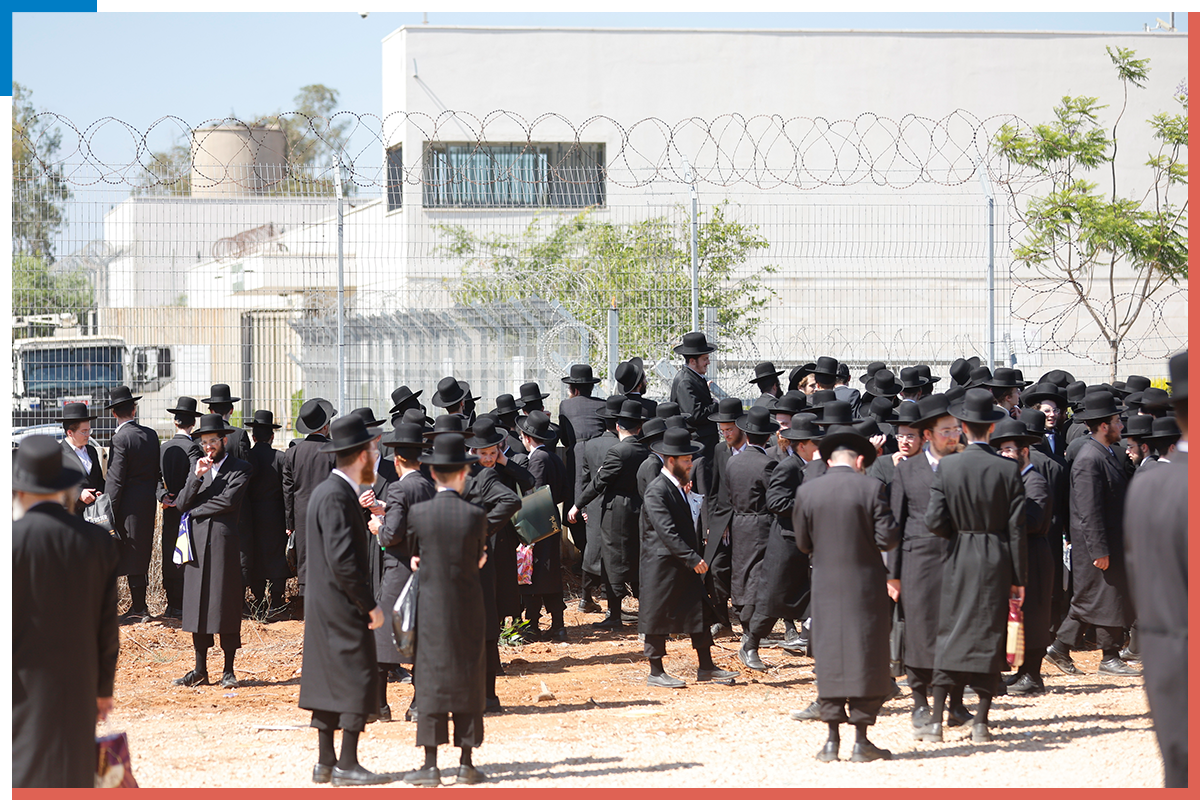
One of the reasons the right usually does better at the ballot box than in the polls is the ultra-Orthodox vote. Take a sky-high turnout rate, multiply it by the highest birth rate in the Western world, and you've got another two seats. In the last elections the ultra-Orthodox parties won 17.5 seats, which became 18 thanks to the Bader-Ofer law for calculating surplus votes. In most polls today they get only 16 seats, so ostensibly — there are another four easy seats here.
Unless the surprise works in reverse this time. Ultra-Orthodox politicians, journalists, and influencers point to the possibility that turnout will crash. The ultra-Orthodox public is bitterly disappointed with its elected officials, most of whom have been around since the last millennium. It blames them for the sanctions and the arrests and believes they failed badly in the outgoing term. The legislative blitz described in the general press as ultra-Orthodox greed and hubris is more a panicked dash by Shas and United Torah Judaism to prove to their voters that they're doing something after all. That's also why the establishment-aligned Agudat Yisrael initiated, two days ago, the massive disruptions on Israel's roads, in cooperation with the fanatic Jerusalem Faction.
This joint disruption raises an interesting possibility. Aryeh Zisman, an editor at "Yated Ne'eman," suggested two days ago that it points to a split between the Lithuanian Degel HaTorah and the Hasidic Agudat Yisrael. And how would Agudat clear the electoral threshold? Thanks to the Faction, tens of thousands of whose members boycott the elections. The mutual hatred would drive everyone to the ballot boxes, in a replay of the 1988 elections. Then too the two ran separately and won almost double the votes they would have together, giving birth for the first time to a significant ultra-Orthodox force.