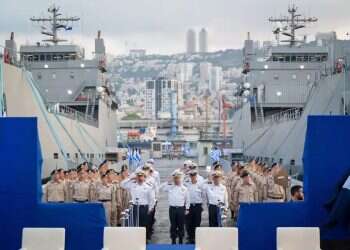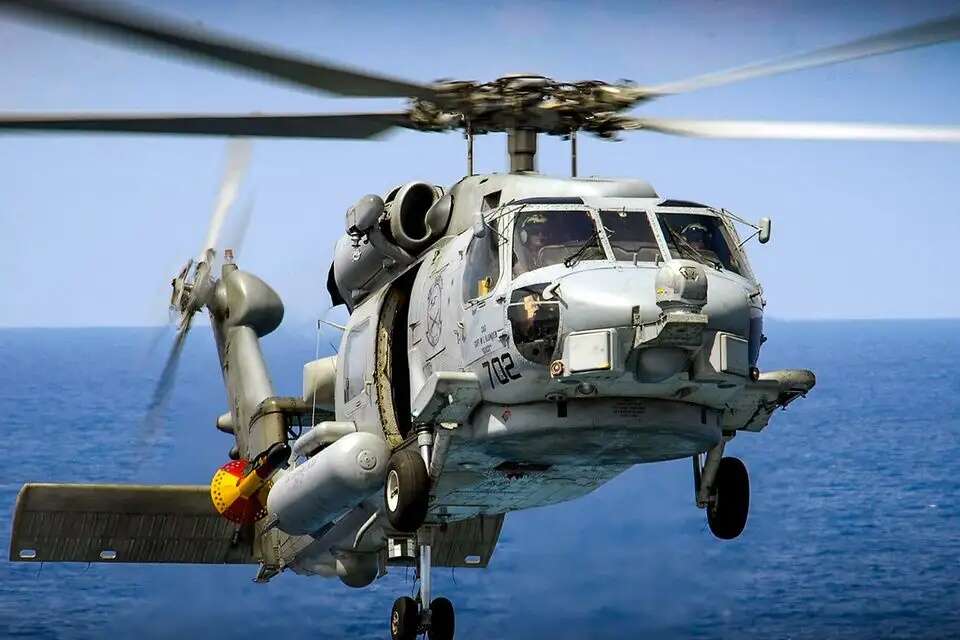
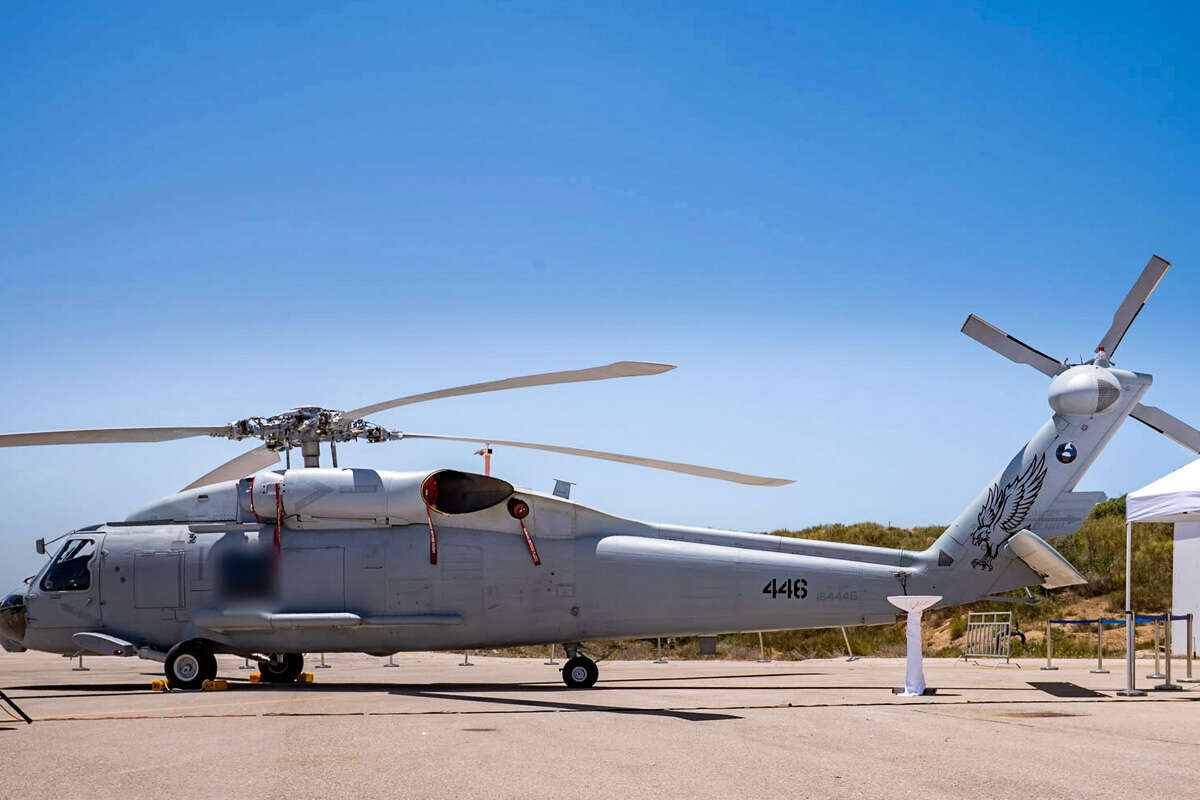
The IDF reopened Squadron 193, which operates Israel's maritime helicopters, on Tuesday, about a year after the squadron was closed when the "Atalef" helicopters were retired. Three Sikorsky SH-60 Seahawk helicopters recently arrived in Israel and have been given the Hebrew name "Shalach," meaning "Osprey." They will replace the Atalef helicopters.
Two of the aircraft are currently undergoing operational integration work at Israeli defense companies. They will then undergo a series of flight tests before entering service. Two additional helicopters are expected to arrive in Israel by the end of the year.
The ceremony was held Monday at the reestablished squadron's home at Palmachim Air Force Base. Israeli Air Force Commander Maj. Gen. Omer Tischler and Israeli Navy Commander Maj. Gen. Eyal Harel attended.
The retirement of the Atalef fleet about a year ago left the Navy without a maritime helicopter, reducing its operational effectiveness. "This created an operational gap that was not good and that we did not expect to last this long," said the squadron commander, identified only as Lt. Col. B. due to military security restrictions. "Ultimately, however, the new helicopters are an incredible platform with enormous operational potential for both the Air Force and the Navy."
B. previously served as the squadron's deputy commander when Squadron 193 operated the Atalef helicopters. In recent months, he commanded the team responsible for establishing the new Shalach unit and has now assumed command of the squadron.
The new helicopter effectively doubles the Atalef's capabilities in terms of range, flight endurance and capacity to carry personnel and equipment. While the Atalef carried two aircrew members and a naval reconnaissance officer, the Shalach will also carry a flight mechanic. It will be able to transport more than 10 troops in its cabin.
The potential uses for troops taking off from the middle of the sea range from boarding and taking control of vessels to inserting forces deep inside enemy territory. The Seahawk will also allow medical personnel to treat wounded troops inside the aircraft. It could, for example, collect equipment from a third country and deliver it to an Israeli Navy vessel operating far from Israel.
"The helicopter will significantly expand the independent capabilities of the Air Force and Navy and reduce both the need for and dependence on outside parties," B. said. "It will be able to compile a maritime situational picture, assist in search-and-rescue operations, resupply ships, transport troops and perform many other advanced missions."
The commander of the Navy's missile boat flotilla, Squadron 3, identified as Col. T., said the helicopter would provide unique capabilities for operations in distant theaters.
"It will enable us to sustain operations, deliver spare parts and transport troops who can conduct boarding operations on ships," he said. "We could not do that with the Atalef. Today, everyone understands the importance of the maritime domain, particularly in light of the confrontation in the Strait of Hormuz and the Bab el-Mandeb Strait," T. added.
"Ninety-eight percent of the goods entering Israel arrive by sea. We must be able to control the maritime arena, know who is operating there and why, and determine who and what can enter or leave Israel's ports. We have recently been operating without a maritime helicopter," he said. "It is like entering a firing range with an M16 instead of a sniper rifle. The helicopter can double our operational range, identify targets and deliver weapons."
The new helicopters will be able to take off from and land on the Navy's Sa'ar 5 and Sa'ar 6 corvettes. The flight decks of the older Sa'ar 5 vessels have been extended to accommodate them.
Explaining the Seahawk's capabilities, T. said: "Suppose I want to transport a two-ton package from the territory of a third country to a ship, or move two tons of equipment from the sea to another country. Suppose I want to deliver food or spare parts to a ship. I can land the equipment in a third country, send the helicopter and transfer it to the vessel. The helicopter can transport troops and provide treatment for wounded personnel. It also has the future potential to carry weapons and conduct antisubmarine warfare. The antisubmarine capability will come at a later stage."