Israel Hayom is a media organization founded on the belief that the Israeli public deserves better journalism—more balanced, more accurate, and more reliable. Journalism that speaks rather than shouts. Journalism that is trustworthy, objective, and matter-of-fact. A different kind of journalism, offered free of charge.
The first print edition was published on July 30, 2007, and in 2010 Israel Hayom became the Israeli newspaper with the highest weekday readership. The newspaper’s publisher is Dr. Miriam Adelson. Its Editor-in-Chief is Omar Lachmanovitch, and its founding editor is Amos Regev.
Israel Hayom’s Hebrew and English websites, as well as its Android and iOS applications, provide around-the-clock news coverage, exclusive content, breaking news and updates, analysis and commentary, video, podcasts, and live broadcasts.
The digital platforms of Israel Hayom include news and opinion channels covering culture and entertainment, lifestyle, technology, sports, business and consumer affairs, health, military affairs, food, Judaism, tourism, and automobiles.
In 2021, a new Hebrew-language website and mobile application were launched to provide users with a fast, up-to-date, secure, and convenient experience.
The content of the newspaper’s print edition is also available online through a daily digital edition and can be received via newsletter.
“The Israel Hayom Clique,” the publication’s exclusive benefits club, offers website users discounts and special promotions on products and services.
Israel Hayom welcomes feedback, criticism, and suggestions for improvement from its readers. You can contact the organization by email at hayom@israelhayom.co.il
For the past 150 years, scholars and archaeologists have attempted to trace Jerusalem's northern fortification line. It's only now, through the Givati Parking Lot excavations, that this defensive system has been clearly exposed.
The 3,800-year-old fabric piece, found in caves in the Judean Desert, was colored using dye from oak scale insects, which researchers believe to be the "scarlet worm" mentioned in biblical texts.
Researchers believe the small bronze ring, which depicts Minerva – the Roman goddess of war – belonged to a woman or girl during the Late Roman Period.
"This is a world-class history-changing discovery: This find reveals to us as never before the ancient mariners' navigational skills," said the head of the Israel Antiquities Authority's (IAA) marine unit, noting that it challenges previous academic assumptions that trade during the late Bronze Age was conducted by hugging coastlines within sight of land.
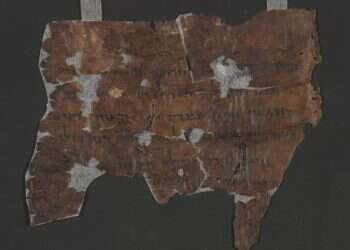
The findings contradict the long-held halachic tradition that tefillin must be dyed black – a ruling from a Talmud sage, who declared that having black tefillin was a religious law originating from Moses at Mount Sinai.
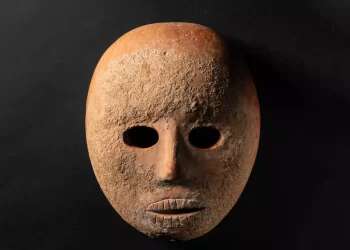
Leading archaeologists theorize the mask may have represented an ancient deified ancestor figure or primordial supernatural entity that held profound symbolic importance for the prehistoric population.
The rare find will be exhibited to the public for the first time during the free "Jerusalem Mysteries" conference hosted by the Israel Antiquities Authority on Jerusalem Day.
The coin, emblazoned with the name of “Eleazar the Priest” in ancient Hebrew script, is believed to date to the first year of the revolt, circa 132 CE.