Israel Hayom is a media organization founded on the belief that the Israeli public deserves better journalism—more balanced, more accurate, and more reliable. Journalism that speaks rather than shouts. Journalism that is trustworthy, objective, and matter-of-fact. A different kind of journalism, offered free of charge.
The first print edition was published on July 30, 2007, and in 2010 Israel Hayom became the Israeli newspaper with the highest weekday readership. The newspaper’s publisher is Dr. Miriam Adelson. Its Editor-in-Chief is Omar Lachmanovitch, and its founding editor is Amos Regev.
Israel Hayom’s Hebrew and English websites, as well as its Android and iOS applications, provide around-the-clock news coverage, exclusive content, breaking news and updates, analysis and commentary, video, podcasts, and live broadcasts.
The digital platforms of Israel Hayom include news and opinion channels covering culture and entertainment, lifestyle, technology, sports, business and consumer affairs, health, military affairs, food, Judaism, tourism, and automobiles.
In 2021, a new Hebrew-language website and mobile application were launched to provide users with a fast, up-to-date, secure, and convenient experience.
The content of the newspaper’s print edition is also available online through a daily digital edition and can be received via newsletter.
“The Israel Hayom Clique,” the publication’s exclusive benefits club, offers website users discounts and special promotions on products and services.
Israel Hayom welcomes feedback, criticism, and suggestions for improvement from its readers. You can contact the organization by email at hayom@israelhayom.co.il
If the plan is serious, it is likely to be further developed in the coming weeks, and the President and his team will have to answer several fundamental questions. From Arab states' opposition to the enormous cost for American taxpayers, the major challenges on the path to implementation.
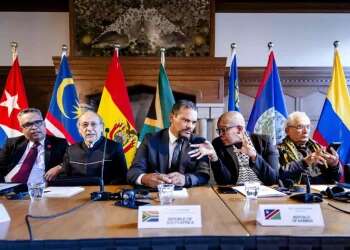
Nine countries from the Americas and Africa have announced the formation of a coalition aimed at combating Israel on the international stage. The group plans to push for the enforcement of arrest warrants against senior Israeli officials and has declared economic sanctions. What are these sanctions, and how significant is their potential impact?
This article delves into the remarkable journey of Moe Berg, exploring his childhood, baseball career, espionage activities during World War II, and life after the war.
Despite the criticisms, it is essential to recognize that when Herzl and other Zionist leaders spoke of colonialism, they did so in the context of establishing a homeland for the Jewish people. Their narrative did not inherently exclude Palestinians from their right to exist on the land.
Iranian diplomat Abdol Hossein Sardari ingeniously saved Jews during WWII by convincing Nazi officials they were "Jugutis" – ethnic Iranians who merely followed Jewish customs – exploiting the regime's own racial ideology to protect them from persecution.
Walter Rosenberg, who later changed his name, not only escaped the Nazis’ infamous death camp but also provided vital evidence of their atrocities to the Allies.
With Israel and Hezbollah now agreeing to a ceasefire, UNIFIL finds itself central to peacekeeping efforts, yet remains unable to enforce a buffer zone between the parties.
Loyalty to one’s tribe and their allies was the unwritten law in Yathrib, leading to a society where blood feuds and alliances dictated social interactions.