Israel Hayom is a media organization founded on the belief that the Israeli public deserves better journalism—more balanced, more accurate, and more reliable. Journalism that speaks rather than shouts. Journalism that is trustworthy, objective, and matter-of-fact. A different kind of journalism, offered free of charge.
The first print edition was published on July 30, 2007, and in 2010 Israel Hayom became the Israeli newspaper with the highest weekday readership. The newspaper’s publisher is Dr. Miriam Adelson. Its Editor-in-Chief is Omar Lachmanovitch, and its founding editor is Amos Regev.
Israel Hayom’s Hebrew and English websites, as well as its Android and iOS applications, provide around-the-clock news coverage, exclusive content, breaking news and updates, analysis and commentary, video, podcasts, and live broadcasts.
The digital platforms of Israel Hayom include news and opinion channels covering culture and entertainment, lifestyle, technology, sports, business and consumer affairs, health, military affairs, food, Judaism, tourism, and automobiles.
In 2021, a new Hebrew-language website and mobile application were launched to provide users with a fast, up-to-date, secure, and convenient experience.
The content of the newspaper’s print edition is also available online through a daily digital edition and can be received via newsletter.
“The Israel Hayom Clique,” the publication’s exclusive benefits club, offers website users discounts and special promotions on products and services.
Israel Hayom welcomes feedback, criticism, and suggestions for improvement from its readers. You can contact the organization by email at hayom@israelhayom.co.il
With Israeli aircraft capable of threatening every capital in the Middle East, and with the protection of Israeli security taking precedence over adherence to the international border, history will remember this war as a victory. Once the hostages return, Israel will face critical tests: demilitarizing the Gaza Strip and determining the fate of the terrorist organization Hamas.
The colorful paper chains I hung in our sukkah two years ago, and promised to take down only when the hostages came home, haven’t fallen apart with time. They remind me what can be seen through a temporary roof, beneath a sky full of stars.
How did it happen that, specifically, the country where a distinctly right-wing government stands and Prime Minister Giorgia Meloni is considered a devoted Israel supporter, placed the Gaza war at the top of the public agenda?
"The border is breached, and nobody really deals with it! The authorities' disregard is a disgrace. That we haven't been hurt yet – it's a miracle. But the possibility that this will turn on us at any moment is tangible."
When the newspaper headline, just one day before October 7, warned of expected protests at the Simchat Torah celebrations in Tel-Aviv with the title “Simchat Torah War,” a war did indeed come, only of a very different kind.
Families of the hostages, IDF soldiers, Israel’s national basketball team – along with the lunar eclipse. Just after the start of the new year, Israel Hayom photographers selected their pictures of the year.
As Yom Kippur approaches, I cannot help but return to that moment – October 7. The day everything turned upside down. The day my world shattered, when everything I knew about myself, my role as a mother, as a citizen, as a human being, was shaken to its core.
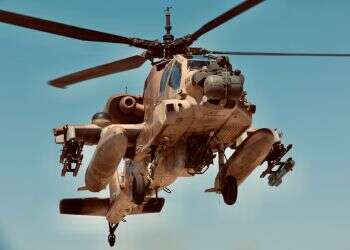
The helicopter that first flew in 1975, designed to stop Soviet tanks on the plains of Europe, is now shooting down Iranian Shahed drones over Israel and Lebanon – an example of the adaptability of a weapon serving in 18 armies. Until October 7, Israel had been reducing its attack helicopter fleet, but the Hamas assault reversed that trend. Today, Israel is seeking to double its fleet. Fifty years after its maiden flight, the Apache has not become obsolete – it has adapted.
Benny Gantz’s declaration, the limping son of the opposition, that he does not intend to boycott Netanyahu, detaches him from the bloc and may prove to be the move that decides the coming elections.
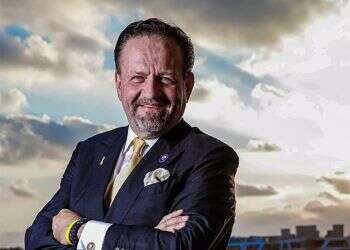
Officially, Dr. Sebastian Gorka is the deputy national security adviser and the president’s adviser on counterterrorism. Unofficially, he is one of the senior officials closest to Trump. In an interview coinciding with his visit to Israel, he offers a rare glimpse into America’s new counterterrorism doctrine and shares the most dramatic moments from Trump’s Situation Room.