Israel Hayom is a media organization founded on the belief that the Israeli public deserves better journalism—more balanced, more accurate, and more reliable. Journalism that speaks rather than shouts. Journalism that is trustworthy, objective, and matter-of-fact. A different kind of journalism, offered free of charge.
The first print edition was published on July 30, 2007, and in 2010 Israel Hayom became the Israeli newspaper with the highest weekday readership. The newspaper’s publisher is Dr. Miriam Adelson. Its Editor-in-Chief is Omar Lachmanovitch, and its founding editor is Amos Regev.
Israel Hayom’s Hebrew and English websites, as well as its Android and iOS applications, provide around-the-clock news coverage, exclusive content, breaking news and updates, analysis and commentary, video, podcasts, and live broadcasts.
The digital platforms of Israel Hayom include news and opinion channels covering culture and entertainment, lifestyle, technology, sports, business and consumer affairs, health, military affairs, food, Judaism, tourism, and automobiles.
In 2021, a new Hebrew-language website and mobile application were launched to provide users with a fast, up-to-date, secure, and convenient experience.
The content of the newspaper’s print edition is also available online through a daily digital edition and can be received via newsletter.
“The Israel Hayom Clique,” the publication’s exclusive benefits club, offers website users discounts and special promotions on products and services.
Israel Hayom welcomes feedback, criticism, and suggestions for improvement from its readers. You can contact the organization by email at hayom@israelhayom.co.il
Despite the government in Berlin saying several weeks ago that "there is no embargo on arms exports to Israel; each request is examined on its own merits," the German paper Bild uncovers a different reality behind the scenes. A written pledge by Israel may have resolved impasse.
The distraught mother of the late Staff Sergeant David Bogdanovsky shared, "I was horrified to find they had placed a black cloth over my David, my hero, a hero of the State of Israel, concealing his tombstone and the cross. Words fail to express the humiliation I experienced."
The op's first phase began in 2015 with the introduction of booby-trapped walkie-talkies into Lebanon. According to the Washington Post, "the mobile two-way radios contained oversized battery packs, a hidden explosive and a transmission system that gave Israel complete access to Hezbollah communications."
INSS senior researcher Dr. Yehoshua Kalisky provides a comprehensive overview of Hezbollah's arsenal, its potential impact, and the readiness of Israel's defense systems.
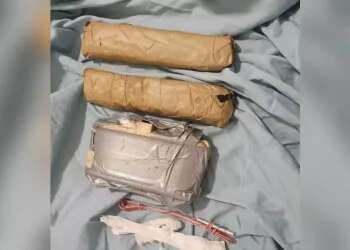
In a special operation, the Shin Bet discovered a sophisticated Claymore-type explosive device, a hallmark of Hezbollah operations. The device featured an advanced remote activation system, complete with a camera and a cellphone, enabling its operation from Lebanese territory.
A source involved in efforts to thwart Iran's plans for revenge claims that they decided to conduct tests before any actual attack due to the massive failure rates of missiles launched in the attack in April.
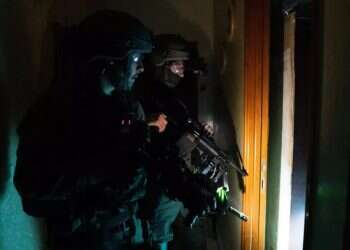
The campaign, the largest of its kind in nearly two decades, is backed by significant air support, both for protecting forces and for strikes by helicopters and drones against terror targets.