Israel Hayom is a media organization founded on the belief that the Israeli public deserves better journalism—more balanced, more accurate, and more reliable. Journalism that speaks rather than shouts. Journalism that is trustworthy, objective, and matter-of-fact. A different kind of journalism, offered free of charge.
The first print edition was published on July 30, 2007, and in 2010 Israel Hayom became the Israeli newspaper with the highest weekday readership. The newspaper’s publisher is Dr. Miriam Adelson. Its Editor-in-Chief is Omar Lachmanovitch, and its founding editor is Amos Regev.
Israel Hayom’s Hebrew and English websites, as well as its Android and iOS applications, provide around-the-clock news coverage, exclusive content, breaking news and updates, analysis and commentary, video, podcasts, and live broadcasts.
The digital platforms of Israel Hayom include news and opinion channels covering culture and entertainment, lifestyle, technology, sports, business and consumer affairs, health, military affairs, food, Judaism, tourism, and automobiles.
In 2021, a new Hebrew-language website and mobile application were launched to provide users with a fast, up-to-date, secure, and convenient experience.
The content of the newspaper’s print edition is also available online through a daily digital edition and can be received via newsletter.
“The Israel Hayom Clique,” the publication’s exclusive benefits club, offers website users discounts and special promotions on products and services.
Israel Hayom welcomes feedback, criticism, and suggestions for improvement from its readers. You can contact the organization by email at hayom@israelhayom.co.il
The standoff follows a bold assault by Islamic State jihadists who broke into Gweiran Prison, enabling an unknown number of terrorists to escape and hold hostages. At least 27 US-backed fighters of the Kurdish-led force have been killed.
Professor Rear. Admiral (Ret.) Shaul Chorev tells JNS that Israel needs a more thought-out strategy when it comes to dealing with the Iranian threat at sea, as well as combat that has become “increasingly asymmetric.”
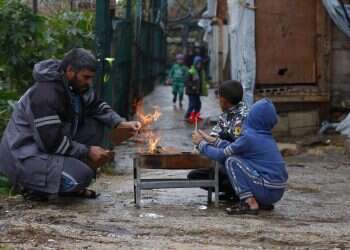
"People can see their own breath when lying on their thin mattresses, you will see children walk around in flipflops and ripped shirts. Families are afraid that they will freeze to death," says Syria director for the CARE aid group Jolien Veldwijk.
The eighth round of negotiations, under Iran's new hard-line President Ebrahim Raisi, began on Dec. 27 after adding some new Iranian demands to a working text.
Palestinian Authority Foreign Minister Riad Al-Maliki criticizes the United States for not using its "special" relationship with Israel to pressure it to abandon what he claims is Jerusalem's "rejection of a two-state solution and peace negotiations."
A report by the Institute for Science and International Security says the new underground area will feature halls “more deeply buried than the Fordo uranium enrichment site.”
Attack claimed by Houthis killed two Indian nationals and one Pakistani as three tankers at the site exploded, police said. Six people were also wounded.
Announcing the successful test of an engine for a solid-fuel satellite carrier rocket, head of Revolutionary Guards' aerospace unit insists, "We won't let sanctions, assassinations, or threats stop us."
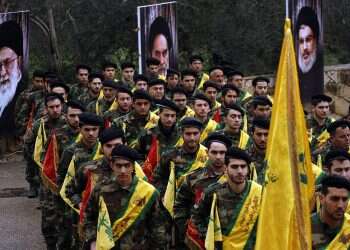
Hezbollah, Iran's largest proxy in the Middle East, and the smaller Shiite militia have been refusing to attend cabinet sessions in a dispute over the handling of an investigation into the huge Beirut port blast in 2020.