Israel Hayom is a media organization founded on the belief that the Israeli public deserves better journalism—more balanced, more accurate, and more reliable. Journalism that speaks rather than shouts. Journalism that is trustworthy, objective, and matter-of-fact. A different kind of journalism, offered free of charge.
The first print edition was published on July 30, 2007, and in 2010 Israel Hayom became the Israeli newspaper with the highest weekday readership. The newspaper’s publisher is Dr. Miriam Adelson. Its Editor-in-Chief is Omar Lachmanovitch, and its founding editor is Amos Regev.
Israel Hayom’s Hebrew and English websites, as well as its Android and iOS applications, provide around-the-clock news coverage, exclusive content, breaking news and updates, analysis and commentary, video, podcasts, and live broadcasts.
The digital platforms of Israel Hayom include news and opinion channels covering culture and entertainment, lifestyle, technology, sports, business and consumer affairs, health, military affairs, food, Judaism, tourism, and automobiles.
In 2021, a new Hebrew-language website and mobile application were launched to provide users with a fast, up-to-date, secure, and convenient experience.
The content of the newspaper’s print edition is also available online through a daily digital edition and can be received via newsletter.
“The Israel Hayom Clique,” the publication’s exclusive benefits club, offers website users discounts and special promotions on products and services.
Israel Hayom welcomes feedback, criticism, and suggestions for improvement from its readers. You can contact the organization by email at hayom@israelhayom.co.il
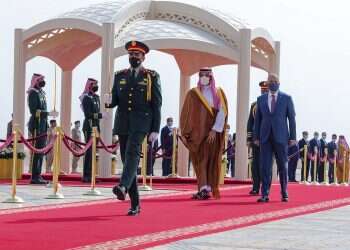
Saudi Arabia is recalibrating its regional position after losing an unflinching supporter in President Joe Biden's predecessor, Donald Trump. Iran, meanwhile, has calculated that a gradual detente with Riyadh, a long-time US ally, will work in its favor during renewed nuclear talks with Washington and world powers.
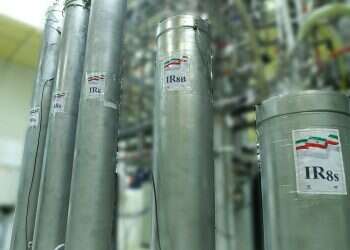
Iran's chief nuclear negotiator said the talks were moving forward despite difficulties but warned Tehran would halt the negotiations if faced with "unreasonable demands" or time wasting.
Brig. Gen. Muhammad Hussein-Zada Hejazi, did not die of a heart attack as Iranian authorities initially claimed on Sunday, rather was poisoned by Israel and the United States with radioactive materials, possibly in Iraq or Syria, an Iranian source tells Kuwaiti newspaper Al-Jarida.
"Practical solutions are still far away, but we have moved from general words to agreeing on specific steps towards the goal," says Mikhail Ulyanov, Russia's ambassador to the International Atomic Energy Agency, which also starts talks with Iran aimed at obtaining explanations on the origin of uranium traces found at undeclared locations.