Israel Hayom is a media organization founded on the belief that the Israeli public deserves better journalism—more balanced, more accurate, and more reliable. Journalism that speaks rather than shouts. Journalism that is trustworthy, objective, and matter-of-fact. A different kind of journalism, offered free of charge.
The first print edition was published on July 30, 2007, and in 2010 Israel Hayom became the Israeli newspaper with the highest weekday readership. The newspaper’s publisher is Dr. Miriam Adelson. Its Editor-in-Chief is Omar Lachmanovitch, and its founding editor is Amos Regev.
Israel Hayom’s Hebrew and English websites, as well as its Android and iOS applications, provide around-the-clock news coverage, exclusive content, breaking news and updates, analysis and commentary, video, podcasts, and live broadcasts.
The digital platforms of Israel Hayom include news and opinion channels covering culture and entertainment, lifestyle, technology, sports, business and consumer affairs, health, military affairs, food, Judaism, tourism, and automobiles.
In 2021, a new Hebrew-language website and mobile application were launched to provide users with a fast, up-to-date, secure, and convenient experience.
The content of the newspaper’s print edition is also available online through a daily digital edition and can be received via newsletter.
“The Israel Hayom Clique,” the publication’s exclusive benefits club, offers website users discounts and special promotions on products and services.
Israel Hayom welcomes feedback, criticism, and suggestions for improvement from its readers. You can contact the organization by email at hayom@israelhayom.co.il
CNN revealed that Tehran purchased 2,000 tons of sodium perchlorate from Beijing for use in its ballistic missile industry. Some of the cargo ships and Chinese entities involved in the deal are under US sanctions.
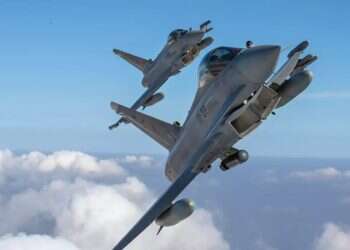
British Prime Minister Keir Starmer and Turkish President Recep Tayyip Erdogan have signed a major $11 billion agreement for the purchase of 20 advanced fighter jets. The deal comes as Turkey seeks to modernize its aging air force. Germany lifted its veto on the sale in July after previously blocking it over concerns about Ankara’s foreign policy.
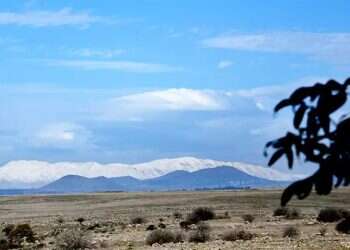
Syria, backed by Turkey and several other Arab states, has launched a broad diplomatic campaign to gain international recognition of its sovereignty over the Golan Heights. Officials in Jerusalem made clear Israel “will not give up a single centimeter of the Golan.”
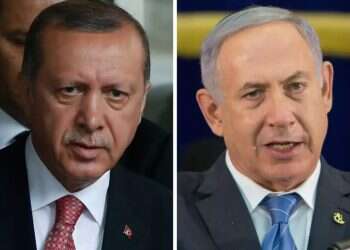
Turkish President Recep Tayyip Erdoğan expressed dissatisfaction with the progress of the ceasefire process and accused Israel of violating it. Erdoğan reiterated that his country was prepared to send forces to the Gaza Strip.
The Associated Press has released aerial photographs showing the construction of a runway on Zuqar Island, near the coast of the port city of Hodeidah in Yemen. While it's unclear exactly who is behind the project, which could increase military pressure on the Iranian-backed Houthi rebels, the companies involved have ties to the United Arab Emirates.
Brig. Gen. Mohammad Reza Naqdi, head of coordination at Iran's Islamic Revolutionary Guard Corps, claimed in a rare interview with Iranian media that Hezbollah was warned against purchasing the pager devices that later exploded in the possession of its operatives.
Ali Shamkhani's daughter's 1.4 billion toman wedding ceremony at Tehran's Espinas Parsian Hotel has become a focal point for Iranian social media criticism, with users contrasting the May 2024 luxury event against government calls for public patience during economic sanctions and recent announcements of expanded morality police deployment.
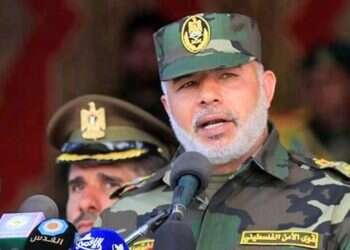
Senior Hamas figure Tawfiq Abu Naim, who served time in prison with Yahya Sinwar, remains in the Gaza Strip despite rumors he had fled. Palestinians claim he survived an assassination attempt and is involved in the wave of executions in Gaza.
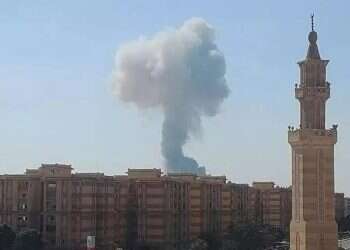
A massive explosion shook the Egyptian capital, causing windows to shatter miles away. The blast occurred at a military base in the northern part of the city, near key government facilities.
After Prime Minister Benjamin Netanyahu accepted US President Donald Trump’s invitation to join the peace conference in Egypt, several Arab leaders threatened to boycott the event. The threat worked, and Netanyahu canceled his participation in the summit, despite Trump’s encouragement for him to attend.