Israel Hayom is a media organization founded on the belief that the Israeli public deserves better journalism—more balanced, more accurate, and more reliable. Journalism that speaks rather than shouts. Journalism that is trustworthy, objective, and matter-of-fact. A different kind of journalism, offered free of charge.
The first print edition was published on July 30, 2007, and in 2010 Israel Hayom became the Israeli newspaper with the highest weekday readership. The newspaper’s publisher is Dr. Miriam Adelson. Its Editor-in-Chief is Omar Lachmanovitch, and its founding editor is Amos Regev.
Israel Hayom’s Hebrew and English websites, as well as its Android and iOS applications, provide around-the-clock news coverage, exclusive content, breaking news and updates, analysis and commentary, video, podcasts, and live broadcasts.
The digital platforms of Israel Hayom include news and opinion channels covering culture and entertainment, lifestyle, technology, sports, business and consumer affairs, health, military affairs, food, Judaism, tourism, and automobiles.
In 2021, a new Hebrew-language website and mobile application were launched to provide users with a fast, up-to-date, secure, and convenient experience.
The content of the newspaper’s print edition is also available online through a daily digital edition and can be received via newsletter.
“The Israel Hayom Clique,” the publication’s exclusive benefits club, offers website users discounts and special promotions on products and services.
Israel Hayom welcomes feedback, criticism, and suggestions for improvement from its readers. You can contact the organization by email at hayom@israelhayom.co.il
Twelve hundred empty chairs stretch across a mile and a half in the heart of Columbia University, an institution that has become a symbol of antisemitism on US campuses. Organizers say their message is clear: they will not let hatred silence the truth.
The sights, the sounds, the stories of the survivors and the dead in Be’eri are etched into me to this day. An entire community fought for its life, while I, in its midst, tried to gather the fragments.
Sixty-four residents of Nir Oz were murdered by the terrorists. Seventy-six children, men and women were kidnapped, nine of whom are still being held captive by Hamas. In a unique project, members of the kibbutz tell the story of their homes in their own words, through images, videos and personal testimonies.
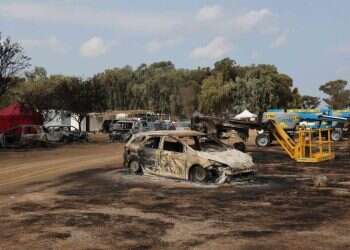
A convoy of colorful cars on the way to paradise. Costumes, fairies, love on the dance floors. Then, with the sunrise, the dream turned into a nightmare.
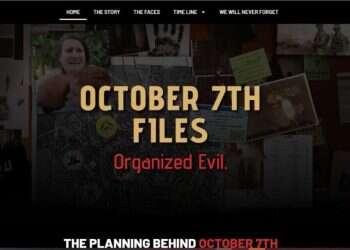
This is so that those seeking information about the massacre will be exposed to the event as it truly was. The expectation is also that artificial intelligence engines, which read content sites, will draw information from it.
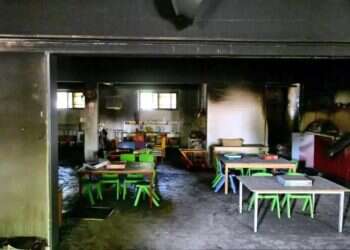
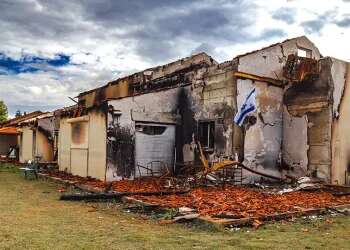
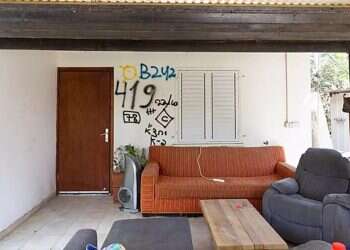
On October 7, two terrorist squads broke into the home of the Avital family. They smashed and looted the house, prepared it for arson, and left only at noon. When the cell service returned, Beni sent his wife, Yamit, a message: “We survived. The children were heroes.”
In a poignant moment of remembrance and solidarity, participants at the Burning Man festival in Nevada stood in silence to honor the victims of the Nova music festival massacre in Israel.
As part of Israel’s global public diplomacy campaign, a joint statement from Netanyahu and Sabine Taasa, who lost her husband and son in the October 7 Hamas massacre, included segments of the atrocity footage captured by security cameras at the family’s home in Moshav Netiv Haasara, described as extremely difficult to watch.