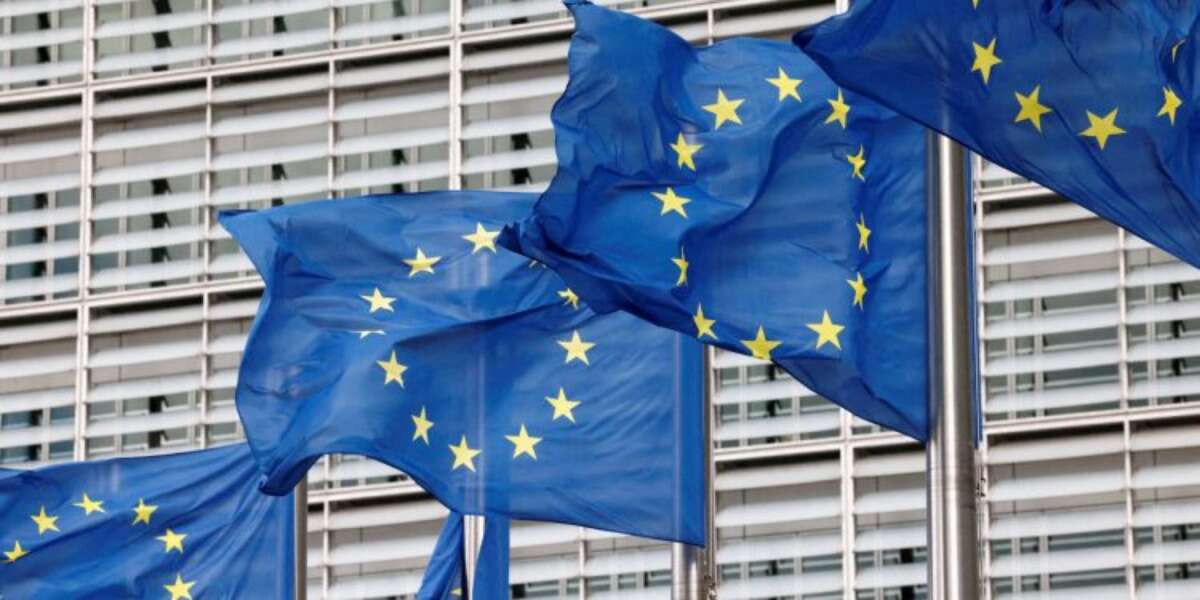
Since the start of the war against Hamas in Gaza and Hezbollah in Lebanon, relations between the European Union and Israel have been in serious crisis. Some member states are calling for the suspension of the association agreement due to the humanitarian situation. Spanish Prime Minister Pedro Sánchez stated that "the Israeli government is violating international law and therefore cannot be a partner of the European Union."
Signed in 1995, this important agreement formalized trade, political, and cultural cooperation between the European Union and the State of Israel. On April 21, 2026, EU foreign ministers rejected the suspension despite strong pressure from Spain, Ireland, and Slovenia. Germany and Italy successfully blocked the proposal, preferring to maintain a "critical and constructive dialogue."
However, the calls for a review of the association agreement and the boycott of Israel at Eurovision have garnered widespread media and public support. A petition launched by the Justice for Palestine collective has already collected over a million signatures across various European countries.
Trade relations between Israel and Europe began in 1959 with the first agreement between Israel and the countries of the European Economic Community (EEC). Today, the European Union remains Israel's largest trading partner, accounting for approximately one-third of our global merchandise trade. The total value of trade in goods is estimated at over €43 billion.
Germany is our leading European partner and France ranks 11th globally with approximately $4 billion in bilateral trade.
However, 34% of Israeli imports come from the EU, highlighting a strong dependence on our industrial and technological supplies, particularly during armed conflict. This is all the more significant given that Israel has also joined NATO's Mediterranean Dialogue, which aims to strengthen regional security, military cooperation, and joint exercises, thereby consolidating Israel's ties with NATO member states.
Therefore, a possible suspension of the association agreement between the European Union and Israel would have direct and serious consequences for our economy and its strategic sectors.
From the beginning, and still today, intensive discussions are regularly held within the Israeli Ministry of Foreign Affairs regarding the formulation of a clear policy toward Europe. While most experts emphasize the importance of strengthening bilateral relations, the trend within governments is to turn instead toward the United States. Rightly so, it is true that the important and crucial decisions regarding the resolution of the conflict with the Arabs are made in Washington, not in Paris or Brussels. And only the United States, the world's strongest power, can help resolve the Palestinian problem. Faced with a politically weakened Europe, the United States is indeed a true strategic ally.
This analysis is correct and justified on the ground, but not perfect. It should be noted that until the outbreak of the Six-Day War in 1967, Israeli governments, for various reasons, preferred to strengthen relations with Europe at the expense of the United States, which had unjustly imposed an arms embargo.
We must therefore never forget France's important contribution to Israel's security in the supply of modern weapons and the construction of the Dimona nuclear reactor during the first and fragile years of our existence.
At the end of the war and following the administration of the Territories, the trend that had been favorable to Israel since its creation changed and worsened. It transformed into a pro-Arab and sometimes even hostile policy. Following the energy crisis and the Yom Kippur War, Europe yielded to the blackmail of oil producers, preferring to abandon Israel in order to obtain petrodollars.
Over the years, changes and events in the Middle East have altered the geopolitical landscape and the European Union has grown from 9 states to 27 with a population that represents more than 500 million people.
Can Israel ignore this trend? Many Israelis remain skeptical and assert at every opportunity that Europeans are fundamentally anti-Semitic, and therefore nothing can change in our relations with them. Some diplomats and politicians wish to distance themselves from certain European countries and even sever diplomatic ties. In a context of the Jewish state's isolation on the international stage, this approach is senseless and counterproductive. It is easy to cut ties with countries that were once friends, but it will always be more difficult to rebuild trust and maintain good relations.
It is true that anti-Semitism is still entrenched in some parts of the Old Continent and the activities of BDS demonstrate blatant anti-Zionism, but the overwhelming majority and European leaders are neither racist nor anti-Semitic.
We should react with realpolitik and observe all current interests with discretion and without prejudice or bias. Certainly, it is clear that the past must never be forgotten or erased, but we must strive for a better future. Let us remember that we obtained reparations from Germany, and this painful and sensitive decision was taken with great urgency precisely to turn the page and establish fruitful diplomatic relations with the country that enabled Nazism and the Holocaust. These relations have been beneficial so far.
Therefore, to improve relations with Europe, we must undertake a complete and pragmatic review and not foolishly erase all the efforts of diplomats who have invested all their efforts during their long careers to improve relations with the different countries of the world.
Our ties with Central and Eastern European countries and our relations with the Balkan states remain strong. This indicates a positive trend among several European countries toward strengthening their relations with Israel. This development is significant and should be welcomed.
We should act wisely to separate bilateral and multilateral diplomatic relations, particularly in the process of resolving the Israeli-Arab conflict.
The Jewish people have been linked to Europe since time immemorial, since the empires of Athens and Rome. They lived in Europe even before the Inquisition and the expulsion from Spain. This historical link, and our geographical presence in the Mediterranean basin, can never be erased. We share democratic and Judeo-Christian values with Europe. These values are deeply rooted in our shared history and are strong enough to overcome the obstacles and condemnations of extremists. In democracies, there is a peaceful transfer of power, and therefore we should cultivate good relations with all political actors on the right, in the center, and on the left.
The war against Iran has helped to provide Israel with many important strategic advantages that can help to strengthen cooperation with the EU.
In light of the new geopolitical landscape, it is essential to sign a memorandum of understanding with European countries. This initial memorandum will allow us to effectively manage the future of our relations. It is also important to take concrete steps to eliminate all boycotts and attempts to impose sanctions. Furthermore, it is necessary to prevent the EU from directly and indirectly funding hostile NGOs and organizations, some of which support terrorism.
Thanks to their strategic advantages and shared values, Israel and Europe can strengthen their relations in all areas, particularly by working together on humanitarian and economic matters to improve the situation of the Palestinians and assist African countries in distress. A joint approach at the source and on the ground will prevent mass migration to the European continent.
Finally, we must act together in the fight against the scourge of antisemitism, Islamist terrorism, and that of the Iranian Revolutionary Guard. Accurate intelligence provided by Mossad can prevent attacks against Jewish communities and save the lives of many innocent European citizens.
In conclusion, we can state without a doubt that the commonalities with Europeans are more numerous and more important than the divergences that currently exist on the conflicts in our region.