

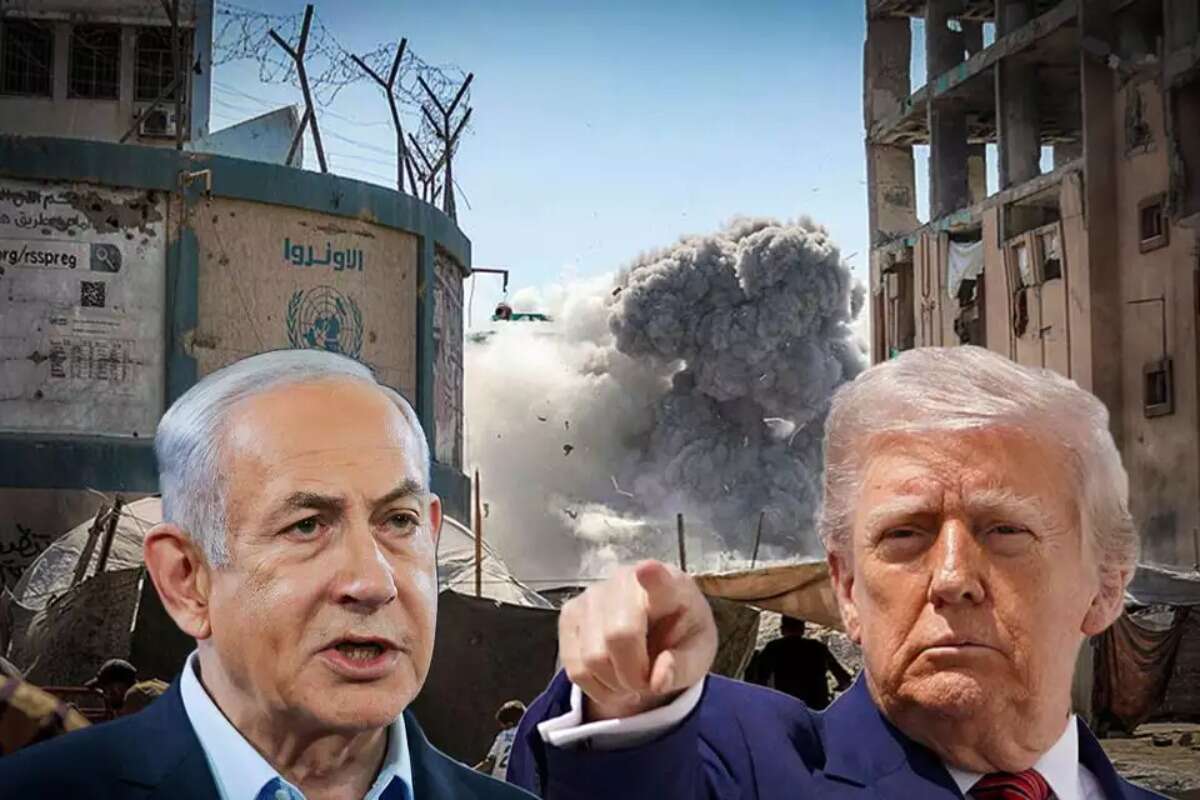
The attack in Doha may not have achieved its tactical goals, but it delivered a diplomatic victory for Israel, which Prime Minister Benjamin Netanyahu and Strategic Affairs Minister Ron Dermer were quick to capitalize on. The exemption that Israel's political and defense establishment, led by Netanyahu, granted Qatar in 2018 is now over.
The strike made it unmistakably clear to Qatar, likely with discreet but unmistakable US backing, that its permission to operate a terrorist army on Israel's borders has expired. Qatar has been put on notice: it will pay for its malevolence, for hosting terrorist leaders, for its antisemitic propaganda, and especially for its monstrous stance on the issue of the hostages.
In the wake of the Israeli operation and the US's lukewarm response, and with pressure from Arab states aligned with Washington—Saudi Arabia, Egypt, Jordan and the UAE, all of whom have been harmed by Qatari actions—Qatar agreed to a three-way deal with the US and Israel. Under the agreement, Netanyahu would express regret over the death of a Qatari civilian in the strike, accepting a symbolic blow to his prestige; Trump would guarantee Qatar's security without mentioning Israel; and both countries would be brought together to air their grievances.
As part of the deal, Qatar pledged to fully support Trump's plan: to immediately release the hostages, then dismantle Hamas militarily and politically in the Gaza Strip, and only afterward, once both goals are achieved, end the war and establish a new governing structure in Gaza. Qatar has apparently also committed to convincing Hamas to accept the plan unconditionally.
Netanyahu and Trump have already fulfilled their parts, issuing the expected gestures. Qatar, for its part, announced its support for the Trump plan without reservation, joined by Arab states and Western countries. What remains to be seen is whether Qatar is truly capable of compelling Hamas to accept the plan, which fulfills Israel's war aims and removes Hamas from power both militarily and politically.
It is hard to imagine that Hamas will agree. The terror group's announced "consent" is not real. It is cornered, and it is unclear whether it will capitulate and release all the hostages with the metaphorical IDF boot on its neck. On the other hand, Saudi Arabia, France and Britain attempted to trap Israel with statements in support of recognizing a fictitious Palestinian state, but ended up passive partners in the initiative spearheaded by Trump and Netanyahu.
To save the hostages, a deal based on the updated Trump-Netanyahu plan would be preferable. But there is a real possibility that Hamas terrorists will not yield, and the IDF will be tasked with eliminating the organization from Gaza by itself, militarily and politically, at the inevitable risk to the hostages' lives.
In moments like this, both malicious deceptions and, to a lesser extent, self-delusions tend to fall away. Hamas terrorists, aided by Qatar and unfortunately by certain segments of the Israeli media and polling institutions, have long hidden behind the phrase "ending the war." What they meant were hostage deals culminating in Israel's capitulation and the entrenchment of a genocidal terrorist army on its borders, one Israel would have no diplomatic ability to confront again anytime soon.
The Trump plan, formulated with Dermer and Netanyahu and now enjoying broad international support, brings this dangerous charade to a halt.
The terrorist army now faces a clear choice, visible even to defeatists at home and abroad: fight to the death, stripped of the protective shield of a civilian population that has mostly been evacuated from the danger zone, or surrender. This is the strongest strategic position Israel has held in Gaza since the disastrous plunge on October 7. Still, the threat to the hostages' lives remains grave. Israel has shown willingness to go far to save them—but not to the point of capitulating to Hamas and guaranteeing its survival after the war.
If no agreement is reached in Gaza, Israel's authorized decision-makers will be forced to resolve the ethical and strategic dilemma that has haunted the country since the war began: do everything possible to rescue the hostages, even during this current operation, but not allow Hamas to survive in the Gaza Strip. It is a painful balance, but one that must be struck: between mutual responsibility and national survival.


