Twenty years ago, on January 25, 2006, Hamas scored a sweeping victory in elections for the Palestinian Legislative Council. The vote was held under a mixed electoral system. Half of the council's 132 members were elected through proportional representation, with voters casting ballots for party lists as in Israeli elections, while the other half were chosen in regional races in which voters in each district elected their own representatives.
It was widely understood that Hamas would post a significant result in the 2006 elections, but opinion polls predicted that Fatah would win and form the next government. A survey conducted by Professor Khalil Shikaki showed Fatah expected to receive 42% of the vote, equivalent to 28 seats, compared with 35% or 23 seats for Hamas. Under the regional system, Fatah was projected to secure 18 seats to Hamas' 17, with the two parties locked in a very tight contest over the remaining roughly 30 seats.
Shikaki ultimately assessed that Fatah was highly likely to form the government. He explained Hamas' growing strength as the result of public fatigue with Fatah, widespread corruption within the Palestinian Authority, and the perception among Palestinians that Israel's disengagement from the Gaza Strip represented a victory achieved through Hamas' "resistance," rather than through Fatah's failed peace process.
Hamas also received a form of political legitimacy from the most popular figure on the Palestinian street at the time, Fatah leader Marwan Barghouti, who was imprisoned in Israel. Barghouti declared that Hamas was a legitimate partner in a Palestinian government and said the armed struggle should continue until the establishment of an independent Palestinian state with Jerusalem as its capital.
As with Shikaki, Israel's security establishment, which closely monitored the Palestinian elections, also assessed with high probability that Fatah would win by a narrow margin. Military Intelligence even assigned a low likelihood to a scenario in which Hamas would score a decisive victory and form the new Palestinian government, effectively turning the Palestinian Authority into "Hamasstan." Forecasts, however, are one thing, and reality another.
When the votes were counted, with turnout reaching 77%, it became clear that Hamas had won 74 seats, compared with just 45 for Fatah. While the proportional vote was relatively close, with Hamas winning 44% to Fatah's 41%, giving Hamas 29 seats to Fatah's 28, the regional races delivered Hamas a crushing victory, 45 seats to Fatah's 17.
Although a poll conducted immediately after Hamas' victory showed that a majority of Israelis, 48% versus 43%, supported talking to the movement if it led the Palestinian Authority, Israel's government decided not to hold any negotiations as long as Hamas was part of it. Then Acting Prime Minister Ehud Olmert declared that a Palestinian Authority including Hamas was not a partner.
The response that most clearly proved the consequences of Hamas' victory came from Benjamin Netanyahu, who at the time was Likud chairman and had opposed the unilateral withdrawal from the Gaza Strip and the Philadelphi Corridor without an agreement with the Palestinians.
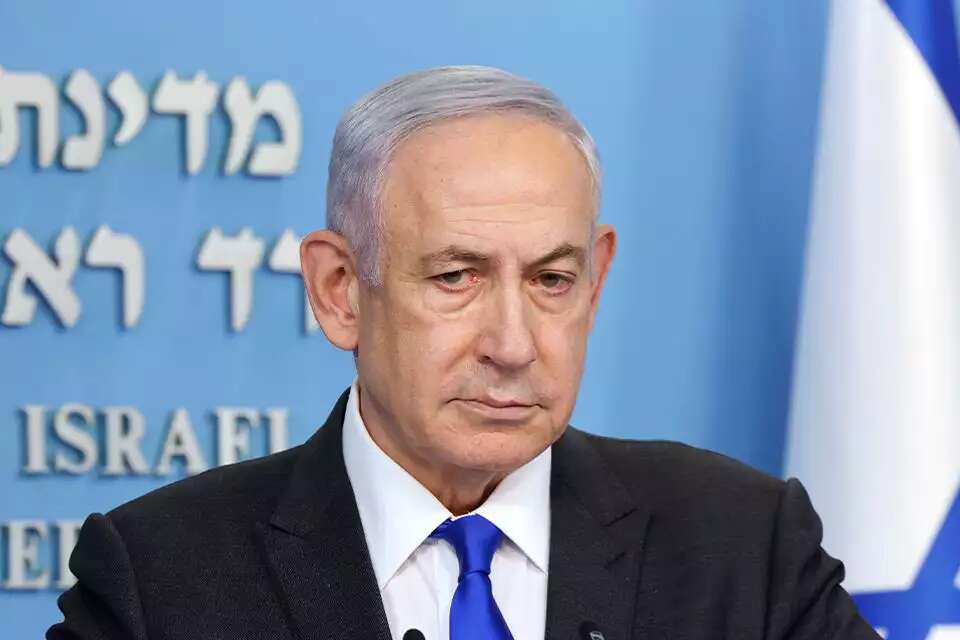
Following Hamas' win, Netanyahu said this was the day the state of Hamasstan had been established, an extremist Islamic state committed to Israel's destruction. He warned against those who claimed Hamas would change and become more moderate. "That is what they said about the ayatollahs when they seized power in Iran and about the Taliban when they took over Afghanistan," Netanyahu said. "It did not happen there, and it will not happen here."
In conclusion, it is regrettable that when Netanyahu later served as prime minister he chose not to implement his outlook from January 2006. Under his leadership, Hamas was allowed to build a terrorist army along the Jewish state's southern border. While Israel's security establishment assessed that Hamas was interested in maintaining calm, Netanyahu should have recalled the warnings he issued after Hamas' election victory. Doing so might have helped thwart, and perhaps even prevent, the October 7 massacre. One can only hope that the lesson for the future will be fully learned.