This author used to feel indifferent about the legislative proposals and public debates surrounding the death penalty for terrorists, which surfaced a few years ago. I naively believed that since many terrorists are already willing, sometimes even eager, to die as "martyrs," the death penalty would not serve as an effective deterrent, and that our energy would be wasted on a dead-end strategy in the fight against terrorism. I dismissed those proposals, viewing them as empty populist gestures.
The death penalty for murder was abolished in Israel in the mid-1950s. Since then, the harshest sentence available has been life imprisonment, or multiple life terms. Under military law in Judea and Samaria, it is technically possible to impose the death penalty for murder, but military courts have never enforced it. The last time a death sentence was handed down was in the 1990s to a terrorist who carried out two deadly suicide bombings at the Afula Central Bus Station. That sentence was appealed and later commuted to life in prison. And what became of that terrorist? He was released in the Gilad Shalit deal.
In another particularly painful case – the lynching in Ramallah – two judges sentenced one of the perpetrators to death, but the third judge, who chose mercy for the merciless, blocked the ruling. As a result, Raad Sheikh, a vile and brutal killer, escaped execution. And what became of him? He was just released in the latest deal to secure the freedom of our kidnapped brothers.

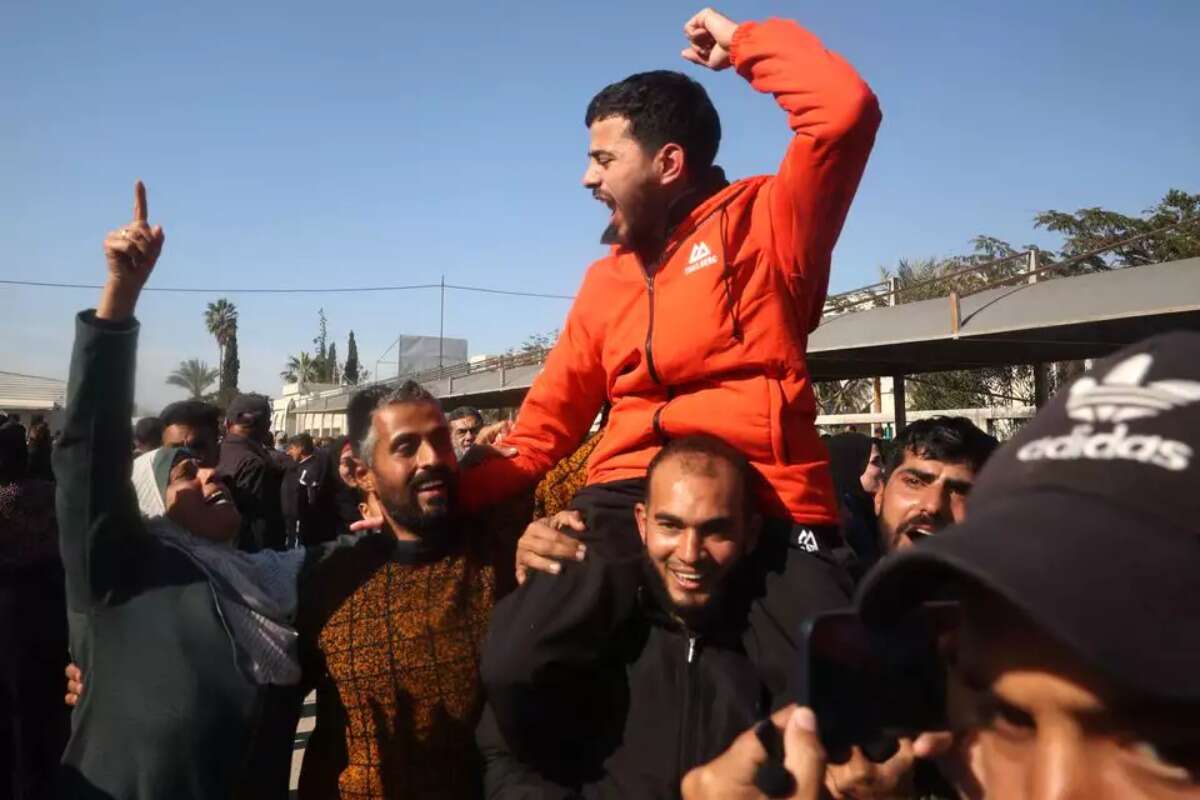
And so I have changed my mind: Israel must institute the death penalty for terrorists. This is a matter of moral survival. Not (only) as a deterrent, but first and foremost as a matter of justice and as a tool to prevent future terrorism. It has become clear that this is the only way Israel can deliver true justice to terrorist murderers. In the recent hostage deal, Israel released 250 terrorists serving life sentences, the heaviest offenders in the system, not including a few dozen others who remain imprisoned for now, some because they are considered symbols of terrorism.
This must now become the equation, an equation written in blood and tears: if a murderous terrorist becomes a legitimate bargaining chip who can be demanded in exchange for our innocent citizens kidnapped by terrorist groups, then he becomes deserving of death from the moment of his arrest, not just when caught in action.
Here's another fact about the recently released prisoners: according to data from Palestinian Media Watch, which tracks payments made by the Palestinian Authority to terrorists, no fewer than 160 terrorists serving life sentences and released in the latest deal walked out of prison as millionaires. The Palestinian Authority's policy of financially rewarding those who shed Jewish blood pays off handsomely, both for the terrorists and their families, during their time in prison and all the more so when they are released prematurely. What has emerged is a corrupt and perverse reality: a society saturated with smiling, well-fed murderers, and not far from them, families torn apart by grief.

I don't know whether the death penalty would deter future terrorists from carrying out attacks. But one thing is certain: it would deliver justice. Murderers would no longer be released after a few years with smiles on their faces. Bereaved families would not be forced to relive their anguish. Terrorists would not return to terrorism. There would be no more Yahya Sinwars – sentenced to five life terms, released in a deal, and then responsible for the worst massacre in the country's history.
Above all, there would be a breath of justice in the public air, instead of injustice and disarray. The righteous would feel relief, the wicked would face retribution. No more "maybes" or "what ifs." No more generous salaries from the Palestinian Authority. No more prospects of early release.
The death penalty must be enshrined first and foremost in Knesset legislation, both as a statement and as a practical tool enabling Israeli courts to sentence terrorists to death. But this shift must also be embraced within the legal establishment itself, among prosecutors and judges alike. They, too, will need to adapt to the new reality. The public will want to monitor those prosecutors and judges who demand and deliver justice, and those who choose mercy for the merciless.
The distorted reality we've created obliges us to introduce the death penalty for terrorists. This is no longer an empty populist slogan. We have a duty to cleanse the public air – for the sake of past victims and to prevent future ones.