


Along the Gaza border, the past few weeks have brought a deceptive and misleading calm, while the Israel-Egypt border has come to life amid a surge in weapons smuggling that has become a major challenge, and perhaps even a security threat.
Thousands of drones operated by crime organizations, which are plentiful across Israel's wild south, cross the border every day, carrying weapons and potentially drugs from the Egyptian side into Israel. The drones themselves are entirely Israeli-made or purchased inside Israel by the crime groups.
It may be tempting to downplay the phenomenon, since the motive is criminal and therefore falls between the cracks. The Israel Defense Forces and the Shin Bet are reluctant to deal with criminal activity tied to organized crime, while the Israel Police may want to act but is unable to. Yet experience shows that weapons stockpiled for criminal purposes often end up in the hands of terrorist organizations, and the criminal of today becomes the terrorist of tomorrow.
Instead of confronting the crime groups and preventing both the procurement and the use of drones, we rush to shut the barn doors after the horses have run off, pouring resources into trying to intercept and bring down the steady airborne flow of drones making their way into Israel.
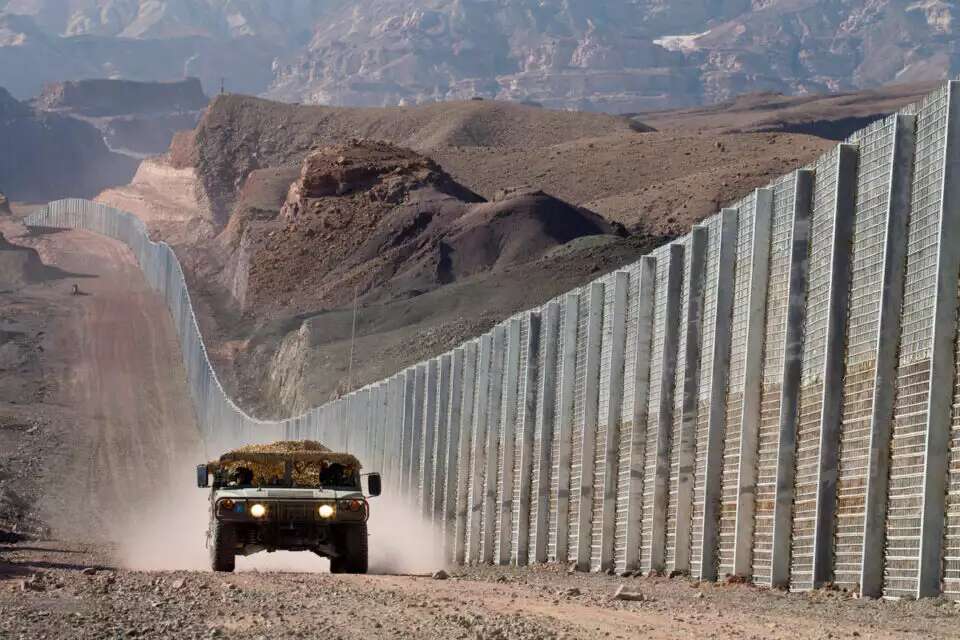
Indeed, the IDF is working to intercept the drones, but its success has been only partial. Meanwhile the defense minister posts instructions to the military on social media that no one is willing or able to carry out.
Where is our neighbor
There is one unknown in this equation that no one seems to talk about: Egypt. Where is our neighbor, from whose territory the smuggling is carried out?
It is important to remind ourselves that Egypt is not an enemy or a threat, not today and not in the foreseeable future. Since Israel signed a peace agreement with Cairo nearly fifty years ago, quiet has prevailed along what was once a battlefield where thousands of soldiers were killed, from the 1948 War of Independence through the 1973 Yom Kippur War.
Are there people in Egypt who view Israel as an enemy? It appears so. Is Egyptian public opinion largely anti-Israel? That is also true. But at the same time, the Egyptian government and most Egyptians still regard peace with Israel as a vital Egyptian interest and have no desire for war. Besides, the strategic threat facing Cairo comes from the south, from Ethiopia, which Egyptians say is depriving them of Nile River water, the country's lifeline since antiquity. There is also the internal threat from the Muslim Brotherhood and from Hamas, its Palestinian offshoot, which the Egyptian regime is battling for its survival. It was, after all, the Egyptians who once warned Israel not to cooperate with Hamas and not to allow it to entrench its rule in Gaza.
Israel and Egypt have a complex relationship, including economic and especially security cooperation. It has had its ups and downs, for example when Islamic State operatives fought the Egyptian army in Sinai and Israel stepped in to help. On the other hand, we have seen Egypt turn a blind eye and show indifference as weapons were smuggled into Gaza for Hamas and now regarding the drone-smuggling phenomenon.
After all, it is difficult to convince an Egyptian policeman earning twenty dollars a month not to look the other way for a hundred dollars when a drone hovers overhead.
Israel can and must hold a firm and uncompromising dialogue with Egypt on this issue. Unfortunately, however, Israel is turning its back on its Arab neighbors and prefers to communicate with them through the US administration, which has its own interests that do not always align with Israel's and is more attentive to Turkey's president and Qatar's emir.


