

Every time Jewish history is tested, memories of life in the Diaspora resurface. The Jewish people have never been truly safe when dependent on the goodwill of others. From the exile after the Second Temple to centuries of wandering between nations and empires, Jews relied on fragile relationships based on mercy that repeatedly collapsed, leading to persecution and pogroms. There were exceptional leaders who managed to reduce harm, but almost never was there an effective Jewish defensive force.
The establishment of the State of Israel changed the equation. For the first time in modern history, a sovereign Jewish defensive force emerged. The Israel Defense Forces, the Border Police, the Israel Police, the Shin Bet security agency and the Mossad created a security system that enabled the Jewish people to stand on their own and defend themselves against armies and states. But the Oct. 7 massacre exposed another painful truth: an attack on Israel is also an attack on the Jewish people everywhere. Images from that morning ignited an unprecedented wave of antisemitism in our generation.
As Israel continues to learn, adapt and rebuild its military strength while fighting on seven fronts, Jewish communities abroad found themselves exposed and insufficiently protected.
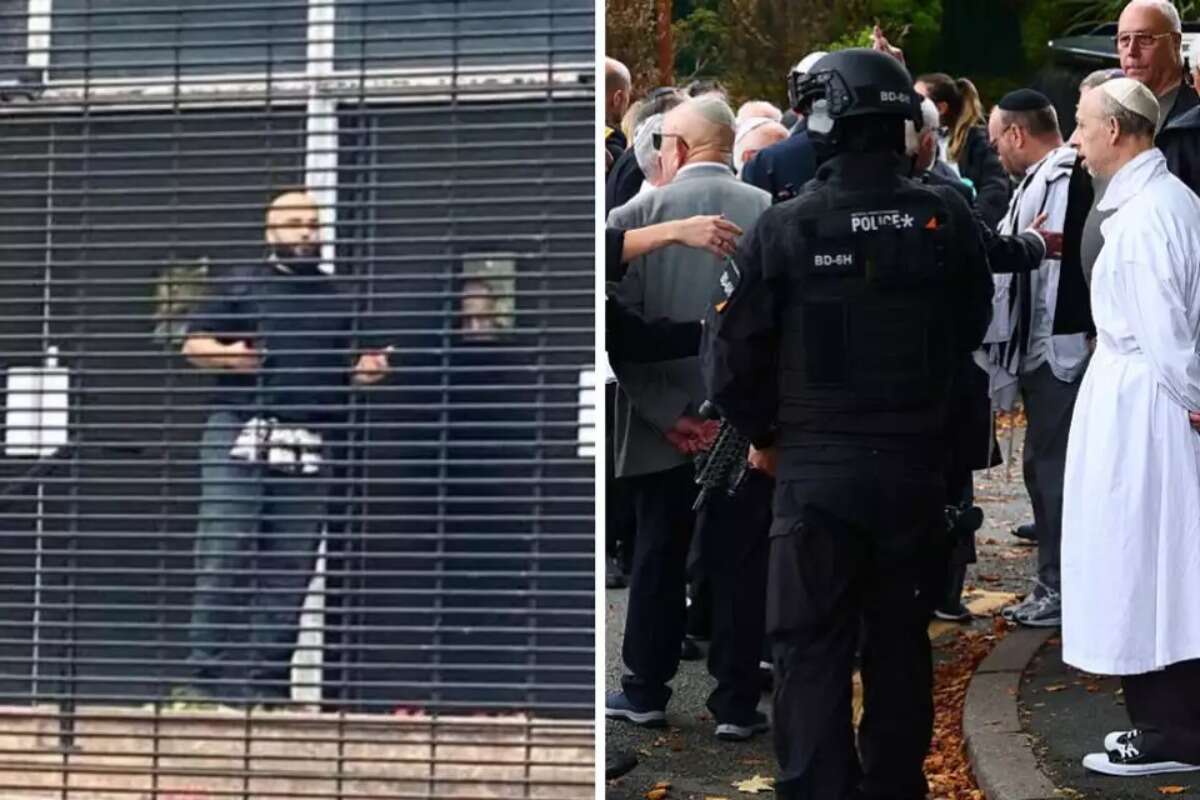
On campuses, in the streets and in synagogues, Jews encountered rising hatred while relying almost entirely on local security forces. Some communities hired private security companies, but these companies cannot truly stop a mass-casualty attack, detect emerging incitement or deter extremist organizations.
This reality demands change. The world has shifted, and threats no longer develop only on the ground but also online, in politics, in protests and in acts of vandalism that spread at extraordinary speed. Jewish communities often stand alone on the front line, without a coordinated Jewish defense structure and without a rapid professional response.
That is why a new move is required: establishing a Jewish People's Guard. Not a local organization, not a security company and not a temporary initiative, but a permanent global structure that creates an international Jewish safety net.
Such a system would connect communities around the world with the State of Israel and official security bodies. It would enable rapid emergency responses, provide orderly training for community response teams and identify incitement processes before they turn violent.
A Jewish People's Guard would create a global alert mechanism, provide unified protocols and build an efficient defensive capability, working in full coordination with governments, local law enforcement agencies and key allies, especially the US. This is not an attempt to form militias, but to build a regulated and supervised system: a shared Jewish safety network that strengthens communities rather than replacing those responsible for protecting them.
The need is not theoretical. Oct. 7 revealed the cost of ignoring warnings. Israel paid in blood. Now we must ensure that Jewish communities abroad are prepared as well. Just as more than 1,000 local emergency squads were established in Israel, Jewish communities worldwide need a legally adapted version: global emergency response teams that can create resilience, provide security and act quickly.
This is the moment to take responsibility. Not out of fear but out of leadership. Not out of weakness but out of understanding that without a shared defensive structure, the next disaster may come, and it can be prevented. As Chami Goldin said at the funeral of his brother Hadar, may his memory be a blessing: "Look closely at this people, at this big family, because this is a family you do not mess with."
The Jewish people are one family, and in such a family, no one is ever left alone.
Editor's note: Due to the Bondi Beach massacre, this op-ed has been reposted.


