Exactly one year ago, in July 2024, Britain's left-wing Labour Party achieved a landslide victory over the Conservatives. After 14 years of Conservative rule, during which their main "achievement" was taking the UK out of the European Union, the British opted for a change in leadership, granting Labour a massive parliamentary majority of 411 out of 650 seats and a mandate to reshape the kingdom.
Public fatigue with the Conservatives was so overwhelming that the party collapsed from 365 seats in the 2019 election to just 121 in 2024, their worst result since 1906. It's worth noting that the UK electoral system is similar to that of the US: each member of Parliament is elected in a winner-takes-all contest in their district. In fact, even though Labour won 63% of the seats, it secured only 34% of the popular vote, compared to the Conservatives' 24%.
Despite expectations that Labour leader Keir Starmer, seen as having purged the party of antisemitism during the tenure of his predecessor Jeremy Corbyn -who had praised Hamas and Hezbollah - would restore public trust, the party has managed to lose it in just one year. The main reason: illegal immigration. Prime Minister Starmer presented a plan to deter migrants, proposing that rejected asylum seekers be sent to third countries, a move meant to discourage illegal entry.
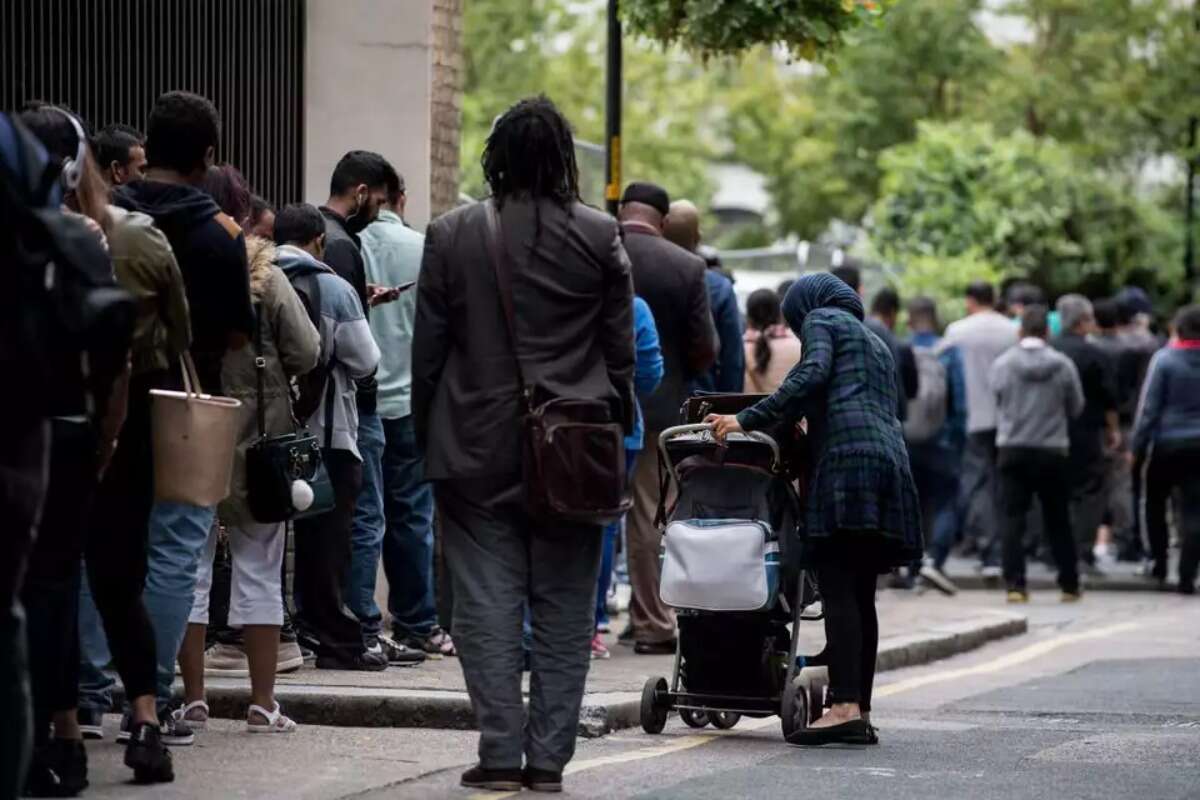
Yet despite these promises, which many saw as a response to growing concerns over England's changing character, some 50,000 illegal migrants entered the UK in the past year. They joined hundreds of thousands who had crossed in previous years, most of them young men from Muslim-majority countries. For British taxpayers, the cost is steep, nearly £10 billion per year.
While the UK's National Health Service is struggling, these migrants receive substantial state-funded benefits, including hotel accommodations and free healthcare. Criticism of Labour has become so fierce that some claim its failure to stop illegal immigration, especially from Muslim nations, is eroding Britain's national identity.
Although some hoped that the crisis would pave the way for a Conservative rebound, the British public appears to have lost faith in the party and does not see it as a viable alternative to Labour. Into this political vacuum has stepped the Reform UK party, led by Nigel Farage, which has made the fight against illegal immigration and the defense of British identity its flagship cause.
In the 2024 election, Reform UK won 14% of the popular vote but only secured five parliamentary seats. However, a poll conducted last week shows the party now leading with 28%, compared to 22% for Labour and 17% for the Conservatives.
But when looking at projected parliamentary seats, the numbers are even more striking: Reform UK is forecast to win 290 seats, compared to Labour's 126 and the Conservatives' 81. Other polls predict an outright parliamentary majority for Reform UK, underscoring the dramatic shift in British public opinion and growing resistance to Labour's perceived failure to defend the kingdom's borders.
In conclusion, the numbers reveal that the British public firmly rejects the leftist policies of Labour and Keir Starmer, who long ago lost control of illegal immigration into the country. Alongside the economic burden, there is growing fear among Britons of losing their national identity. With four years to go until the next general election, Britain is in for a turbulent ride.
Dr. Ori Wertman is a research fellow at the University of South Wales, UK, and a research fellow at The Israel Centre for Grand Strategy - ICGS.