Israel Hayom is a media organization founded on the belief that the Israeli public deserves better journalism—more balanced, more accurate, and more reliable. Journalism that speaks rather than shouts. Journalism that is trustworthy, objective, and matter-of-fact. A different kind of journalism, offered free of charge. The first print edition was published on July 30, 2007, and in 2010 Israel Hayom became the Israeli newspaper with the highest weekday readership. The newspaper’s publisher is Dr. Miriam Adelson. Its Editor-in-Chief is Omar Lachmanovitch, and its founding editor is Amos Regev. Israel Hayom’s Hebrew and English websites, as well as its Android and iOS applications, provide around-the-clock news coverage, exclusive content, breaking news and updates, analysis and commentary, video, podcasts, and live broadcasts. The digital platforms of Israel Hayom include news and opinion channels covering culture and entertainment, lifestyle, technology, sports, business and consumer affairs, health, military affairs, food, Judaism, tourism, and automobiles. In 2021, a new Hebrew-language website and mobile application were launched to provide users with a fast, up-to-date, secure, and convenient experience. The content of the newspaper’s print edition is also available online through a daily digital edition and can be received via newsletter. “The Israel Hayom Clique,” the publication’s exclusive benefits club, offers website users discounts and special promotions on products and services. Israel Hayom welcomes feedback, criticism, and suggestions for improvement from its readers. You can contact the organization by email at hayom@israelhayom.co.il

Saturday Sep 26, 2026
NEWSLETTER
www.israelhayom.com
  • Home
  • News
    • Israel
    • Israel at War
    • Middle East
    • United States
  • Opinions
  • Jewish World
    • Archaeology
    • Antisemitism
  • Lifestyle
    • Food
    • Travel
    • Fashion
    • Culture
  • Magazine
    • Feature
    • Analysis
    • Explainer
  • In Memoriam
www.israelhayom.com
  • Home
  • News
    • Israel
    • Israel at War
    • Middle East
    • United States
  • Opinions
  • Jewish World
    • Archaeology
    • Antisemitism
  • Lifestyle
    • Food
    • Travel
    • Fashion
    • Culture
  • Magazine
    • Feature
    • Analysis
    • Explainer
  • In Memoriam
www.israelhayom.com
Home News World News

Report: US sought Saudi oil support before pulling from Iran deal

by  Reuters and Israel Hayom Staff
Published on  06-08-2018 00:00
Last modified: 12-22-2019 12:43
Report: US sought Saudi oil support before pulling from Iran deal

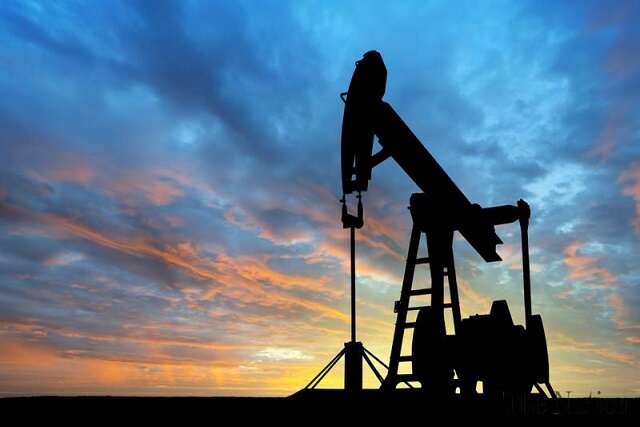
Oil prices have spiked to over $80 per barrel

Share on FacebookShare on Twitter

A day before U.S. President Donald Trump withdrew from the Iran nuclear deal, one of his senior officials phoned Saudi Arabia to ask the world's largest oil exporter to help keep prices stable if the decision disrupted supply.

Riyadh, Tehran's archrival, has long been a close Washington ally, but direct pressure on a member of Organization of the Petroleum Exporting Countries over oil policies is rare. Washington last pressed Saudi Arabia to increase output in 2012.

Riyadh has said that even though prices have spiked to over $80 per barrel, the highest since 2014, the market has yet to recover from a long slump. Until the phone call, Saudi officials had been saying it was too early to raise output.

Riyadh took this line partly because higher crude prices could help the stock market float of a stake in state oil giant Saudi Aramco expected to take place in 2019, Saudi industry sources said.

So there was shock among some of Saudi Arabia's fellow OPEC members when it issued a supportive statement hours after Washington imposed new sanctions on Tehran. It said it was ready to raise output to offset any supply shortage.

Three sources familiar with the matter said a senior U.S. administration official had called Saudi Crown Prince Mohammed bin Salman before Trump's announcement to make sure Washington could count on Riyadh, the de facto OPEC leader.

One of the sources said the call took place on May 7. The other two did not specify a date for the call.

Washington was worried that the sanctions would curb deliveries from Iran and push oil prices up, the sources said.

A White House spokesperson declined to comment on whether a call took place.

A senior Saudi official did not confirm the call but said, "We were made aware of the decision on the JCPOA [Joint Comprehensive Plan of Action] before the announcement. … We always have conversations with the U.S. about the stability of the oil market."

OPEC will meet on June 22 and needs a consensus of all members to officially change its output policy. Iran's oil minister, Bijan Zanganeh, said last week he did not agree on the potential need to increase global oil supplies.

An OPEC source familiar with Saudi thinking said that Riyadh and Washington had discussed their oil policies before the U.S. announcement on Iran.

"You need to work with your partners in dealing with any potential effect on supply," that OPEC source said.

Allies 'upset' 

The sudden shift in Riyadh's public position came as a surprise to its Gulf allies, who coordinate OPEC policies closely.

Some Gulf countries were "upset that there was no prior consultation with them," a separate source said. They felt Riyadh had come under pressure from Washington and they had not been consulted before public comments by Saudi Energy Minister Khalid al-Falih.

Falih traveled to Russia's economic forum in St. Petersburg last month and said the kingdom was prepared to gradually ease oil output curbs to calm consumers' worries.

The shift has also irked some producers outside the Gulf.

"Some people felt they were not properly consulted before the comments in St. Petersburg," a second OPEC source said.

Since the original international sanctions were lifted in January 2016, Iran has struggled to raise production above 4 million barrels per day. This is due to a lack of new projects.

Iran would benefit less than Saudi Arabia from an increase in supplies if it cannot raise output, as well as receive a lower price for existing production.

A third OPEC source said it would be against the OPEC charter to raise output just because Washington had requested it. "For some OPEC members, this is too much," the source said.

U.S. reliance on Saudi crude imports has decreased in recent years, in part as domestic shale output has risen, but Saudi Arabia remains an important source of U.S. supply.

Sources familiar with the issue said Riyadh's shift in stance was prompted by pressure by Washington and other consuming countries but does not reflect concern in Saudi Arabia that there is a supply deficit.

In late April, Trump in a tweet criticized OPEC for high oil prices. India and China also raised concerns about high oil prices in separate calls with Falih.

"The thinking before was to continue with the OPEC deal until the end of the year," a fourth OPEC source said. "But then Trump and the Iran nuclear deal happened and consuming nations started to complain. Consumers are very important for us."

Related Posts

Germany investigates 105-year-old former Nazi camp guard over role in murders

Germany investigates 105-year-old former Nazi camp guard over role in murders

by Neta Bar

German national who allegedly served as a guard at Stalag 326 VI K, one of Nazi Germany's largest prisoner-of-war camps,...

Trump courts Xi in Washington, Beijing's price could be Taiwan

Trump courts Xi in Washington, Beijing's price could be Taiwan

by Dudi Kogan

As Trump rolls out red-carpet treatment for China's leader, Beijing may seek a steep price on Taiwan in exchange for...

US aircraft carrier crew hit by wave of suicide attemptsPhoto: US Central Command

US aircraft carrier crew hit by wave of suicide attempts

by ILH Staff

According to a letter from a senior Navy official, two sailors jumped overboard and six more attempts were reported during...

Menu

Analysis 

Archaeology

Blogpost

Business & Finance

Culture

Exclusive

Explainer

Environment


Features

Health

In Brief

Jewish World

Judea and Samaria

Lifestyle

Cyber & Internet

Sports


Diplomacy 

Iran & The Gulf

Gaza Strip

Politics

Shopping

Terms of use

Privacy Policy

Submissions

Contact Us

About Us

The first issue of Israel Hayom appeared on July 30, 2007. Israel Hayom was founded on the belief that the Israeli public deserves better, more balanced and more accurate journalism. Journalism that speaks, not shouts. Journalism of a different kind. And free of charge.

All rights reserved to Israel Hayom

Hosted by sPD.co.il

  • Home
  • News
    • Israel at War
    • Israel
    • United States
    • Middle East
    • Sports
  • Opinions
  • Jewish World
    • Archaeology
    • Antisemitism
  • Lifestyle
    • Food
    • Travel
    • Fashion
    • Culture
  • Magazine
    • Feature
    • Analysis
    • Explainer
    • Environment & Wildlife
    • Health & Wellness
  • In Memoriam
  • Subscribe to Newsletter
  • Submit your opinion
  • Terms and conditions

All rights reserved to Israel Hayom

Hosted by sPD.co.il

Newsletter

[contact-form-7 id=”508379″ html_id=”isrh_form_Newsletter_en” title=”newsletter_subscribe”]

  • Home
  • News
    • Israel at War
    • Israel
    • United States
    • Middle East
    • Sports
  • Opinions
  • Jewish World
    • Archaeology
    • Antisemitism
  • Lifestyle
    • Food
    • Travel
    • Fashion
    • Culture
  • Magazine
    • Feature
    • Analysis
    • Explainer
    • Environment & Wildlife
    • Health & Wellness
  • In Memoriam
  • Subscribe to Newsletter
  • Submit your opinion
  • Terms and conditions

All rights reserved to Israel Hayom

Hosted by sPD.co.il