Israel Hayom is a media organization founded on the belief that the Israeli public deserves better journalism—more balanced, more accurate, and more reliable. Journalism that speaks rather than shouts. Journalism that is trustworthy, objective, and matter-of-fact. A different kind of journalism, offered free of charge. The first print edition was published on July 30, 2007, and in 2010 Israel Hayom became the Israeli newspaper with the highest weekday readership. The newspaper’s publisher is Dr. Miriam Adelson. Its Editor-in-Chief is Omar Lachmanovitch, and its founding editor is Amos Regev. Israel Hayom’s Hebrew and English websites, as well as its Android and iOS applications, provide around-the-clock news coverage, exclusive content, breaking news and updates, analysis and commentary, video, podcasts, and live broadcasts. The digital platforms of Israel Hayom include news and opinion channels covering culture and entertainment, lifestyle, technology, sports, business and consumer affairs, health, military affairs, food, Judaism, tourism, and automobiles. In 2021, a new Hebrew-language website and mobile application were launched to provide users with a fast, up-to-date, secure, and convenient experience. The content of the newspaper’s print edition is also available online through a daily digital edition and can be received via newsletter. “The Israel Hayom Clique,” the publication’s exclusive benefits club, offers website users discounts and special promotions on products and services. Israel Hayom welcomes feedback, criticism, and suggestions for improvement from its readers. You can contact the organization by email at hayom@israelhayom.co.il

Wednesday Aug 19, 2026
NEWSLETTER
www.israelhayom.com
  • Home
  • News
    • Israel
    • Israel at War
    • Middle East
    • United States
  • Opinions
  • Jewish World
    • Archaeology
    • Antisemitism
  • Lifestyle
    • Food
    • Travel
    • Fashion
    • Culture
  • Magazine
    • Feature
    • Analysis
    • Explainer
  • In Memoriam
www.israelhayom.com
  • Home
  • News
    • Israel
    • Israel at War
    • Middle East
    • United States
  • Opinions
  • Jewish World
    • Archaeology
    • Antisemitism
  • Lifestyle
    • Food
    • Travel
    • Fashion
    • Culture
  • Magazine
    • Feature
    • Analysis
    • Explainer
  • In Memoriam
www.israelhayom.com
Home News Middle East

Iranians chant 'Death to dictator' as anti-regime protests mount

by  Eli Leon , News Agencies and ILH Staff
Published on  06-26-2018 00:00
Last modified: 11-22-2021 15:49
|

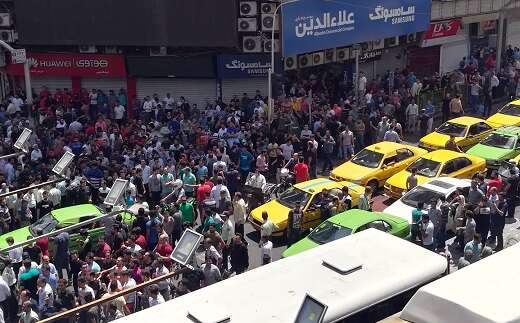
Protesters in Tehran's Grand Bazaar

Share on FacebookShare on Twitter

Thousands of Iranians angered over their country's failing ‎economy took to the streets to protest for the third consecutive day ‎Monday, clashing with security forces in what ‎appears to be the biggest domestic political ‎challenge to Iran's leaders since the Green ‎movement was crushed by the Revolutionary Guards in 2009. ‎

Gaining momentum by the day, the protests signal the ‎Iranian people's widespread unease in the wake of ‎U.S. President Donald Trump's decision to withdraw ‎from the 2015 nuclear accord, and their fear of what the ‎future will bring as new U.S. sanctions loom. ‎

It was not immediately clear who was leading the ‎protests. Iran's Fars, ISNA and Tasnim news ‎agencies described the demonstrations in Tehran and elsewhere across the country as ‎having erupted after the Iranian rial plunged to ‎‎90,000 to the U.S. dollar despite government ‎attempts to control the exchange rate.‎

On Sunday, Interior Minister Rahmani Fazli ‎Abdolrahman warned protesters that their actions ‎will have consequences, saying, "Those who damage ‎public property, disrupt order and break the law ‎must be responsible for their behavior and pay the ‎price."‎

But the demonstrators seemed undeterred.‎

Students near Tehran University chanted "We don't ‎want the ayatollahs," ‎"Death to the dictator" and ‎‎"Death to Khamenei," referring to Supreme Leader Ayatollah Ali ‎Khamenei.‎

Videos posted on social media showed protesters ‎‎chanting "Death to Palestine," "No to Gaza, no to ‎‎Lebanon" and "Leave Syria and think of us," ‎indicating widespread anger at the ‎Iranian regime for ‎spending billions of dollars on ‎proxy wars in the ‎Middle East and supporting terrorist groups such as ‎Hezbollah in Lebanon and the Houthis in Yemen ‎instead ‎of investing in the struggling economy at ‎‎home.‎

Protesters in the Grand Bazaar in Tehran, Monday AP

Other videos showed protesters across Iran taking ‎down banners depicting Khamenei. Such chants and ‎acts of dissent are unprecedented in Iran, where ‎the supreme leader holds ultimate authority and ‎criticizing him is taboo.‎

Iranian media said dozens of people had been arrested in ‎demonstrations across the country, but the exact number was unclear. ‎

‎'Resistance economy‎'‎

In an attempt to shore up the economy, Iranian ‎authorities announced Monday that they were banning ‎imports of more than 1,300 products.‎

Industries and Trade Minister Mohammad Shariatmadari ‎slapped the import ban on 1,339 goods that could ‎instead be produced in the country.‎ Prohibited imports include home appliances, textile ‎products, footwear, leather products, ‎furniture, health care products and some machinery.

The order suggests that the U.S. sanctions threat is ‎pushing the Iranian leadership back towards running a "resistance ‎economy" designed to conserve foreign exchange ‎reserves and become as self-sufficient as possible ‎in many products.‎

Iran eased its "resistance economy" policy after ‎many international sanctions were lifted in January ‎‎2016 under the nuclear deal, when President Hassan ‎Rouhani announced plans to boost Iran's foreign ‎trade and give foreign companies a bigger role in ‎its economy.‎

With Iran now aiming to close its markets to many ‎foreign products and the government intervening to ‎support locally owned companies, those goals look ‎more distant.‎

‎"In the coming months we will see much more ‎intervention in the economy by the government, a ‎centrally imposed style of management by dictate," ‎said Mehrdad Emadi, an Iranian economist who heads energy ‎‎risk analysis at London's Betamatrix consultancy.‎

One result is likely to be a shift of influence over ‎Iran's non-oil foreign trade from the private ‎sector, along with a strong presence by the ‎government's Revolutionary Guards, to near-complete ‎dominance by the Guards, he said.‎

Emadi and other Iranian economists said Iran ‎had imposed import bans during the previous ‎sanctions era before 2016, with only limited success.‎

The government is justifying its latest clampdown on ‎imports by citing economic security. ‎

The Tehran Times quoted Mohammad Reza Pourebrahimi, ‎head of the parliamentary economic committee, as saying ‎the ban would prevent an outflow of $10 billion in ‎foreign currency.‎

The International Monetary Fund estimated in March ‎that the Iranian government held $112 billion in ‎foreign assets and reserves and that Iran was ‎running a current account surplus. These figures ‎suggest Iran might withstand the sanctions without ‎an external payments crisis.‎

At the end of last year, similar economic protests ‎rattled Iran and spread to about 75 cities and towns, ‎becoming the largest demonstrations in the country ‎since the 2009 disputed presidential election. At ‎least 25 people were killed and nearly 5,000 others ‎were arrested in the protests in late December and ‎early January.‎

Related Posts

Iran threatens attacks on Europe if US 'goes too far'Wikimedia Commons, EPA

Iran threatens attacks on Europe if US 'goes too far'

by Adi Nirman

Tehran exploring options to strike American installations in southeastern Europe and subsea cables in the event that President Donald Trump...

Iran's nightmare: Hormuz slipping through fingers

Iran's nightmare: Hormuz slipping through fingers

by Erez Linn

With most vessels choosing the US-protected Omani route, Iran's grip on the waterway is fading.

Turkish troops may be allowed to enter Gaza despite denials

Israel confirms Syria strike: 'We repeatedly warned Syria' over Turkish troop deployment

by Shirit Avitan Cohen

Prime Minister's Office says Damascus was about to violate an agreed security status quo. US envoy Tom Barrack: Turkey was...

Menu

Analysis 

Archaeology

Blogpost

Business & Finance

Culture

Exclusive

Explainer

Environment


Features

Health

In Brief

Jewish World

Judea and Samaria

Lifestyle

Cyber & Internet

Sports


Diplomacy 

Iran & The Gulf

Gaza Strip

Politics

Shopping

Terms of use

Privacy Policy

Submissions

Contact Us

About Us

The first issue of Israel Hayom appeared on July 30, 2007. Israel Hayom was founded on the belief that the Israeli public deserves better, more balanced and more accurate journalism. Journalism that speaks, not shouts. Journalism of a different kind. And free of charge.

All rights reserved to Israel Hayom

Hosted by sPD.co.il

  • Home
  • News
    • Israel at War
    • Israel
    • United States
    • Middle East
    • Sports
  • Opinions
  • Jewish World
    • Archaeology
    • Antisemitism
  • Lifestyle
    • Food
    • Travel
    • Fashion
    • Culture
  • Magazine
    • Feature
    • Analysis
    • Explainer
    • Environment & Wildlife
    • Health & Wellness
  • In Memoriam
  • Subscribe to Newsletter
  • Submit your opinion
  • Terms and conditions

All rights reserved to Israel Hayom

Hosted by sPD.co.il

Newsletter

[contact-form-7 id=”508379″ html_id=”isrh_form_Newsletter_en” title=”newsletter_subscribe”]

  • Home
  • News
    • Israel at War
    • Israel
    • United States
    • Middle East
    • Sports
  • Opinions
  • Jewish World
    • Archaeology
    • Antisemitism
  • Lifestyle
    • Food
    • Travel
    • Fashion
    • Culture
  • Magazine
    • Feature
    • Analysis
    • Explainer
    • Environment & Wildlife
    • Health & Wellness
  • In Memoriam
  • Subscribe to Newsletter
  • Submit your opinion
  • Terms and conditions

All rights reserved to Israel Hayom

Hosted by sPD.co.il