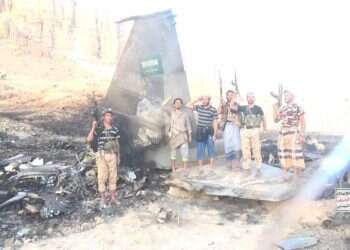
Hamas on Thursday tried its usual tactic: psychological warfare. Releasing information supposedly related to the IDF special forces operation in Gaza on Nov. 11 is meant as a manipulation that Hamas hopes will produce certain results.
Hamas likely has several goals in mind. The first, as always, is to embarrass Israel – to point a spotlight into the shadows and show that the operation failed, and to reveal the soldiers' identities and turn the hunters into prey.
The second goal is to gather information. Hamas cannot be certain that the information it has is correct. It hopes Israeli citizens will disseminate the information, share and chatter, naturally wondering if they recognize someone. Hamas hopes this will help it verify or discredit the information it has.
The third and most important goal is to understand what happened. What was the undercover commando team doing in Gaza when it was detected? Were they at the start of their mission or the end? What was their specific objective? Photographs disseminated after the incident indicate that Hamas has some equipment the soldiers left behind and it is trying to piece together what it was used for. It hopes Israeli chatter will reveal more of the puzzle.
The fourth and final goal is to tarnish Israel in the eyes of regional players – specifically Egypt and Qatar – as responsible for starting the latest round of fighting. Additionally, Hamas probably wants to signal to its partners in the region (primarily Iran and Hezbollah) that Israel is not idle, even after the shooting stops.
From this perspective, the IDF censor was right to prohibit publication of the photos in Israel. We can ponder the effectiveness of such a measure in a world of social media and information sharing, but no one has ever regretted damage that was not caused. While it is unclear how successful the censorship will be, there is no question that the operation was clearly necessary for the country's security.
Hamas, however, is not the only one capable of playing this game. Mere minutes after the terrorist group released the photos from the IDF operation, the Shin Bet security agency said it had uncovered a Hamas terror cell in Hebron that was planning massive attacks in the heart of Israel. Beyond thwarting a terrorist plot and saving lives, the goal is to tarnish Hamas and its leadership, and to show that while Israel allows fuel, goods and cash to enter Gaza, Hamas is trying to carry out terrorist attacks inside Israel.
The revelation of this terrorist plot sheds light on two other interesting details. The first is that Hamas continues to try to exploit Israel's humanitarianism in allowing sick people to enter for medical treatment. The second and more important detail is that Hamas leaders in Gaza, not abroad, orchestrated this plot. While this may seem like semantics – because what does it matter which of two hands on the same body instigated a terrorist attack – it still illustrates two things: Hamas abroad, under the Turkey-based leadership of Sala al-Aruri, is struggling to put terrorist attacks in motion, and the group's Gaza headquarters is trying to supplant it despite the obstacles Israel imposes.
The simultaneous publication of both these affairs is a reminder that even if things appear calm, the issues in Gaza are still bubbling underneath the surface. On Friday, like clockwork, the masses will gather along the security fence for their weekly clashes with IDF troops, and as usual these clashes have the potential to spark hostilities anew. Although both sides do not want this to happen, their actions could lead them toward an undesired conflagration. We can only hope that Israel is utilizing this lull to bolster its assets and mitigate the potential risks, thereby improving its starting position before the next round of fighting begins.