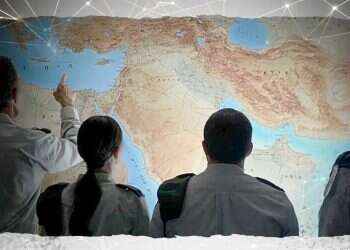
These are difficult days for Iran. Israel has carried out a number of strikes against targets linked to Iranian forces and their satellites in Syria. Iran promised to respond, but for now, its only move has been to send a drone armed with a small bomb toward Israel, which was intercepted. Although an Israeli fighter jet was shot down during the response to the drone, that is small comfort to the Iranians. They have learned that Israel is prepared to address threats such as drones sent into its airspace.
It is no coincidence that the response to the strikes has been delayed. It appears that Iran is preparing a response that will deter Israel from further strikes, while Israel has increased the frequency of its attacks on Iranian targets in Syria and is promising to keep them up. Iran's problem is that it does not have a solution that will stop the Israeli strikes as long as it remains at a disadvantage against Israel in the Syrian arena. As long as this remains the balance of power, an attempt to attack Israel could cost Iran dearly.
The main threat Iran can pose to Israel is with missile salvos, most likely fired by Iranian proxy Hezbollah, mostly from Syria. But a response of that kind could spiral into a broader conflict and Iran has no interest in a development like that, for two reasons: It could harm its efforts to strengthen its position and influence in Syria and Iraq, which is currently its top strategic goal; and a large conflict could provide Israel with reason and opportunity to attack Iranian nuclear facilities.
In addition, there is the painful blow of Israel snatching Iran's nuclear archive out of the heart of Tehran. While it appears that the material does not contain any smoking gun or unequivocal proof that Iran has tried to develop nuclear weapons since the nuclear deal with world powers was signed in 2015, it is a clear indication of the Iranian regime's fundamental intention of obtaining nuclear weapons, which could increase pressure to revisit and fix the deal.
The intelligence operation in Tehran could give the Iranian regime another reason to respond. There are rivalries and disputes within the regime. No less important, millions of Iranians want an essential change to the regime, and some are repeatedly taking to the streets in prowwww. In December 2017, masses of Iranians marched in the streets calling for improvements to the economy, particularly an end to Iranian intervention in Syria, which is costing the government billions of dollars.
For a dictatorial regime like the one in Tehran, it is especially important to project power and success to its supporters and rivals. But the capture of its archive was an embarrassment – it could not stop such sensitive material from being grabbed from under its very nose. The sense of humiliation, which is clearly being felt at the apex of the regime, along with the concern that the opposition will try to exploit the regime's helplessness to stir up outrage, could motivate the regime to carry out a retaliatory operation against Israel that will be painful, but will restore Iran's lost honor.
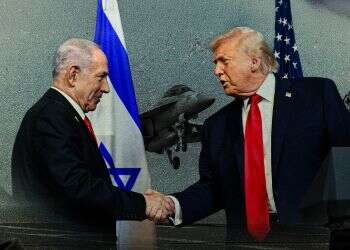
Finally, U.S. President Donald Trump is about to announce whether the U.S. will remain part of the nuclear deal or not. Whatever happens, it will be a blow to Tehran. While the deal places important restrictions on Iran's nuclear program, it offers Iran important advantages: It removes many of the sanctions against it, and a few years from now, when the restrictions are lifted, Iran will be able to rush toward nuclear weapons. All thanks to the deal.
If the U.S. withdraws from the deal, sanctions against Iran will be restored, leading to a worse economic situation there. Iran has already rejected a demand that it enter negotiations on issues that were not part of the deal, such as its missile program and oversight of its nuclear facilities, which could lead to the sanctions being put back in place.
Iran is facing tough decisions about Israel, since Israel has an advantage in Syria, and the U.S. is also against Iran. But we need to remember that Iran also has certain advantages, including its satellites on the ground, its ties to Russia, and its ability to employ the element of surprise.