The Iranian choice
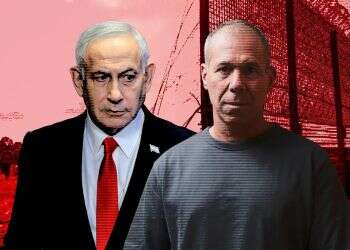
On January 3, the members of the new US House of Representatives will walk into their offices. By all signs, several dozen Democrats will move into offices vacated by Republicans routed in the fall. The nearly certain loss of the House, alongside the fairly likely loss of the Senate, will make the president's life hell. Not only his, perhaps.
The US Constitution permits the president to launch military action, but after 60 days approval is required on Capitol Hill. The president, certainly the current one, can continue, but in that case he is exposed to legal risks and especially to budgetary ones. A hostile Congress can block budgets, and America, as is well known, does not fight with only its fingernails.
What can be done in two months that would change the picture? And if the goal is to get ahead of the hostile Congress, is it worth it for Trump, against all odds and analyses, to open a campaign even before then?

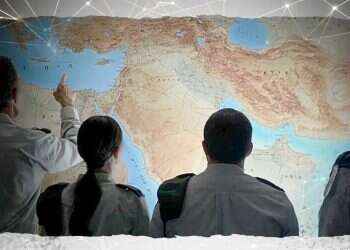
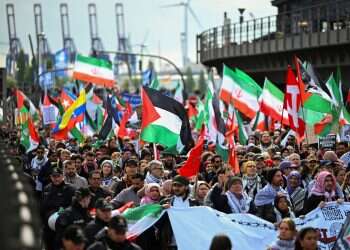
A growing buzz has surrounded Washington and Jerusalem in recent days. It is no longer false rumors and speculation. Something is happening. On its face, that runs counter to all logic. The Iranians don't want to escalate before the elections in Israel, and Trump doesn't want to escalate before the elections in America. But if you start a campaign at the end of October and then get approval from the still-Republican Congress at the end of December, perhaps that is the way to topple the regime? After all, the Iranians work for the long term, and two months to them is nothing.
Or perhaps the story is a limited, pinpoint event that won't send fuel prices soaring but will bring a significant achievement that will, hopefully, end the debate over the war's necessity and results. What could be short and elegant? How do you avoid getting entangled in a third round that ends with no clear decision, at a sensitive time for two politicians whom the polls predict a hard blow, on both sides of the ocean?
The quiet revolution
The 26th Knesset will be marked by a human statistic that probably has no parallel in world history: one in every ten Knesset members will come from a family bereaved in the last war. Gadi Eisenkot, possibly the next prime minister, lost his son. On his list, in realistic spots, are Shira Shapira, who lost her son Ener at the shelter in Re'im, Nir Hajbi, whose son Yonatan was murdered two kilometers west of there in those very same hours, and Shai Fisher, whose grandmother and uncle were murdered in Kfar Yuval by Hezbollah fire.
Tali Gvili of Likud is the mother of Ran, the hero of the battle at Alumim, five minutes from there, and the last hostage returned from Gaza. On the Yisrael Beiteinu list are Rafi Ben Shitrit, whose son fell on October 7, and Sharon Sharabi, whose brother Yossi was murdered in Hamas captivity. On the Together list is Michal Negri Hirsch, mother of Roi, who fell defending Be'eri on October 7. Religious Zionism chairman Bezalel Smotrich is a cousin of Amishar Ben David, who fell in Gaza, and his number 2, Moshe Feiglin, is the grandfather of Yair Levin, who fell in Gaza. The Democrats' Omri Ronen is the grandson of Nira Ronen, who was murdered in Kfar Aza. That is without counting the bereaved brothers Benjamin Netanyahu (Yoni, Operation Entebbe), Eliasaf Peretz (brother of Uriel and Eliraz, who fell in their service) and Limor Son Har-Melech, whose husband Shuli was murdered before her eyes in a terror attack.
Add a parent of freed hostages (Zvika Mor), a wounded war veteran (Elisha Madan) and a host of other contributors to society, and this is exactly the Knesset we supposedly longed for. According to the polls, 60 Knesset members will be replaced. Half a new Knesset is on its way, and we are once again standing in the same dead-end alley.
We were promised a nasty, violent, fateful campaign. We got a boring, nonexistent one. After a brainstorm we funded to the tune of hundreds of millions of shekels, one camp is recycling the line "Bibi or Tibi", while the other thought and thought and concluded that "anyone but Bibi" is the most effective message.
Maybe it's connected to the indecision, maybe to the fact that the MKs are new, but the molds they were poured into are very old. Maybe it's connected to digital changes. Rallies gave way to street signs, which were converted into TV spots, which moved on to internet banners, and in this election everything runs on paid, targeted social advertising. There is almost no trace of it in the public arena, only in the jeans pocket. A similar story played out in the previous election, equally boring, which ended in an exceptionally high turnout.
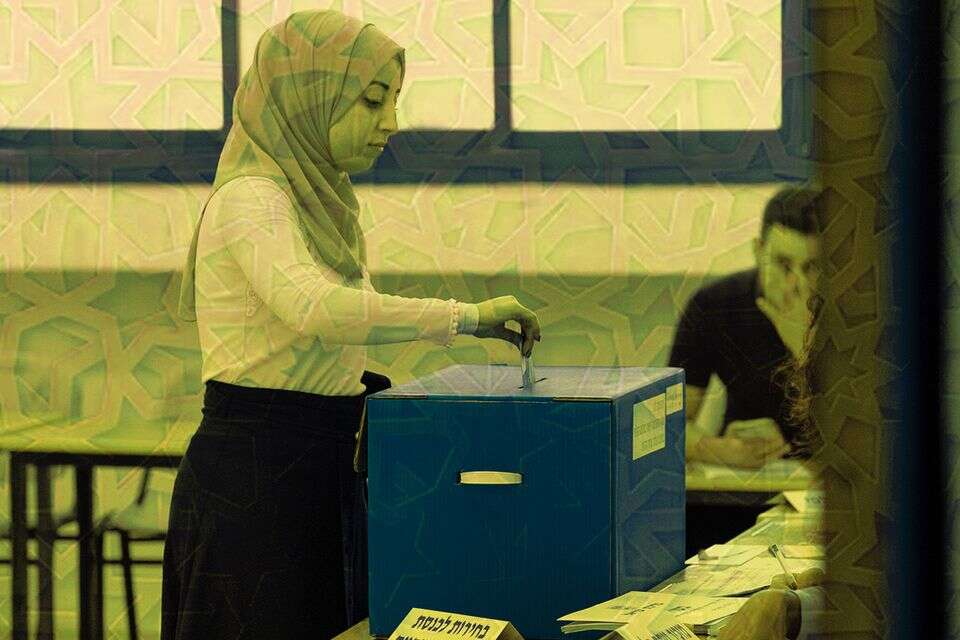
The story of the week, therefore, may be hiding in jeans pockets in the Arab Triangle. Arab turnout is surging, according to Change Bloc party polls. In one of them it scrapes 70 percent, a 30-year high. These figures are a double-edged sword and pose a very hard dilemma for the opposition parties and their get-out-the-vote operations. Turnout like that would greatly help push Winter and Zelicha below the electoral threshold and widen the gap from Likud. On the other hand, it would push the chance of forming a government even further away. No one talks about a 61-seat coalition anymore, but with 52 seats for the Change Bloc it would be nearly impossible to form even a temporary minority government.
The question there is, in short, one of risk exposure. Is it better for Arab voters to turn out in a way that finally ends Netanyahu's chances of forming a government, at the price of paralysis? Or is it better for them to stay home, which leaves a chance for a coalition but also a bitter surprise from the other side? It's not certain the dilemma is still in their hands.