"There is only one thing worse than fighting with allies, and that is fighting without them." (Winston Churchill)
Flydubai Flight 1073 was not the first time an Israeli drama unfolded in the skies over Saudi Arabia.
In the early 1960s, Israeli Air Force transport planes flew along the Saudi coastline carrying military equipment that was parachuted to royalist rebels in Yemen, who were backed by Riyadh. The covert mission, devised at the highest political levels and given the peculiar codename Operation Sauce, was not revealed until the 2000s. It is considered the first instance of military cooperation between Israel and an Arab party.
Direct clandestine relations with Saudi Arabia, according to media reports, were established only beginning in 2006, under the leadership of the late Mossad Director Meir Dagan, who was apparently the first Israeli to establish direct contact with officials in the kingdom.
By 2010, when Eyal Tsir Cohen was appointed head of the Middle East Division in the Mossad's Tevel Directorate, the relationship Dagan had established was already a done deal. "I inherited the relationship the Mossad had developed with Saudi Arabia," Tsir Cohen says.
During that tentative period, contacts with Saudi Arabia were generally conducted through a third party, in what the Mossad calls a "special liaison." "For example, I could ask an American contact to arrange a meeting between the Mossad representative in Washington and our contact at the Saudi Embassy, during a White House reception or something similar," Tzir Cohen recalls. "They would slip into a side room and talk."
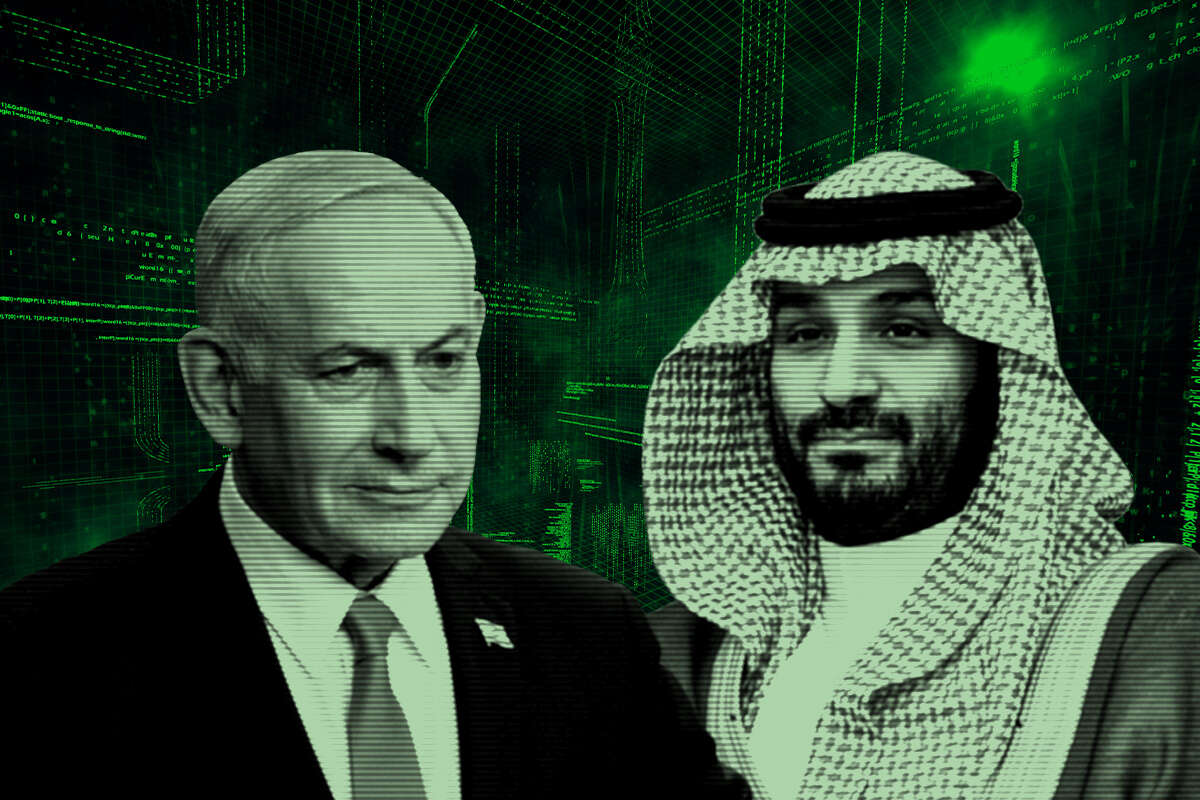
The Saudi contacts with whom Israel dealt in the US over the years were diplomatic figures, most notably Prince Bandar bin Sultan, the former Saudi ambassador to Washington, who was and remains one of the most influential figures in Saudi foreign affairs. He is also the father of the kingdom's current ambassador to Washington.
Over time, Tsir Cohen explains, the goal was to take the relationship further. "Our ambition was to move from third-party contacts to direct engagement with intelligence professionals, then to political officials and ultimately to the leadership. We were looking for channels into the royal family, even though the Saudis were extremely worried that their ties with us would be exposed. Our interest was to spread the 'virus' of cooperation as far as they could tolerate it. Part of that meant solidifying ties at the professional level and turning them into personal relationships. So sometimes we initiated operations that, even if they had little intelligence or military value, created opportunities for Israelis and Saudis to sit together. The personal connection was what we were after."
As with any relationship between countries and intelligence agencies, these secret ties were driven by mutual interests. Over the years, Riyadh sought valuable Israeli intelligence and various cyber capabilities, while Jerusalem hoped to cultivate contacts at the highest levels of one of the Middle East's wealthiest and most powerful countries, a potential counterweight to Iran.
Intelligence cooperation helped prepare the ground for the diplomatic relationship that followed, including the public normalization talks in the months leading up to Oct. 7, 2023. But apart from a handful of disclosures, including revelations that Israel's NSO Group had supplied Saudi Arabia with its Pegasus spyware, the covert relationship between the two countries remained a closely guarded secret.
That changed about a month ago, when a report by Danny Zaken in Israel Hayom revealed that Saudi Arabia had recently approached Israel through US Central Command (CENTCOM), seeking intelligence to help it confront the increasingly powerful Houthi rebels in Yemen.
The request marks a new level of intelligence cooperation between the two countries, a relationship that had already intensified significantly during Gen. Michael "Erik" Kurilla's tenure as CENTCOM commander.

What does Israel receive in return?
"Generally speaking, when you share intelligence with a partner, that partner may repay you in an entirely different currency," says a former senior official in the IDF Military Intelligence Directorate. "More often than not, it's a strategic payment for an intelligence commodity."
Israel and Saudi Arabia are unlikely to confirm it, but Houthi leader Abdul-Malik al-Houthi made precisely that claim in a speech delivered several days after Zaken's report was published. According to al-Houthi, in exchange for the intelligence it received from Israel, Saudi Arabia "opened its airports to Israeli intelligence flights against Yemen."
A warning during the Olympics
The emergence into the open of intelligence ties between Israel and Saudi Arabia comes against the backdrop of the opposite trend now unfolding with Britain. The Israeli and British intelligence communities have maintained a close relationship for years, second only to Israel's ties with the US intelligence community.
But that relationship is now being tested. About a month ago, reports emerged that following the British government's decision to impose economic sanctions on Israel over its policies in Judea and Samaria, the head of MI6, Britain's foreign intelligence service and the counterpart of the Mossad, approached the British prime minister and foreign secretary to warn that the political move could jeopardize intelligence cooperation.
"MI6 are tearing their hair out," a British political source told The Spectator. That source is not alone in believing British intelligence has much to lose from a deterioration in diplomatic relations with Israel. "Israel has cyber capabilities that exceed those of MI6," Ralph Goff, a former senior CIA officer who spent years stationed in Europe, explained this week.
Further evidence of Israel's intelligence advantage emerged only recently. According to media reports, Israel helped Britain thwart an Iranian plot to attack RAF Fairford, a British air force base, last month.

"Israel has prevented a great many terrorist attacks through intelligence it provided to its partners," says a former intelligence community official who held a particularly senior position. "I'm talking about dramatic plots that were thwarted: Assassinations of senior officials, mass-casualty terrorist attacks and assaults on military forces. After preventing an attack like that, you land in the country you've just warned with your chest puffed out and say, 'Dear British friends, forget about the settlements for a moment. Remember what Israel did for you.'"
Examples are not hard to find. In August, The Wall Street Journal reported that Israel had provided the US with intelligence about an Iranian plot to assassinate President Donald Trump by bringing down Air Force One as he prepared to depart Turkey. In July 2024, reports emerged that Israel had supplied France with intelligence that prevented a terrorist attack during the Olympic Games. In 2018, Israeli intelligence was credited with thwarting a plot to bomb an Australian passenger plane flying from Sydney to Abu Dhabi. And those are just a few examples.
"Israeli intelligence is often ahead of that of our partners, including the Americans," the former intelligence official continues. "Whenever Unit 8200 personnel met their counterparts at the NSA, we always came away with the upper hand. So when you have intelligence about an attack that's already being planned, you can quickly call your counterparts, usually through Mossad channels, and use that information as leverage. You can say, for example, 'I'm about to save a concert where ISIS is planning to carry out an attack.' There's nothing unusual about that."
What does Israel get in exchange for the intelligence it provides?
"It's not a supermarket where you hand over one thing and purchase something else in return." One objective, he explains, is to bolster the standing of Israel's political leaders. "After a piece of intelligence is passed along and saves lives, the defense minister or prime minister can pick up the phone the next day, call that country's president and say, 'We saved your asses. You owe us.' That has tremendous value."
The goal: A public diplomacy victory
Intelligence and diplomatic relations have always been intertwined. Sometimes intelligence ties save diplomatic relations, and sometimes the reverse is true.
"It often happens that a prime minister, say ahead of a secret visit to a country with which we have no diplomatic relations, asks his military secretary to contact the head of Military Intelligence and request intelligence that could help that country," says someone who previously worked in precisely this field. "At the end of the day, Israeli intelligence is part of Israel's foreign relations."
Just last week, a representative of a foreign country arrived in Israel and, at the Foreign Ministry's request, received a classified intelligence briefing from senior officials. "I could see how important it was to him to hear what we had to say," says the official who delivered the briefing. "It was important to the Foreign Ministry, too."
There is a reason the practice is known as "liaison intelligence," or in professional jargon, "FORINT," short for foreign intelligence liaison. It is a branch of intelligence in which agencies share information with their counterparts in other countries, sometimes even hostile ones, to expand their intelligence collection capabilities or establish and strengthen diplomatic relations.
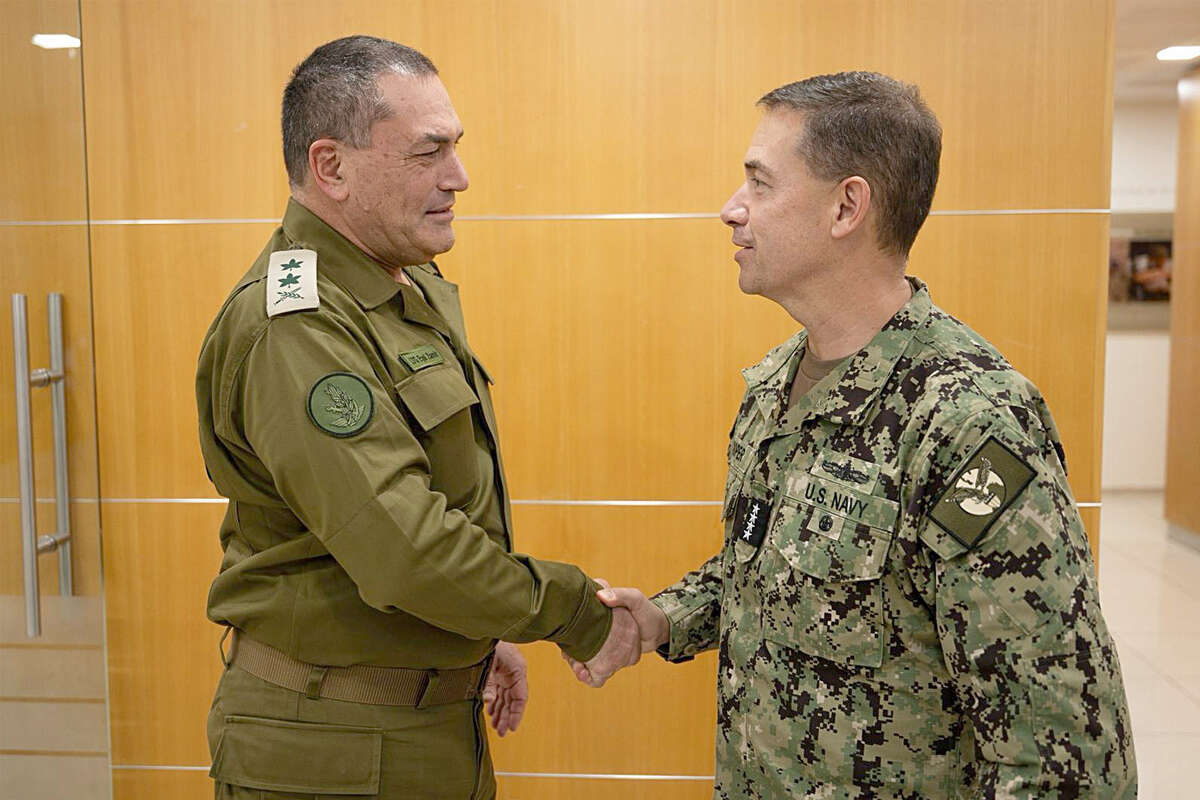
Despite the failures of Oct. 7, Israeli intelligence remains one of the world's most highly regarded intelligence services, operating through an extensive network of partnerships. According to foreign reports, Israel maintains intelligence cooperation with at least 25 countries, ranging from the US, European countries and Persian Gulf states to countries such as Brazil and Panama in Latin America.
All are interested in the intelligence Israel has to offer. Yet the flow of information goes both ways, and sometimes Israel is the party receiving critical intelligence from its partners. One example was the so-called Emirati warning that United Arab Emirates President Sheikh Mohamed bin Zayed Al Nahyan, commonly known as MBZ, reportedly conveyed to Prime Minister Benjamin Netanyahu on the eve of Oct. 7. Although Netanyahu denied receiving the warning, he acknowledged that "if there was any relevant information, it was passed through intelligence channels between the two countries."
Incidentally, there is one subject on which Israel almost never provides intelligence to foreign partners or receives it from them: The Palestinian issue.
"We have a problem there because of the diplomatic sensitivities," a security establishment official acknowledges. "Liaison intelligence is a trade in interests," says a former senior Military Intelligence official. Ultimately, the reason you develop your own intelligence sources is to protect the interests of the State of Israel. If you decide to take a risk and share that information with someone else, you need a very, very good reason to do so. Cases in which we help a foreign country purely out of goodwill are rare."
He says that intelligence was occasionally provided purely on humanitarian grounds, including to countries that did not enjoy good relations with Israel. "In those cases, we acted solely to save lives, because the information we gave that country brought us nothing in return," he says.
Sometimes intelligence is passed to another country not to prevent an attack, but to secure a public diplomacy victory. For example, early in the war, Israel effectively exposed an important intelligence source when it presented evidence to the world that the deadly explosion at Gaza's al-Ahli Hospital was caused by a failed Palestinian Islamic Jihad rocket launch rather than an Israeli airstrike.
In all the cases described above, liaison intelligence proved to be an exceptionally effective tool. It is no coincidence that Tsir Cohen describes the practice as a "force multiplier."
"Because biometric capabilities have developed tremendously in recent years, making it much harder for Israeli Mossad operatives to operate in foreign countries, cooperation has become a central driving force in Mossad operations, the mechanism that enables the other operational units to function," he explains.
Historically, the Mossad's Tevel Directorate, which Tsir Cohen headed in his final position at the agency, was responsible for managing Israel's foreign intelligence relationships with all its partners, including the US. The directorate oversaw Israel's relationship with the CIA and, through it, the wider American defense and intelligence establishment. It also played a central role in the peace agreement with Egypt, relations with Jordan and the Abraham Accords.
"As head of the directorate, I'm the one who builds the process of establishing contact with the other side," Tsir Cohen says. "When a need arises, our personnel examine the best way to approach that country, who the relevant contacts are, what they need from me and what I need from them. In many cases, your needs and those of your partner don't overlap. I might, for example, help a particular country develop solutions in various fields, knowing that in return I want information from them on an issue that interests me. For instance, I'll give a country intelligence about a terrorist organization, and they'll give me a mapping of an enemy country to which they have access."
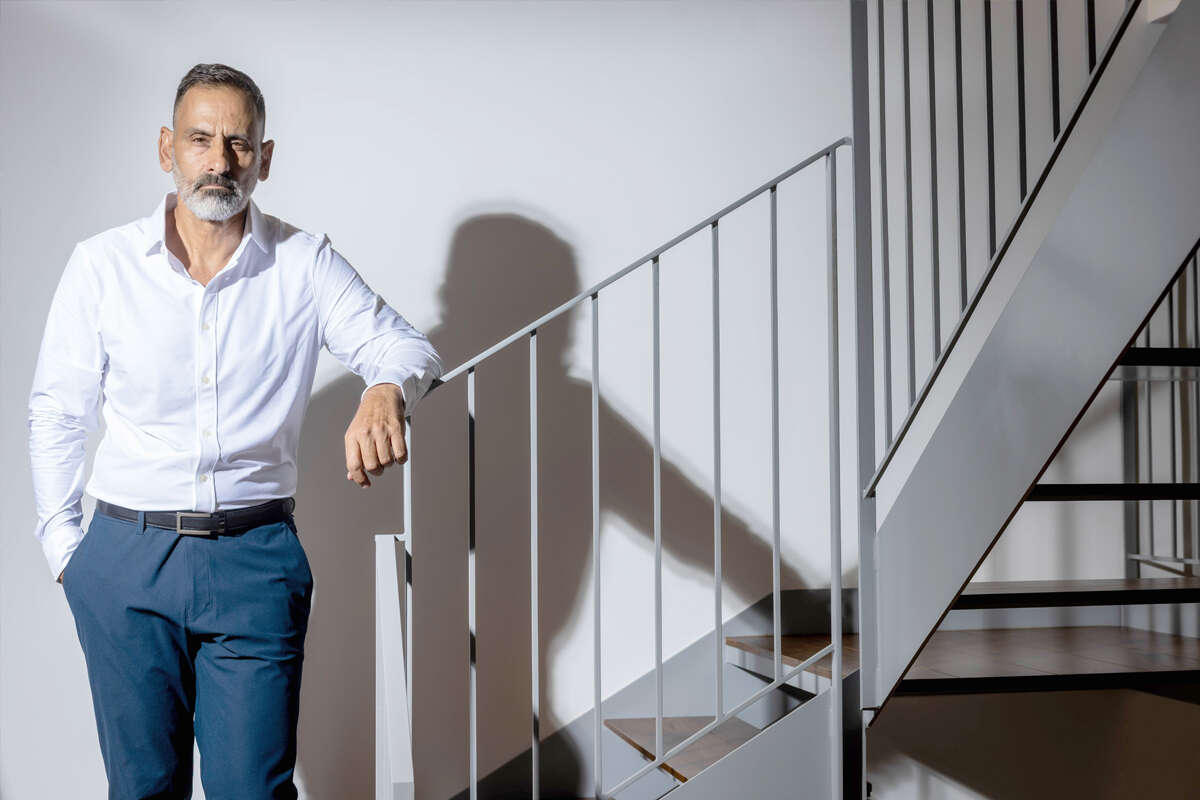
Over the years, the management of foreign intelligence relationships expanded beyond the Mossad into the IDF. The first breakthrough was the establishment of direct ties between the IDF Military Intelligence Directorate's Unit 8200 and its American counterpart, the National Security Agency (NSA).
The relationship began at the Americans' initiative following the 1973 Yom Kippur War. During that period, senior officers from the two organizations began meeting, initially under CIA auspices and later independently. Such meetings have continued regularly, several times a year, ever since.
A similar relationship subsequently developed with Britain's Government Communications Headquarters (GCHQ). "The degree of intimacy that has developed between the units is extremely high," says a former senior Unit 8200 official.
"Our cooperation with the US and Britain is unlike anything else. The openness is different, what you're prepared to share is different, and so is what you receive in return. The relationship with the NSA is probably the closest relationship that exists between an Israeli intelligence unit and another organization. We saw that very clearly during Operation Roaring Lion in Iran."
A former head of Military Intelligence describes the close relationship he established with his counterpart in another country, a relationship that continued even after the man was appointed chief of staff of his country's military.
"Today, I can pick up the phone and call that chief of staff directly," he says. "That's an enormous source of power. Today, when Netanyahu is at odds with the leaders of so many countries, what's often left are the ties between the intelligence communities. It's an extraordinary situation."
Israel is not Sparta
Alongside the Mossad's Tevel Directorate and the independent relationships between intelligence collection organizations, such as Unit 8200 and the NSA, the IDF Military Intelligence Directorate also expanded its work in foreign intelligence liaison.
In 2003, against the backdrop of the Sept. 11 terrorist attacks and the global war on terror, a decision was made to enlarge the Military Intelligence foreign relations branch, formerly known as Branch R, and turn it into a department. The new department was later named the International Intelligence Cooperation Unit, known by its Hebrew acronym, Mashab. The officer selected to command the new unit was Col. Assaf Orion, now a brigadier general in the reserves.
"I saw the department first and foremost as an intelligence collection tool," Orion says. "Every military unit has its own tools: Systems, weapons and so on. Our medium was flights, meetings and information sharing. With a modest but intelligent investment, you can gain access to an entire intelligence agency and tap into the potential output of enormous resources someone else has invested. This method of intelligence cooperation is one of the most cost-effective disciplines there is. Everyone would prefer to handle matters independently and directly, without needing anyone else, but that's not how life works. The idea that Israel can be Sparta, meaning that it can manage entirely on its own, is somewhat childish. Cooperation, in general, arises when our problems exceed our independent capabilities. The intelligence world is no different."
According to Orion, "To cooperate, you need, on the one hand, a common foundation, whether in values, diplomacy or strategy, and on the other hand, differences between the two sides. If you have exactly what I have, there's no point in cooperating. So you ask yourself what you need and who has it, how you can reach that person, what they'll want in return and how to build a relationship. For example, the State of Israel has excellent satellite capabilities, and it has Unit 8200, which is at the forefront of the world's signals intelligence and cyber agencies. But there are others whose greatest advantage when they wake up in the morning is that they aren't Israeli. That means they can naturally reach places around the world that we have to make enormous efforts to access. What we have in common, and what distinguishes us, are the foundations of cooperation."
Bureaucracy also plays a role, as do the people within it. Orion recalls an incident in which he wanted to advance intelligence cooperation with an organization in a foreign country that was among the best in the world.
"The Israeli military attaché in that country approached the intelligence organization through official channels and received a polite but unequivocal refusal," Orion recalls. "As it happened, I traveled to that country for a course where the organization's deputy director was giving a lecture. After the lecture, I approached him and asked whether we could sit down and talk for a while. The next day, we sat on a bench in a garden, and I gave him an overview of Military Intelligence, what capabilities we had and what we wanted to do together in the future. A few weeks later, he called me and gave me a senior contact on his behalf. We formalized cooperation with that official, and the relationship has since soared to new heights. That meeting on the bench was what opened the door. In the end, it's all about people."
The motorcade was visible from the plane
Mashab continued to grow, deepening cooperation with numerous countries and establishing ties with new partners. Over the past four years, the department has doubled its workforce, an indication of its growing importance. "We broke down the fear barrier," says a source who worked closely with the unit. "It's no longer frightening to walk into a room with a partner and discuss something."
Today, the department is divided into three geographical divisions: The Americas, Europe and the regional division. It operates under the Military Intelligence Directorate's Operations Division. Its personnel wear civilian clothes, and its headquarters is housed in a civilian-looking building in the greater Tel Aviv area, far from the IDF's Kirya military headquarters.
One entire floor of the building was set aside, at considerable expense, for a spacious hospitality complex featuring several reception halls of different sizes, named after familiar Israeli regions: Negev, Galilee and Golan. These elegant rooms, which also feature a drinks bar and deep armchairs, make it possible to host foreign delegations and senior dignitaries in a setting that requires no apologies.
Against the backdrop of reports about close cooperation between the IDF and foreign militaries during the war with Iran, it is not hard to imagine the foreign officials who have visited the complex over the past three years. The substantial investment in the hospitality facilities is just one indication that Military Intelligence has come to recognize the power of liaison intelligence.
The fleet of luxury vehicles purchased specifically for the department, unlike anything found elsewhere in the IDF, is also part of Mashab's protocol. "Military Intelligence deals with which suits people wear when they travel abroad, what gifts they bring and how they behave at dinner," says a former senior official in the directorate.
Department personnel recall, for example, an officer who turned up for an important meeting wearing a business suit and Blundstone boots. He was immediately sent home to change his shoes.
"Attention to those details matters," the former official continues. "Not long ago, the intelligence chief of a foreign country arrived in Israel for the first time, but the Israeli head of Military Intelligence was too busy to meet him. When the IDF chief of staff at the time heard about it, he immediately cleared two hours from his schedule and hosted the foreign officer in his office. Mistakes like that can destroy relationships."
Nevertheless, with all due respect to the hospitality skills that Military Intelligence has developed, everyone agrees that Israel still has something to learn.
"When you travel abroad, particularly to the more secretive countries, it's another world," says a former Mashab official. "A private jet, luxury cars waiting for you at the foot of the aircraft stairs, fine-dining restaurants. It's nothing like the Israelis, who will take their guests to a kosher restaurant. I've been both a host and a guest. I prefer being the guest."
"When we flew to the Emirates, we used to joke that you could already see the motorcade heading toward the airport from the air," adds the Mossad's Tsir Cohen. "They have Bentleys and Aston Martins that we can only dream of. They know how to make you feel like the most important person in the world."
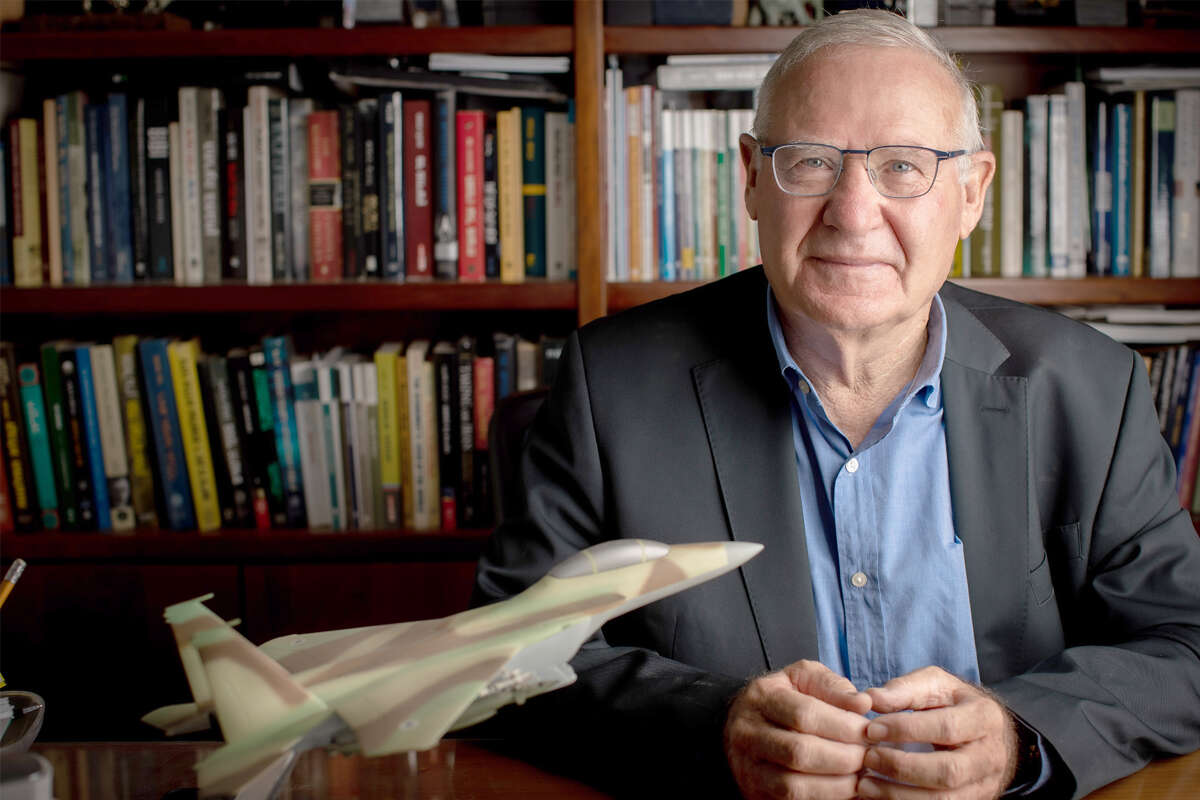
One of the heads of Military Intelligence who invested heavily in foreign intelligence partnerships was Maj. Gen. (res.) Amos Yadlin, who served in the position from 2006 to 2010. "Foreign intelligence liaison is a very important dimension of intelligence," he says. "I personally invested in it because I believed that the intelligence services of the US, France, Britain and even Russia could be enormously useful to us if we knew how to work with them properly."
Trump's 'leak'
Yadlin cites the elimination of Hezbollah military chief Imad Mughniyeh as an example of close intelligence cooperation between Israel and the US.
"The Americans have a presence in Damascus, and if an American walks around Damascus, he won't automatically arouse suspicion," Yadlin explains. "If an American rents an apartment in Damascus, that won't necessarily raise suspicions either. An Israeli can't do that. What you have here is a product of shared interests and relationships built on trust. Those two things are the glue that holds intelligence partnerships together."
One of the operating principles observed by successive heads of Military Intelligence is never to share information that could ultimately harm Israel or expose an Israeli intelligence source. For that reason, in the overwhelming majority of cases, the head of Military Intelligence personally approves the transfer of intelligence to a third party. Sometimes the approval comes from an even higher level, including the IDF chief of staff, the Mossad director or the prime minister. Intelligence is generally passed on in the form of a sanitized summary, known as a "paraphrase" in Israeli intelligence terminology, a paragraph containing the relevant information while concealing the source's identity.
During the period when ISIS was highly active, Israel transmitted numerous such summaries that saved lives in other countries.
"One of the most 'productive' periods for Military Intelligence was at the height of ISIS activity in the Sinai Province," recalls a former senior official. "On one occasion, we received extremely detailed information about a planned attack on the Multinational Force and Observers base in Sinai, located at El Gorah. We knew exactly where the terrorists would come from, how they would infiltrate the base and how many fighters were involved. We immediately passed that information to the other side. We also saved a great many Europeans who were going to a concert and had no idea ISIS was planning to kill them there."
In another case, information was passed to American authorities about an ISIS plot to bring down passenger aircraft using laptops packed with explosives. Trump, who was then serving his first term as president, shared the information with the Russian foreign minister. The matter subsequently reached the media and became public. "Naturally, Trump's leak, which could have exposed a spy within ISIS, violated every understanding we had with them," says an Israeli official who was privy to the affair.
Trump refused to apologize and insisted in a Twitter post that he had the right to share sensitive information with whomever he wanted. Since then, however, the American president appears to have learned how to handle intelligence received from his partners.