

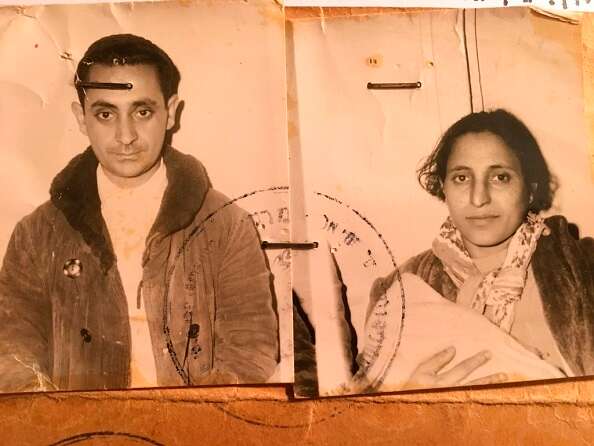
An electrifying new Israeli documentary series on the problematic integration of Middle Eastern Jews by Israel's European founders in the 1950s has reopened old wounds of an ethnic divide ahead of the country's 70th Independence Day festivities.
While Israel marks the anniversary by highlighting its prosperity and successes, it is still wrestling with divisions – and not only between Jews and Arabs. For those who view the Jews as a people no less than a religion, the intra-Jewish rift is especially painful.
"The Ancestral Sin" has ignited new outrage and disbelief by arguing that the immigrants were systematically marginalized by seemingly bigoted bureaucrats. The controversy has exposed just how raw sentiments still are about the history of relations between Mizrahi Jews, from the Middle East and North Africa, and those from Europe, the Ashkenazim.
"This was a state that directed their fate without including them at all, while deceiving them and imposing its policies on them," said David Deri, the director.
"To this day, society hasn't really dealt very deeply with these people and places."
Arriving from Arabic-speaking countries in the Middle East and North Africa after Israel's establishment in 1948, many Mizrahi immigrants were sent to shantytown transit camps and largely sidelined by the country's European leaders. They have long complained of discrimination by the European-descended elite that traditionally dominated the government, military and economy.
Ironically, they eventually found their political savior in Likud party leader Menachem Begin, who was himself a Polish Jewish immigrant.
As the longtime opposition leader, Begin cultivated an outsiders' alliance that appealed to the Mizrahi Jews' sense of deprivation, and with massive Mizrahi backing, he swept to power in 1977 to shatter nearly 30 years of Labor rule. The community's loyalty to Likud has remained steadfast.
Tensions have diminished over time. Marriages between Mizrahi and Ashkenazi Jews are now common, and Jews of Mizrahi descent have risen to the highest echelons of the government, military, judiciary and entertainment industry.
But gaps remain. There has never been a Mizrahi prime minister. Mizrahim far outnumber Ashkenazim in prison, and are far outnumbered in academia. Ashkenazi men earn more than Mizrahim, according to the Adva Center think tank, although there is less difference than in the past.
The series has ramped up an internal Mizrahi debate over how to address past grievances. While many Mizrahim feel their narrative has been shut out, others willingly distanced themselves from their Middle Eastern roots upon arrival. Those efforts often morphed into anti-Arab sentiment and support for Likud's hard line toward the Palestinians.
"The Ancestral Sin" begins in the southern Israeli working-class town of Yeruham, where Deri's family and thousands of others were sent when it was little more than an expanse of sand dotted with caravans. Deri's aging parents, who came from Morocco, tearfully explained how their pleas to immigration officials to be settled near Israel's main cities fell on deaf ears.
New immigrants were dispatched to remote towns to help secure Israel's borders in the volatile years after the state's creation, but the film contends that it was mainly Mizrahim who bore the burden.
The series leans on transcripts from meetings of the Jewish Agency – the country's main immigration facilitator – as well as officials' correspondence and personal diaries. It includes interviews with academics, North African immigrants and a bureaucrat from the time.
Drawing on obscure documents tucked away in Jerusalem's Central Zionist Archives, the series presents facts known mostly to scholars but which Deri said are absent from the public discourse and history textbooks.
The documents show that those who put up a fight were threatened, either with being denied food or having their children taken away. European immigrants, in contrast, appear to have been treated more leniently and often ended up in or near Israeli cities.
"I was shocked," Margalit Tzanaani, a popular Israeli singer of Yemeni descent, told Army Radio.
"We were taught about the titans of Zionism, people who have streets named after them, who are, forgive me, racists."
The documents, read aloud by an Ashkenazi veteran broadcaster Yaron London, are peppered with inflammatory language that the series' creators say points to racist tendencies among Israel's founding elite.
"How can the future of a nation be built on such human ruins?" Chaim Sheba, a senior health official who would later have a major hospital named after him, is quoted as saying. Other officials discuss the "primitive" new immigrants and question their intelligence levels.
Since it aired last month, the series has been a frequent topic on TV and radio talk shows, and has been shown at special screenings for officials and military brass. Even Prime Minister Benjamin Netanyahu has chimed in, promising to expand access to the documents brought to light in the series.
Reactions have ranged from outrage to calls for action. An Israeli city has vowed to change a street named after an official quoted in the series making offensive remarks against Mizrahim.
"Watching the film, a sense of anger, alienation and even despair sneaks up on you. But that feeling motivates me to do, to act, to fix society, to cut off the multi-generational chain of social failure," Michael Biton, the mayor of Yeruham, wrote in the financial daily Globes. "It is our moral duty toward the immigrants."


