Israel Hayom is a media organization founded on the belief that the Israeli public deserves better journalism—more balanced, more accurate, and more reliable. Journalism that speaks rather than shouts. Journalism that is trustworthy, objective, and matter-of-fact. A different kind of journalism, offered free of charge. The first print edition was published on July 30, 2007, and in 2010 Israel Hayom became the Israeli newspaper with the highest weekday readership. The newspaper’s publisher is Dr. Miriam Adelson. Its Editor-in-Chief is Omar Lachmanovitch, and its founding editor is Amos Regev. Israel Hayom’s Hebrew and English websites, as well as its Android and iOS applications, provide around-the-clock news coverage, exclusive content, breaking news and updates, analysis and commentary, video, podcasts, and live broadcasts. The digital platforms of Israel Hayom include news and opinion channels covering culture and entertainment, lifestyle, technology, sports, business and consumer affairs, health, military affairs, food, Judaism, tourism, and automobiles. In 2021, a new Hebrew-language website and mobile application were launched to provide users with a fast, up-to-date, secure, and convenient experience. The content of the newspaper’s print edition is also available online through a daily digital edition and can be received via newsletter. “The Israel Hayom Clique,” the publication’s exclusive benefits club, offers website users discounts and special promotions on products and services. Israel Hayom welcomes feedback, criticism, and suggestions for improvement from its readers. You can contact the organization by email at hayom@israelhayom.co.il

Thursday Sep 17, 2026
NEWSLETTER
www.israelhayom.com
  • Home
  • News
    • Israel
    • Israel at War
    • Middle East
    • United States
  • Opinions
  • Jewish World
    • Archaeology
    • Antisemitism
  • Lifestyle
    • Food
    • Travel
    • Fashion
    • Culture
  • Magazine
    • Feature
    • Analysis
    • Explainer
  • In Memoriam
www.israelhayom.com
  • Home
  • News
    • Israel
    • Israel at War
    • Middle East
    • United States
  • Opinions
  • Jewish World
    • Archaeology
    • Antisemitism
  • Lifestyle
    • Food
    • Travel
    • Fashion
    • Culture
  • Magazine
    • Feature
    • Analysis
    • Explainer
  • In Memoriam
www.israelhayom.com
Home News Middle East

Fears of violence grow as Lebanese crisis deepens

The crisis sweeping Lebanon has taken a violent turn prompting warnings of bloodshed and revived memories of the 1975-1990 civil war.

by  Reuters and Israel Hayom Staff
Published on  11-28-2019 11:04
Last modified: 11-28-2019 11:33
Fears of violence grow as Lebanese crisis deepensReuters/Omar Ibrahim

Broken glass from a damaged Bankmed branch in Tripoli | Photo: Reuters/Omar Ibrahim

Share on FacebookShare on Twitter

The crisis sweeping Lebanon has taken a violent turn this week with three nights of skirmishes that have prompted warnings of bloodshed and revived memories of the 1975-1990 civil war.

Trouble flared in several areas of Lebanon on Tuesday night, including the Beirut district of Ain el-Remmaneh, where the civil war began. The army deployed to prevent a confrontation between supporters of rival Christian and Shiite Muslim groups.

 Follow Israel Hayom on Facebook and Twitter

A senior Shiite cleric warned on Wednesday the street could spin out of control and push "our nation into a slide towards anarchy." Sheikh Ali al-Khatib urged politicians to "remedy the situation and contain the deterioration."

Lebanon has been sinking deeper into turmoil since protests erupted against its ruling elite on Oct. 17, fueled by anger at corruption that has led to the worst economic crisis in decades.

The economic crisis, which was long in the making, has now come to a head: dollars are scarce, the pegged Lebanese pound has slumped by more than 40%, and controls imposed by banks are preventing depositors from withdrawing their savings.

In parallel, a political crisis has left Lebanon without a government since Sunni Muslim politician Saad Hariri quit as prime minister on Oct. 29, bringing down a coalition that included the heavily armed, Iran-backed Shiite group Hezbollah.

Though violence has been rare since the protests began, this week's incidents included assaults by supporters of Hezbollah and its Shiite ally Amal on demonstrators in Beirut and the city of Tyre, where a protest camp set was set on fire.

Tuesday's incident in Beirut began when a three-year-old video showing men insulting Hezbollah leader Hassan Nasrallah began to circulate on social media, according to a security source.

Believing the men in the video to be supporters of the Christian Lebanese Forces party from Ain el-Remmaneh, a group from the neighboring Shiite district of Chiyah took to the streets. The army deployed as rocks began to fly.

With tension among party supporters running high, the security source warned that "playing with the street is very dangerous." "All the while the political matters are not being resolved, the security pressures are getting more dangerous."

Ali, the owner of a cafe on a road between Chiyah and Ain el-Remmaneh, said the situation had been "unbelievably tense."

"The situation in the country is not okay and things like this should not be allowed to happen, because our country cannot bear it. As a Shiite, I cannot accept that the Shiite side does this to the Christian side, and I cannot accept the Christian side does this to the Shiite side."

The area was a front line of the civil war which began as a conflict between Lebanese Christian groups on the one hand and Palestinian, Lebanese leftist and Sunni Muslim groups on the other, and fractured Lebanon into sectarian enclaves.

Jamileh al Jaroush, in her 50s, who lives on the street dividing Chiyah from Ain el-Remmaneh, said she had been praying for God to calm the situation. "Those who did not witness the previous civil war don't know the meaning of war ... it is impossible to repeat it."

There was also trouble in the Christian town of Bikfaya when supporters of President Michel Aoun, a Maronite Christian and Hezbollah ally, tried to drive a convoy through the area, a political bastion of the Kataeb party which opposes Hezbollah.

As people sought to block the road to prevent the Aoun supporters from passing, the army tried to open it, the security source said. A few people were lightly injured in clashes with sticks and stones.

There were also disturbances in the mainly Sunni Muslim city of Tripoli, where an office belonging to the political party founded by Aoun was attacked, along with a bank ATM. A hand grenade was thrown but did not explode, the source said.

The incidents have taken the crisis into a more dangerous phase, said Nabil Boumonsef, a columnist at An-Nahar newspaper. While the number of casualties had so far been limited, the violence would become harder to contain.

"If there is not a quick, political containment of the crisis, we are facing the danger of armed clashes," he said.

He noted that while only Hezbollah has heavy weaponry, light arms are widely dispersed throughout Lebanon. "When you find problems of this type, you will find that weapons will spread in five seconds into the hands of everyone," he said.

Tags: HezbollahLebanonMichel Aoun

Related Posts

Saudi Arabia builds a new power bloc with Turkey and Pakistan

Saudi Arabia running short of interceptors, seeks allies' help

by ILH Staff

The kingdom faces Houthi attacks on infrastructure and shipping routes. The US, its main ally and weapons supplier, is also...

Houthis claim downing of Saudi F-15, release video of burning wreckage

Houthis claim downing of Saudi F-15, release video of burning wreckage

by ILH Staff

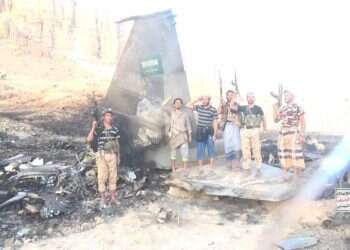
Operatives of the Yemen-based terrorist organization are seen posing over charred debris bearing a Saudi flag, but the claim has...

US held secret Houthi talks in Oman as Saudis turned to Israel for helpReuters, EPA

US held secret Houthi talks in Oman as Saudis turned to Israel for help

by Adi Nirman

Talks in Muscat came days after the Iran-backed militia seized Red Sea coastline and Bab el-Mandeb islands, with Riyadh weighing...

Menu

Analysis 

Archaeology

Blogpost

Business & Finance

Culture

Exclusive

Explainer

Environment


Features

Health

In Brief

Jewish World

Judea and Samaria

Lifestyle

Cyber & Internet

Sports


Diplomacy 

Iran & The Gulf

Gaza Strip

Politics

Shopping

Terms of use

Privacy Policy

Submissions

Contact Us

About Us

The first issue of Israel Hayom appeared on July 30, 2007. Israel Hayom was founded on the belief that the Israeli public deserves better, more balanced and more accurate journalism. Journalism that speaks, not shouts. Journalism of a different kind. And free of charge.

All rights reserved to Israel Hayom

Hosted by sPD.co.il

  • Home
  • News
    • Israel at War
    • Israel
    • United States
    • Middle East
    • Sports
  • Opinions
  • Jewish World
    • Archaeology
    • Antisemitism
  • Lifestyle
    • Food
    • Travel
    • Fashion
    • Culture
  • Magazine
    • Feature
    • Analysis
    • Explainer
    • Environment & Wildlife
    • Health & Wellness
  • In Memoriam
  • Subscribe to Newsletter
  • Submit your opinion
  • Terms and conditions

All rights reserved to Israel Hayom

Hosted by sPD.co.il

Newsletter

[contact-form-7 id=”508379″ html_id=”isrh_form_Newsletter_en” title=”newsletter_subscribe”]

  • Home
  • News
    • Israel at War
    • Israel
    • United States
    • Middle East
    • Sports
  • Opinions
  • Jewish World
    • Archaeology
    • Antisemitism
  • Lifestyle
    • Food
    • Travel
    • Fashion
    • Culture
  • Magazine
    • Feature
    • Analysis
    • Explainer
    • Environment & Wildlife
    • Health & Wellness
  • In Memoriam
  • Subscribe to Newsletter
  • Submit your opinion
  • Terms and conditions

All rights reserved to Israel Hayom

Hosted by sPD.co.il