Friday Dec 5, 2025
NEWSLETTER
www.israelhayom.com
  • Home
  • News
    • Israel
    • Israel at War
    • Middle East
    • United States
  • Opinions
  • Jewish World
    • Archaeology
    • Antisemitism
  • Lifestyle
    • Food
    • Travel
    • Fashion
    • Culture
  • Magazine
    • Feature
    • Analysis
    • Explainer
  • In Memoriam
www.israelhayom.com
  • Home
  • News
    • Israel
    • Israel at War
    • Middle East
    • United States
  • Opinions
  • Jewish World
    • Archaeology
    • Antisemitism
  • Lifestyle
    • Food
    • Travel
    • Fashion
    • Culture
  • Magazine
    • Feature
    • Analysis
    • Explainer
  • In Memoriam
www.israelhayom.com
Home Commentary

As fighting in Gaza winds down, focus must shift to Hamas leadership abroad

The time has come to target senior Hamas officials living abroad, who currently operate with relative impunity. Israel must maintain several points of leverage against Hamas to impede its recovery.

by  Meir Ben Shabbat
Published on  07-02-2024 14:30
Last modified: 07-02-2024 15:34
As fighting in Gaza winds down, focus must shift to Hamas leadership abroadIDF Spokesperson's Unit

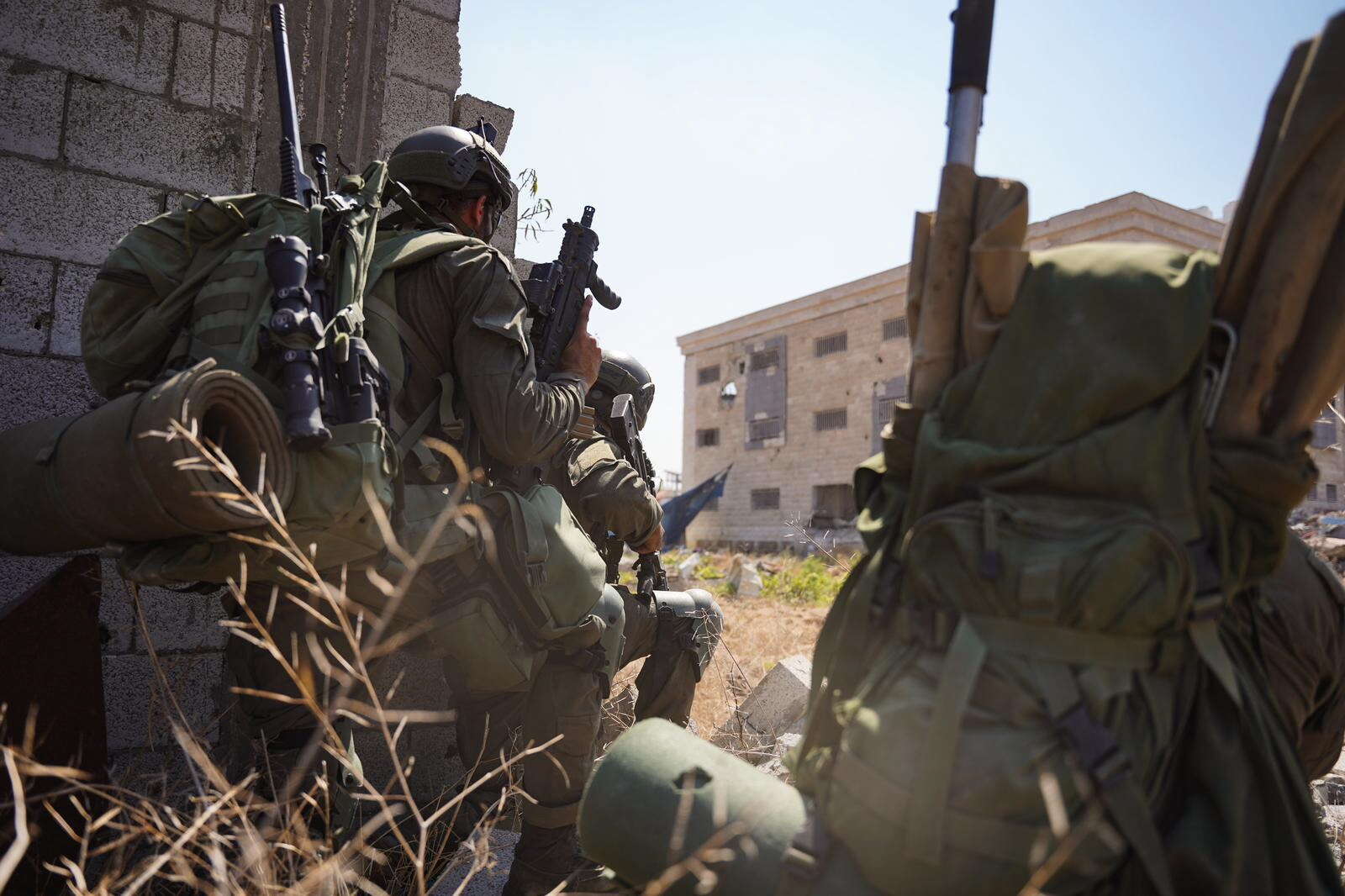
IDF forces in the Gaza Strip, June 2024 | Photo: IDF Spokesperson's Unit

Share on FacebookShare on Twitter

While discussions in Israel increasingly focus on transitioning to a new phase of the conflict, the situation on the ground remains volatile. Approximately 20 rockets were recently launched from Khan Younis in the Gaza Strip toward communities in southern Israel, and intense fighting continues in the city of Rafah.

The threat extends beyond Gaza's borders. Near Tulkarm in the West Bank, an explosive device was detonated against Israeli forces operating in the Nur al-Shams refugee camp. Hamas official Husam Badran recently outlined the group's strategy: "We are currently working to increase and develop resistance in the West Bank." He called on anyone with weapons to take action.

In a separate interview, senior Hamas figure Khaled Mashal stated that the Oct. 7 attack created an opportunity for Palestinians to revive their longstanding ambition: a single Palestinian state "from the river to the sea."

The purpose that the discourse on the imminent end of intense fighting is meant to serve is unclear. The risks it poses are evident: it generates hope for our enemies and, conversely, may reduce our forces' operational readiness and vigilance. While Israel has dealt significant blows to Hamas, the group is far from defeated. Hamas retains a considerable fighting force, substantial weaponry, an extensive tunnel network, and a largely intact leadership structure both within Gaza and abroad.

The organization maintains control over areas of Gaza where Israeli forces are not present. Its unyielding stance in hostage negotiations demonstrates not only an ability to coordinate under difficult circumstances but also a degree of confidence in its position.

As long as Israel's stated war objectives remain unmet, including the formulation of an acceptable hostage release deal, pressure on Hamas should not be reduced. The opposite is true. Our forces on the ground have proved that they know how to achieve their objectives. They should be given everything necessary to do so, including authorizations to use intense fire as much as needed to reduce risks and maintain their safety. It is appropriate to avoid messages that create hesitation or confusion.

The time has come to target senior Hamas officials living abroad, who currently operate with relative impunity. Israel must maintain several points of leverage against Hamas to impede its recovery: Control over humanitarian aid distribution; preventing residents from returning to northern Gaza; maintaining control of key border crossings; keeping Gaza geographically divided; establishing a wide security perimeter with strict rules of engagement and carefully managing the issue of Palestinian detainees (under no circumstances should we agree to a situation where they are released due to a shortage of detention facilities or for other technical and administrative reasons.)

The many question marks in the current policy should be replaced with exclamation points, both regarding the pressing humanitarian issues and undermining Hamas' governance efforts. The principle of simplicity also applies in this regard.

Our success in the Gaza Strip is crucial to prevent Hamas from realizing its ambitions in the West Bank as well, and to ensure that when the time comes, and to ensure we can address the northern front from a position of strength when the time comes.


Meir Ben Shabbat is head of the Misgav Institute for National Security & Zionist Strategy, in Jerusalem. He served as Israel's national security advisor and head of the National Security Council between 2017 and 2021, and prior to that for 30 years in the General Security Service (the Shin Bet security agency or "Shabak").

Tags: Gaza WarHamasIsraelTerrorism

Related Posts

More Mamdanis to come and Trump can't stop itAFP/Jim Watson

More Mamdanis to come and Trump can't stop it

by Yoav Limor

Despite the belief that the president will solve all the problems, in the battle for public opinion among young Americans,...

Netanyahu is gambling with Israel's security

Netanyahu is gambling with Israel's security

by Yoav Limor

Prime Minister Benjamin Netanyahu has named Roman Gofman as director of the Mossad, despite Gofman having no background in intelligence...

Netanyahu's Washington visit comes with a hard decisionChip Somodevilla / POOL / AFPף EPA/WILL OLIVERף Stephanie Lecocq/Pool via AP

Netanyahu's Washington visit comes with a hard decision

by Danny Zaken

While the US is set to request curbs on IDF operations, officials acknowledge that no comprehensive Middle East arrangement is...

Menu

Analysis 

Archaeology

Blogpost

Business & Finance

Culture

Exclusive

Explainer

Environment


Features

Health

In Brief

Jewish World

Judea and Samaria

Lifestyle

Cyber & Internet

Sports


Diplomacy 

Iran & The Gulf

Gaza Strip

Politics

Shopping

Terms of use

Privacy Policy

Submissions

Contact Us

About Us

The first issue of Israel Hayom appeared on July 30, 2007. Israel Hayom was founded on the belief that the Israeli public deserves better, more balanced and more accurate journalism. Journalism that speaks, not shouts. Journalism of a different kind. And free of charge.

All rights reserved to Israel Hayom

Hosted by sPD.co.il

  • Home
  • News
    • Israel at War
    • Israel
    • United States
    • Middle East
    • Sports
  • Opinions
  • Jewish World
    • Archaeology
    • Antisemitism
  • Lifestyle
    • Food
    • Travel
    • Fashion
    • Culture
  • Magazine
    • Feature
    • Analysis
    • Explainer
    • Environment & Wildlife
    • Health & Wellness
  • In Memoriam
  • Subscribe to Newsletter
  • Submit your opinion
  • Terms and conditions

All rights reserved to Israel Hayom

Hosted by sPD.co.il

Newsletter

[contact-form-7 id=”508379″ html_id=”isrh_form_Newsletter_en” title=”newsletter_subscribe”]

  • Home
  • News
    • Israel at War
    • Israel
    • United States
    • Middle East
    • Sports
  • Opinions
  • Jewish World
    • Archaeology
    • Antisemitism
  • Lifestyle
    • Food
    • Travel
    • Fashion
    • Culture
  • Magazine
    • Feature
    • Analysis
    • Explainer
    • Environment & Wildlife
    • Health & Wellness
  • In Memoriam
  • Subscribe to Newsletter
  • Submit your opinion
  • Terms and conditions

All rights reserved to Israel Hayom

Hosted by sPD.co.il