


Syria's new president has traded his militant fatigues for polished suits as he attempts to transform his image from extremist commander to pragmatic statesman, The New York Times reported. Ahmad al-Sharaa, previously known by his nom de guerre Abu Mohammad al-Julani, became Syria's interim president after a rebel alliance he led toppled strongman Bashar Assad in December.
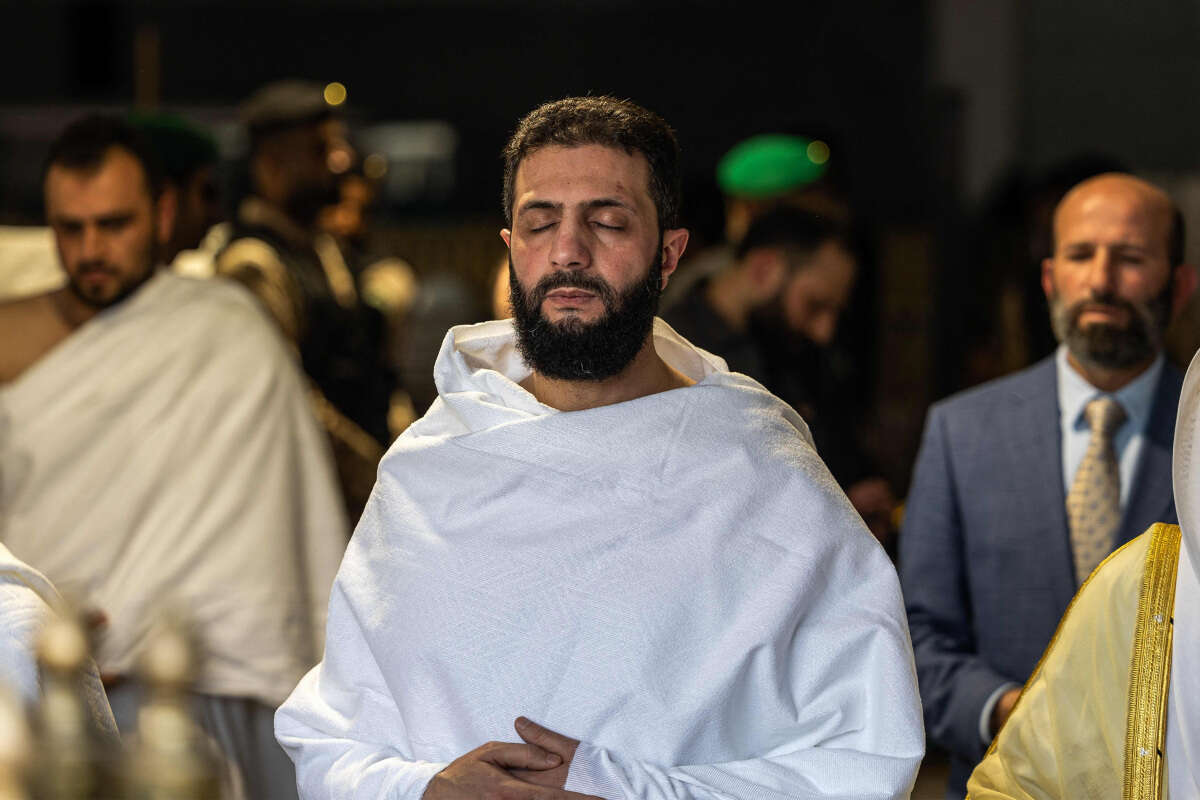
The former commander who once welcomed foreign fighters and dispatched bombers now tells The Economist that "if democracy means that the people decide who will rule them and who represents them in the Parliament, then, yes, Syria is going in this direction." The New York Times noted that al-Sharaa broke with al-Qaida years ago and has embarked on a diplomatic campaign to convince both international leaders and Syrians that he can rebuild his shattered country.
The stark contrast between al-Sharaa's jihadist history and his current nationalistic approach has raised questions about his true intentions, according to The New York Times. His interim government is holding a national dialogue Tuesday with hundreds of attendees, ostensibly to build consensus around Syria's political and economic future, though key groups like the US-backed Kurdish militia controlling the northeast were not invited.
Many Syrians, exhausted after 13 years of civil war, believe any leadership will improve upon the "misery and destruction" wrought by Assad, The New York Times reported. However, critics concerned about al-Sharaa's Islamist background charge that his conciliatory rhetoric masks a troubling past he hasn't clearly renounced.
Since emerging as Syria's new leader, senior Arab and Western officials have met with al-Sharaa in Damascus or hosted him abroad to discuss key issues including combating Iranian influence, limiting Russia's military presence, stopping illegal drug exports, cracking down on violent extremists, and ensuring rights for women and religious minorities.
Barbara A. Leaf, who served as a senior State Department official during the Biden administration, was among the first US officials to meet al-Sharaa in Damascus in December. "I found him to be a very methodical thinker with a strong degree of pragmatism," Leaf told The New York Times.
She added that it remains unclear how much his extremist background still shapes his worldview: "Either he is just a great actor or he has a kind of spongelike personality that takes on both experience and the context that is shaping the larger environment and adjusts his own thinking to it."
Al-Sharaa faces enormous challenges in a country devastated by war. The conflict killed more than 500,000 people according to most estimates, forced millions to flee abroad, and destroyed entire communities. His government seeks to create a national army to incorporate Syria's many militias, though some control significant territory and resources and resist integration. In recent days there has been greusome reports of vengance killings directed against the Alawites due to their affiliation with the old regime (the Assad family were from that community, ruling Syria with an Iron fist since the late 1960s).
The interim president has worked to rebrand both himself and Syria, touring provinces and meeting with Christian, Alawite, and Druze minority representatives. While maintaining an Islamist outlook, his government has not banned alcohol or imposed dress codes on women, The New York Times reported.
In his diplomatic engagements, al-Sharaa has tailored his message to each host. When meeting Crown Prince Mohammed bin Salman in Saudi Arabia, he wore a green tie reflecting the Saudi flag, while choosing a red tie for his meeting with President Recep Tayyip Erdogan in Turkey. Breaking with conservative Muslim traditions of keeping wives out of public view, al-Sharaa's spouse Latifa al-Droubi has accompanied him on official visits, including meeting with Erdogan's wife.
Regarding regional relations, al-Sharaa has spoken cautiously about Israel, calling on it to respect a decades-old truce along their shared border. He has also measured his comments about Russia, despite its military support for Assad and bombing of rebel communities. His contact with the Trump administration appears limited, though in a recent interview on the podcast The Rest Is Politics – Leading, he praised President Trump for his interest in "peace building" and his "positive approach to both the Middle East and future US policy in the region."
Critics accuse al-Sharaa of telling audiences what they want to hear while downplaying his extremist background and the violent records of some associates. One rebel who appointed him president, Ahmad al-Hayes, stands accused by the United States of overseeing torture, killing detainees, trafficking women and children, and running extortion schemes. Another supporter, Mohammad al-Jasim, is accused by the US of commanding forces that displaced residents to seize property and kidnapped people for ransom.
The current government consists primarily of al-Sharaa's loyalists, including some who have been with him since his jihadist days, and his brother serves as health minister. Social media videos showing Justice Minister Shadi al-Waisi presiding over street executions of two women in 2015 have horrified many Syrians. The new government's media relations office did not respond to The New York Times request for comment.

Extreme religious influences were evident in al-Sharaa's administration as recently as last August, when ultraconservative clerics forced the cancellation of a Paralympic-style event in northwestern Syria after accusing participants of "worshiping fire" – considered sinful in Islam.
Despite this, Fuad Sayed Issa, founder of Violet, the organization that arranged the games, expressed optimism about the new leadership. "We now feel that things are going better," he told The New York Times. "The leader has an open mind-set and they are taking Syria to a better place."
Al-Sharaa's allegiances shifted repeatedly during the war. Originally entering Syria from Iraq with Islamic State support, he later broke with the group and pledged allegiance to al-Qaida before announcing a split in 2016. His original group, the Nusra Front, fought against and alongside other rebels over the years, rebranding twice and becoming Hayat Tahrir al-Sham (HTS) in 2017.
Orwa Ajjoub, a doctoral candidate studying HTS at Malmo University in Sweden, suggested al-Sharaa's history indicates he is guided more by power considerations than rigid ideology. "He has changed a lot, and he is genuine in this change," Ajjoub told The New York Times. "On one hand, there is a pragmatism that is encouraging and it gives you some hope. But on the other, the lengths to which he is willing to go to stay in power are scary.


