Iran's internal debate over whether the country should develop nuclear weapons is intensifying and becoming increasingly public, Reuters reported, citing sources inside the country, against the backdrop of the current war against Israel and the US.
According to the report, which relies on two senior Iranian sources, the growing strength of the Islamic Revolutionary Guard Corps following the leadership vacuum at the top of the Iranian regime after a series of assassinations, most notably that of Supreme Leader Ali Khamenei, has also strengthened its hawkish views on Iran's nuclear program.
In public, in interviews and statements, official Iranian figures continue to insist that Iran does not want to possess nuclear weapons, relying on Khamenei's religious ruling from October 2003 that such weapons are forbidden under Islam. At the same time, and in the wake of the US invasion of Iraq, Tehran ordered the suspension of its secret nuclear weapons program, known as the Amad Plan.
At the same time, one source said Tehran has not yet formulated a plan to change its nuclear doctrine, and Iran has not made a decision to pursue a bomb. But significant voices within the establishment are questioning the current policy and calling for it to be changed.
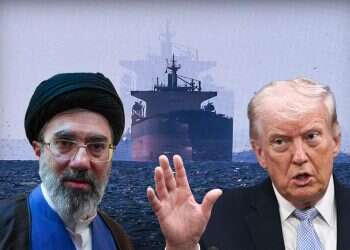
Even before the current war broke out, US intelligence had concluded that while no political decision had been made by Iran's leadership to pursue nuclear weapons, the "decade-long taboo on public discussion of nuclear weapons" had been eroding. The selection of Mojtaba Khamenei as supreme leader, reportedly under heavy pressure from the Revolutionary Guards, could lead to renewed debate over whether the religious ruling issued by his father remains valid, even if not in public.
The idea of withdrawing from the Nuclear Non-Proliferation Treaty, which Iranian hawks previously raised as a diplomatic threat, is now gaining more prominence in state media, alongside calls to move directly toward a nuclear bomb, once considered taboo. Tasnim News Agency, which is close to the Revolutionary Guards, published an article Thursday calling on Iran to withdraw from the treaty as soon as possible while maintaining a civilian nuclear program. A bill in a similar spirit was submitted to the Iranian parliament during the 12-day war in June.
This week, Iranian state media quoted Mohammad Javad Larijani, the brother of Ali Larijani and a conservative politician, as calling on Iran to suspend its membership in the treaty. "The NPT should be suspended," he said. "We need to establish a committee to examine whether the treaty is of any benefit to us at all. If it turns out to be beneficial, we will return to it. If not, they can keep it for themselves."
Earlier this month, state television aired an interview with commentator Nasser Torabi, who argued that the Iranian public is demanding that the country abandon its current public doctrine. "We must work to build nuclear weapons. Either we build them ourselves, or we buy them," he said.
Alongside the public debate, a similar internal discussion is taking place within the ruling establishment. According to the two sources who spoke to Reuters, there is a gap between the hawkish camp, led by the Revolutionary Guards, and the political echelon over whether such a move is worthwhile. Iranian officials have previously threatened to reconsider the country's membership in the treaty, but always as a pressure tactic in negotiations with the West, and they have never followed through.
Even if a decision is made to pursue a bomb, it remains far from clear how quickly Iran could move in that direction. After weeks of joint US-Israeli strikes on its nuclear, missile and research facilities, and after the 12-day war in June, which also badly damaged that infrastructure, Iran's capabilities may have been significantly set back.
Khamenei's fatwa, which banned nuclear weapons as contrary to Islam, was delivered orally in the early 2000s and was never formally codified in writing, though he repeated it in 2019. One of the sources said Khamenei and Larijani had held back voices supporting the acquisition of nuclear weapons, and that the opponents of such a move have now weakened.
Another issue is whether the ruling remains valid after the death of Khamenei the elder. According to Reuters, the assessment is that it will remain in force unless it is revoked by his son Mojtaba, who has not been seen in public since his father's downfall. However, according to a Western diplomatic source who spoke to Israel Hayom, Mojtaba is still involved to some extent in decision-making in Tehran, despite reports that he was wounded in the elimination of his father.

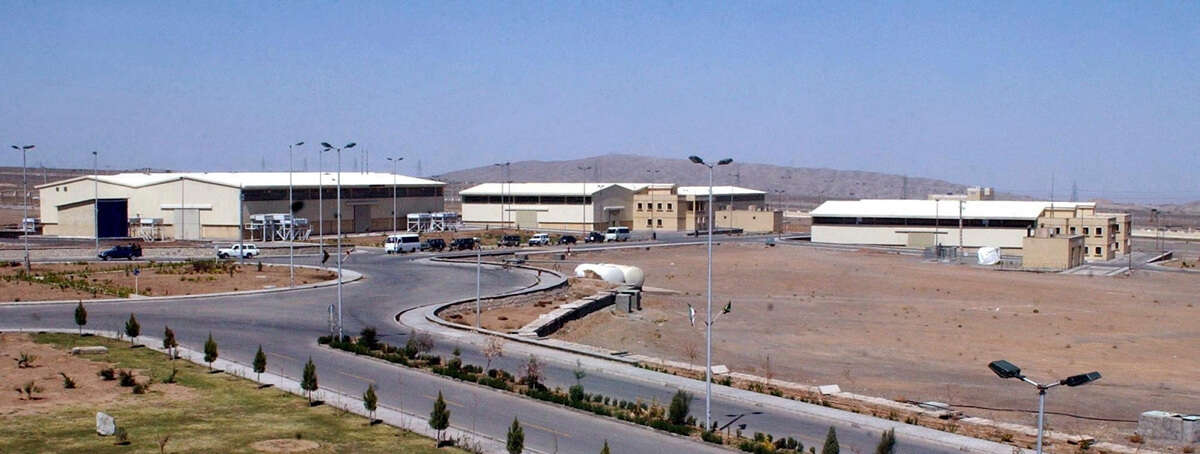
At the same time, despite the public declarations, Iran has in recent years accumulated a stockpile of uranium enriched to 60%, only a short distance from the level needed for nuclear weapons. It is the only country in the world without nuclear weapons that is nevertheless enriching uranium to those levels. According to reports, the stockpile stands at between 440 kilograms and 460 kilograms (970 to 1,014 pounds), enough, after further enrichment, for fissile material that could be used to build an arsenal of more than 10 bombs. That said, fissile material is only one of the components needed to assemble such a weapon, and Iran would still face other challenges, including the possibility that a dash toward nuclear weapons would trigger Israeli or American military intervention.
Similarly, according to Israeli and Western reports, even before the military confrontation with Israel, Iran had been advancing the "weapon group," the most secret part of its nuclear program, focused on developing the nuclear detonation mechanism under the cover of "dual-use" activity. On June 12, 2025, one day before the outbreak of the 12-day war, the Board of Governors of the International Atomic Energy Agency adopted a resolution stating for the first time in about 20 years that Iran was violating its obligations under the nuclear safeguards agreement and that the IAEA could not verify that its nuclear program was intended solely for peaceful purposes.