


We are in the middle of one of the most powerful and emotionally fraught periods in Israel, marked first by Yom HaShoah – Holocaust Remembrance Day, and then by Yom HaZikaron, or more formally, Yom HaZikaron laChalalei Ma'arachot Yisrael u'Nifga'ei Pe'ulot HaEivah, meaning "The Memorial Day for Israel's Fallen Soldiers and Victims of Terrorism."
Throughout most of my life, Yom HaZikaron felt distant. Even as I grew closer to my Judaism and began working as a Jewish and pro-Israel professional, the gravity of the day barely registered. Growing up outside of Israel meant that this period rarely stirred strong emotions. Jews in the diaspora, even those who care deeply about Israel, often struggle to connect because there's little chance we personally know someone who fell in battle or was murdered in a terror attack, even if we have friends and family in Israel.
Diaspora communities usually hold ceremonies for Yom HaZikaron, but in my opinion, they often struggle to emotionally capture what the day means to Israelis – the rawness of the sacrifices so many have made. Without the personal loss of a loved one, it's no fault of our own that the experience feels removed; formal ceremonies can feel too scripted to truly convey the solemnness of what it means to mourn the fallen.
It wasn't until April 2023 that I began to understand the true weight of Yom HaZikaron. In the weeks leading up to Passover, Israel was rocked by back-to-back terror attacks, including the brutal murders of Lucy Dee and her two daughters, Rina and Maia. Their deaths pierced something deep within Israeli society, especially among Olim like myself, as the Dee family were British nationals as well. During the Hol Hamoed period in the middle of Passover, Lucy and her daughters were driving in the Jordan Valley when a Palestinian terrorist rammed their car off the road and shot them at point-blank range.
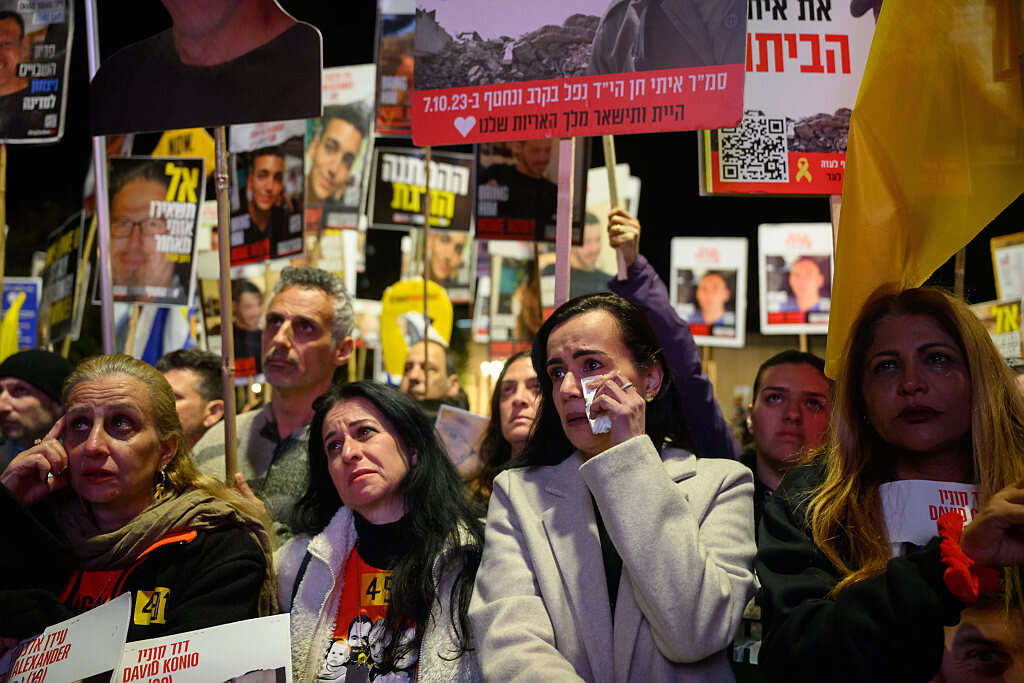
The cruelty of their murder devastated so many of us. Watching the Dee family honored just weeks later during a Yom HaZikaron ceremony finally made me register the profound pain of the day. What struck me most was seeing Keren Dee, sitting in the audience, shaking and weeping as the images of her mother and sisters flashed across the screen. It was a moment I'll never forget.
Who could have imagined that just four and a half months later, the entire nation would experience unprecedented levels of terrorism and cruelty? As Hamas invaded Israel, they unleashed atrocities I still struggle to put into words: slaughter, burning, decapitation, and mass rape against innocent civilians. For the first time since the Holocaust, the Jewish world witnessed the depths of evil and hate that is antisemitism.
For Israelis, Yom HaZikaron is not new. Unlike most Jews in the diaspora, the vast majority of Israelis have either lost someone or know someone who has been killed in battle or by terror. But now, in the wake of the October 7 massacre, the ongoing war in Gaza, the hostages still held captive, and the global surge in antisemitism, everything feels different.
For many Jews living outside of Israel, I urge you to try to truly connect to what this day represents. This year might be the first time you can genuinely understand what it means to mourn the fallen.
Yom HaZikaron is remembering the horror you felt when you first heard Hamas had invaded. It's the sickness in your stomach as you watched Hamas parade Shani Louk's lifeless body through the streets of Gaza. It's the terror you felt seeing Shiri Bibas holding her two redheaded children, surrounded by a Palestinian mob, as they were taken captive, and the agony of learning how they were murdered and their bodies desecrated.
It's the unbearable heartbreak of hearing that Hersh Goldberg-Polin, Eden Yerushalmi, Almog Sarusi, Ori Danino, Carmel Gat, and Alex Lubanov were killed in a Hamas tunnel in Rafah – and the devastation of watching their families bury them.
Yom HaZikaron is remembering the countless soldiers who gave their lives before and after October 7th, not just as numbers, but as young men and women, many only 18 years old, forced to make the ultimate sacrifice to defend our nation. One of them was Sagi Golan, killed on October 7th while fighting Hamas terrorists in Kibbutz Be'eri, just 13 days before he was supposed to marry his partner, Omer Ohana. Sagi and his unit helped rescue residents under attack. Israeli singer Ivri Lider was scheduled to perform at their wedding, but instead, he sang at Sagi's funeral.
Yom HaZikaron is also about the hostage families, like the family of Omer Neutra, who have not even been able to bury their loved ones, terrified that their sons and daughters are still buried under Gaza's ruins with no grave to mourn at.
Yom HaZikaron usually means feeling all of this while also experiencing the powerful transition from mourning to celebration, knowing that despite everything, the following day we celebrate Yom HaAtzmaut, Israel's Independence Day. This year, however, it feels impossible to celebrate Jewish liberation in our ancestral homeland while 59 of our people remain in captivity.
This solemn day may always be hard for diaspora Jews to fully grasp. But now more than ever, it must serve as a bridge, a call to strengthen our collective commitment, to educate the next generation, and to draw inspiration from the thousands of soldiers and civilians, all who are heroes, who gave everything for the survival and future of the Jewish People.


