


Prime Minister Benjamin Netanyahu isn't just making throwaway comments when he says, "Let's hope for good news, today, tomorrow, or the day after." But the fact remains: the ceasefire deal reportedly based on the Viatkof framework is simply not acceptable.
The pattern is as follows: Hamas attacks Israel. Israel responds with a military campaign that demands combat in crowded urban areas, bringing with it heavy civilian casualties and massive devastation. A ceasefire follows within weeks or months. It typically includes "rebuilding the Gaza Strip." Billions of dollars pour into Hamas' coffers or straight into its hands, often Arab money, whether from Qatar or other sources.
This time, we're told, things are different. We are supposed to believe that. Even though the cannibalistic Hamas has lost much of its manpower and despite the extensive destruction in Gaza, the underlying deal remains the same: rebuild the Gaza Strip.

Aid disguised as bridging loans
Temporary aid is presented as humanitarian assistance, a bridging loan of sorts. Hamas survives mainly as a myth and a mechanism to seize control of humanitarian convoys. And now, as part of a temporary agreement accompanied by a near-total Israeli withdrawal from the Strip, the organization is receiving an influx of aid. In the end, beyond all the interim steps, comes the real reconstruction: rebuilding Gaza's ruins and the terrorist infrastructure, courtesy of Britain, France, Canada, Qatar, and the US.
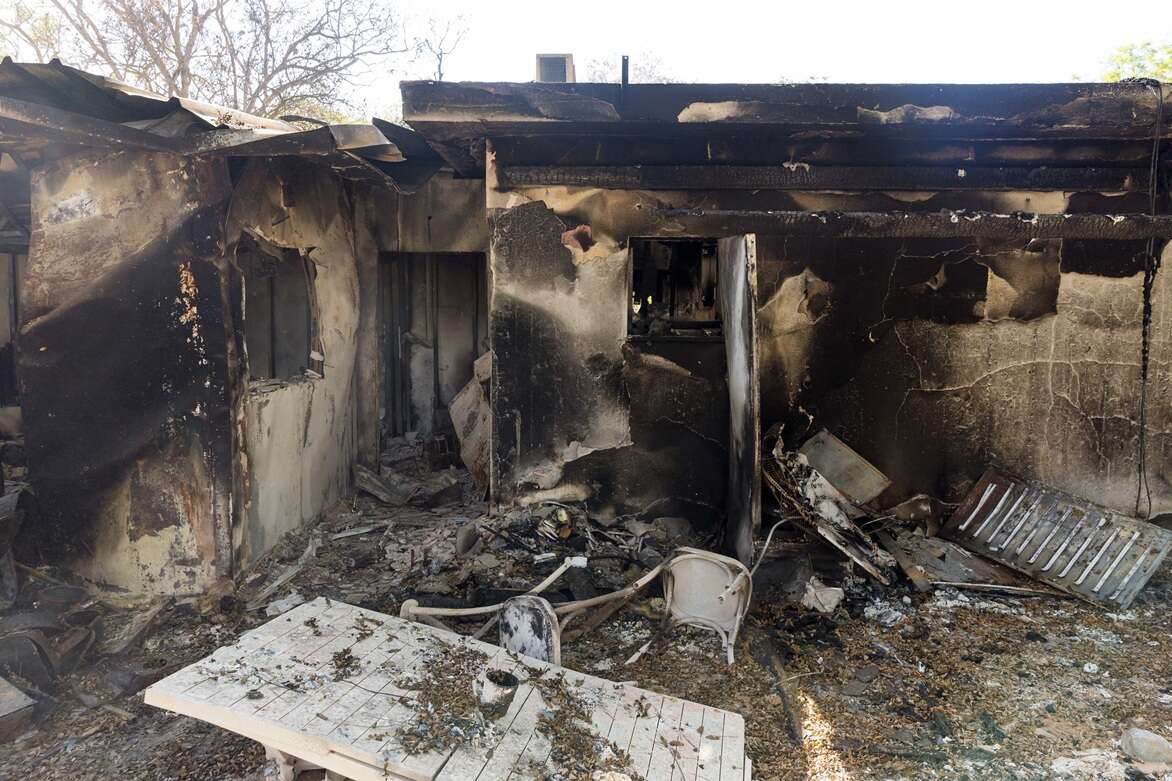
The original Donald Trump, not the current occupant of the White House, would have been offended to hear that the cost of rebuilding Israeli communities around the Gaza border, after the mass killing rampage by the "Einsatznachba" death squads, is estimated at 4.5 billion shekels (about $1.5 billion). Meanwhile, Qatar, the European Union, and other supposed "sponsors" of Gaza's reconstruction are not asked to contribute to repairing the damage inside sovereign Israeli territory.
There's no question that the brazen terms of the proposed deal suggest rising confidence within what's left of the Hamas leadership. If any of them were to show up today in Paris, or even at a Lincoln Center gala in New York, they'd be greeted with hugs and applause.
The October 7 massacre was described by the chair of Britain's inquiry committee as the lowest point in modern combat history, unmatched since 1945. And if France, Britain, and Canada respond to that by bestowing statehood recognition on the Palestinians, then the terrorists have every reason to demand an encore.
The Macron–Yair Golan war
It is hard to predict what might compel Hamas leaders to surrender and release all the hostages. But one possible trigger for ending the war and dismantling Hamas' arsenal is the kind of pressure now being exerted in Lebanon and Syria. As of last week, the current stage of the conflict could be dubbed the "Macron–Yair Golan War."
Hamas sees that the global intifada is working. The attack in Washington, the elite-driven campaign of capitulation designed to topple the Israeli government, and the internal chaos over strategic issues like "conflict of interest" and the Ronen Bar imbroglio, all this could well encourage Hamas' leaders to demand a curtain call.
The performance is going well, and they're calling for more. Above all, they sense a growing rift between the US administration and Israel. Israel, in turn, has little choice but to keep playing Hamas the music it loves most: the music of war.


