Gaza is not a concentration camp.
The war and the Palestinian civilian death toll are tragic and upsetting, but this is in no way equivalent to the Holocaust.
There is a disturbing fetish in the anti-Israel movement with latching onto Jewish suffering and twisting it into a political weapon. An obsession with appropriating the Holocaust has taken root, not to reflect the reality of present-day suffering, but to distort its lessons and weaponize them against the Jewish state.
Hamas started a war on October 7, 2023, a war they knew they could never win. They slaughtered Jews, Arabs, and other minorities in such grotesque and barbaric ways that even the Nazis might have taken notes. They did not do it to "Free Palestine," but to ignite a regional war with the hope of destroying the Jewish state. Israel's retaliation was inevitable, and the devastating response worked in Hamas's favor, maximizing Palestinian suffering for propaganda purposes. Their goal was never peace or liberation; it was chaos, martyrdom, and the perpetuation of endless conflict, with civilians on both sides used as cannon fodder in their genocidal ideology.
The purpose of Nazi concentration camps was systematic extermination. The Jews of Europe had committed no crimes; they were rounded up and herded into death camps for the sole reason that they were Jewish.
The rhetoric surrounding the Nakba and the aftermath of October 7 is now being weaponized by some as a way to suggest that Palestinians are experiencing their own Holocaust. But mass displacement after starting a war that you had no chance of winning is not a Holocaust. Palestinian leadership made a choice, one that could have easily been avoided both in 1948, had they accepted the existence of a Jewish state, and again in 2023, had they chosen not to massacre, rape, burn, and destroy Israeli communities.
Almost immediately after Hamas' attacks, even while terrorists were still inside Israel and bodies were still being counted, certain social media accounts began comparing the massacre to the Warsaw Ghetto Uprising. This is not only a revolting comparison, but also a historically illiterate one. The 400,000 Jews who were forcibly herded into a sealed-off ghetto in Nazi-occupied Poland were confined under inhumane conditions, starving, diseased, and awaiting deportation to death camps. They had no options. The Jews in the Warsaw Ghetto faced a brutal choice: fight back or be sent to the gas chambers.
Palestinians had – and still have – other choices. They could have chosen peace. They could have chosen nonviolence. They could have chosen to reject terrorism. Jews in the Warsaw Ghetto were not receiving international aid, which they diverted into rockets and terror tunnels. No Israeli is taking Gazans and herding them into gas chambers or crematoria.
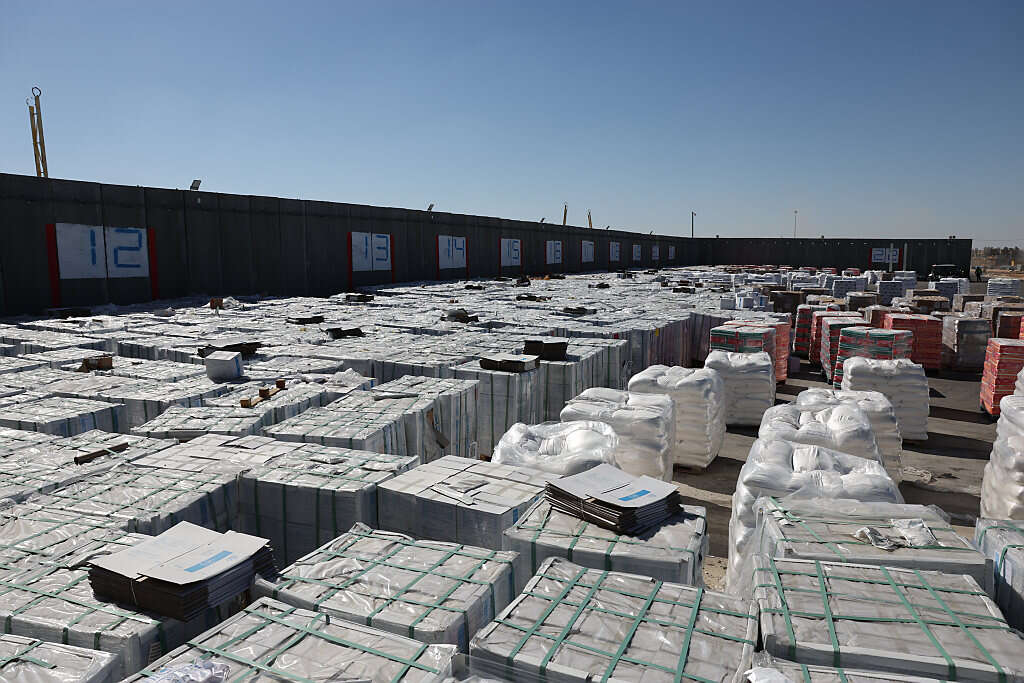
Yes, humanitarian aid has been a critical and painful issue throughout this war. The images of malnourished children and desperate families in Gaza are deeply upsetting. War is ugly, and no child should suffer because of the decisions of a terrorist regime. The scenes of Gazans lining up for food, sometimes having to break through Hamas's own blockades to reach aid, are tragic and enraging.
But Gaza is still not a concentration camp.
Jews in Nazi Germany were not given international aid. There were no UN agencies delivering food. The only lines they stood in were the ones where Nazi officers decided whether they would be worked to death or sent straight to the gas chambers. Comparing that to the tragedy in Gaza is not only historically false – it is a moral obscenity.
The Jews of Europe did not kidnap hostages and keep them in inhumane conditions for over 600 days. That alone is justification for Israel's war against Hamas. The international community should be demanding the unconditional release of every hostage, not wasting time making grotesque comparisons between Gaza and concentration camps or calling it an "open-air prison."
This phenomenon, this Holocaust envy, where Jewish suffering is minimized, repurposed, or denied in order to delegitimize Jewish sovereignty, is not just deeply offensive. It erases Palestinian agency. It implies that Palestinians are nothing more than perpetual victims, incapable of making choices, incapable of responsibility, and undeserving of accountability.
Make no mistake: the tragedy of this war stems entirely from the choices of Palestinian leadership, from their refusal to release hostages, to their refusal to surrender, to their refusal to lay down their arms. While Palestinians suffer and go hungry, to compare their situation to the Holocaust or to speak of "genocide" is not only intellectually bankrupt, it is a cruel joke.
To call Gaza a concentration camp is not only a lie, it is a deliberate insult to history, to truth, and to the memory of six million Jews who were systematically exterminated simply for being Jewish. This is nothing more than propaganda masquerading as empathy, and it does nothing to help the Palestinian people.
This war is devastating. The civilian toll in Gaza is heartbreaking. But no cause, not liberation, not resistance, and certainly not vengeance, justifies slaughtering innocents or taking hostages. And no amount of rhetorical acrobatics can turn a terrorist invasion into a noble uprising, or a Hamas-run enclave into a Holocaust reenactment.