Israel Hayom is a media organization founded on the belief that the Israeli public deserves better journalism—more balanced, more accurate, and more reliable. Journalism that speaks rather than shouts. Journalism that is trustworthy, objective, and matter-of-fact. A different kind of journalism, offered free of charge. The first print edition was published on July 30, 2007, and in 2010 Israel Hayom became the Israeli newspaper with the highest weekday readership. The newspaper’s publisher is Dr. Miriam Adelson. Its Editor-in-Chief is Omar Lachmanovitch, and its founding editor is Amos Regev. Israel Hayom’s Hebrew and English websites, as well as its Android and iOS applications, provide around-the-clock news coverage, exclusive content, breaking news and updates, analysis and commentary, video, podcasts, and live broadcasts. The digital platforms of Israel Hayom include news and opinion channels covering culture and entertainment, lifestyle, technology, sports, business and consumer affairs, health, military affairs, food, Judaism, tourism, and automobiles. In 2021, a new Hebrew-language website and mobile application were launched to provide users with a fast, up-to-date, secure, and convenient experience. The content of the newspaper’s print edition is also available online through a daily digital edition and can be received via newsletter. “The Israel Hayom Clique,” the publication’s exclusive benefits club, offers website users discounts and special promotions on products and services. Israel Hayom welcomes feedback, criticism, and suggestions for improvement from its readers. You can contact the organization by email at hayom@israelhayom.co.il

Monday Aug 10, 2026
NEWSLETTER
www.israelhayom.com
  • Home
  • News
    • Israel
    • Israel at War
    • Middle East
    • United States
  • Opinions
  • Jewish World
    • Archaeology
    • Antisemitism
  • Lifestyle
    • Food
    • Travel
    • Fashion
    • Culture
  • Magazine
    • Feature
    • Analysis
    • Explainer
  • In Memoriam
www.israelhayom.com
  • Home
  • News
    • Israel
    • Israel at War
    • Middle East
    • United States
  • Opinions
  • Jewish World
    • Archaeology
    • Antisemitism
  • Lifestyle
    • Food
    • Travel
    • Fashion
    • Culture
  • Magazine
    • Feature
    • Analysis
    • Explainer
  • In Memoriam
www.israelhayom.com
Home Commentary

Pressure alone will not break Iran

A fundamental gap in how Washington and Tehran perceive each other is making diplomacy nearly impossible. As long as Iran's leadership equates compromise with surrender, US coercion is more likely to harden positions than resolve the crisis.

by  Danny Citrinowicz
Published on  02-05-2026 09:17
Last modified: 02-05-2026 09:17
Is Iran's ring of fire around Israel coming back?AFP

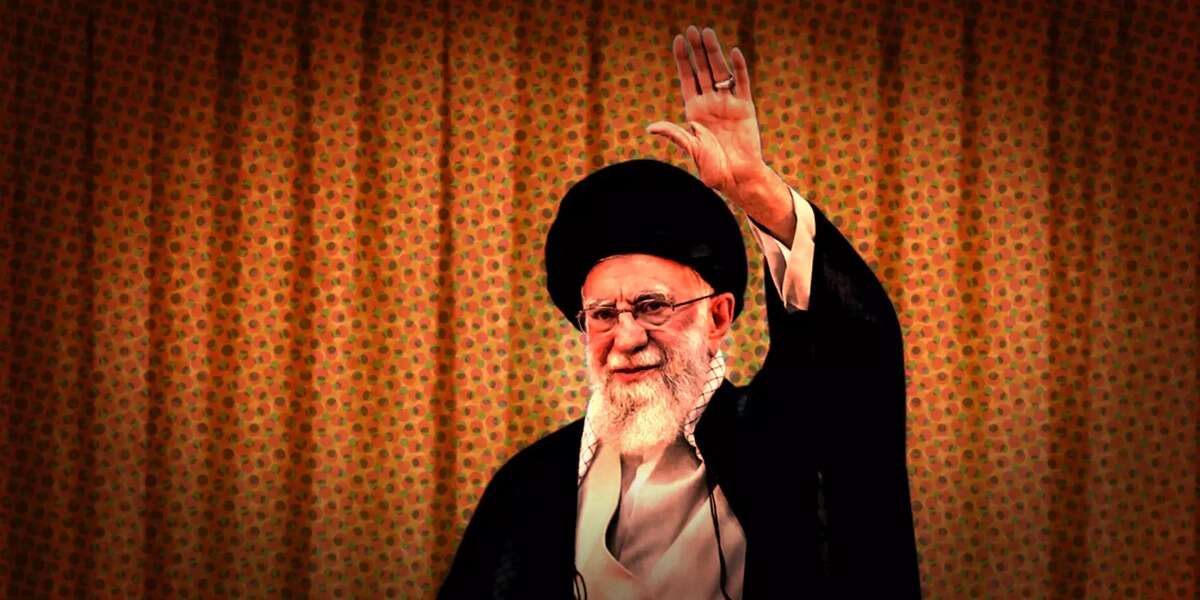
Iran’s Supreme Leader Ali Khamenei | Photo: AFP | Photo: AFP

Share on FacebookShare on Twitter

Even before they truly began, the nuclear talks appeared on the brink of collapse, with a moment in which it seemed the sides might not meet in Oman or anywhere else. The core of the crisis lies not only in gaps over substance, but in a deep and unbridgeable divide in how each side perceives the other.

To understand the crisis, it is necessary to enter the mindset of Iran's supreme leader, Ayatollah Ali Khamenei, who is inherently suspicious of the US in general and of the American president in particular. From his perspective, he arrives at this moment after years of developments he interprets as part of a comprehensive conspiracy against the regime, most recently the 12-day war and the wave of protests across Iran. Seen through this lens, it is clear why he has no intention of compromising on the regime's core principles. In his view, it is entirely possible that the US has already decided to strike, or at the very least is acting together with its regional allies to deprive Iran of its ability to defend itself. Faced with this reality, he prefers to risk an attack rather than submit.

US President Donald Trump with the aircraft carrier USS Abraham Lincoln in the background and the THAAD air defense system in action. Photo: Reuters, AP

On the other side, the American administration operates under the assumption that Iran has been significantly weakened by the military confrontation and by internal unrest. In Washington's assessment, a combination of military pressure and a show of force will ultimately compel Tehran to accept US demands, not only on the nuclear issue, but also on its missile program and network of regional proxies.

This perceptual gap prevents the sides from even sitting down to talk, because at a fundamental level they have nothing to discuss. It is possible that neither side seeks escalation and that both would prefer negotiations that end in compromise, but their respective perceptions of each other, and of themselves, make such an outcome unattainable.

It is easy to dismiss the way Iran views itself, but anyone attempting to anticipate its next moves must understand that from the regime's perspective, its positions cannot be separated from the belief that it "stood firm" both in the military confrontation and in the face of protests, which it sees as part of a broad Western plot to overthrow it.

Iranian missle launcher. Photo: Reuters Reuters

Accordingly, even if the talks do take place and survive the current crisis, there is a high likelihood they will run aground once one side attempts to bend the other to its will, a direct result of starting positions that almost guarantee failure. As long as Khamenei remains at Iran's helm, regardless of what the US does, it can be expected that he will not cross the line he has already defined as surrender.

Iran has no future in its current state, but for the supreme leader, loyalty to the revolution's ideology outweighs considerations of prosperity or stability. Abandoning these principles would, in his eyes, amount to abandoning the revolution itself.

The problem is that even the collapse of the regime does not necessarily promise a stable or democratic Iran, and may well produce the opposite outcome. Under present circumstances, an escalation appears inevitable, though not necessarily imminent. The US can still leverage its massive military presence in the Gulf to project power and pressure the regime, thereby giving mediators another opportunity. In practice, however, the diplomatic track currently appears devoid of real viability.


Tags: Iran

Related Posts

Hezbollah drones emerge as deadliest threat on Lebanon front despite ceasefire

The drone threat has changed, Israel must change with it

by LTC (Ret.) Or Horvitz

The booby-trapped drone in Germany showed that advances in range and precision have become new norm. To prevent the next...

The verdict is clear: The IDF failedAFP

Israel's Oct. 7 vow is at risk

by Nadav Haetzni

Security officials estimate that some 400 Hamas Nukhba terrorists who took part in the massacre have yet to be killed...

Trump’s Iran dilemma

What lies behind Trump's hesitation over Iran?

by Prof. Zaki Shalom

For Washington, there is genuine risk. Iran’s leadership may conclude that it can no longer tolerate a humiliation and launch...

Menu

Analysis 

Archaeology

Blogpost

Business & Finance

Culture

Exclusive

Explainer

Environment


Features

Health

In Brief

Jewish World

Judea and Samaria

Lifestyle

Cyber & Internet

Sports


Diplomacy 

Iran & The Gulf

Gaza Strip

Politics

Shopping

Terms of use

Privacy Policy

Submissions

Contact Us

About Us

The first issue of Israel Hayom appeared on July 30, 2007. Israel Hayom was founded on the belief that the Israeli public deserves better, more balanced and more accurate journalism. Journalism that speaks, not shouts. Journalism of a different kind. And free of charge.

All rights reserved to Israel Hayom

Hosted by sPD.co.il

  • Home
  • News
    • Israel at War
    • Israel
    • United States
    • Middle East
    • Sports
  • Opinions
  • Jewish World
    • Archaeology
    • Antisemitism
  • Lifestyle
    • Food
    • Travel
    • Fashion
    • Culture
  • Magazine
    • Feature
    • Analysis
    • Explainer
    • Environment & Wildlife
    • Health & Wellness
  • In Memoriam
  • Subscribe to Newsletter
  • Submit your opinion
  • Terms and conditions

All rights reserved to Israel Hayom

Hosted by sPD.co.il

Newsletter

[contact-form-7 id=”508379″ html_id=”isrh_form_Newsletter_en” title=”newsletter_subscribe”]

  • Home
  • News
    • Israel at War
    • Israel
    • United States
    • Middle East
    • Sports
  • Opinions
  • Jewish World
    • Archaeology
    • Antisemitism
  • Lifestyle
    • Food
    • Travel
    • Fashion
    • Culture
  • Magazine
    • Feature
    • Analysis
    • Explainer
    • Environment & Wildlife
    • Health & Wellness
  • In Memoriam
  • Subscribe to Newsletter
  • Submit your opinion
  • Terms and conditions

All rights reserved to Israel Hayom

Hosted by sPD.co.il