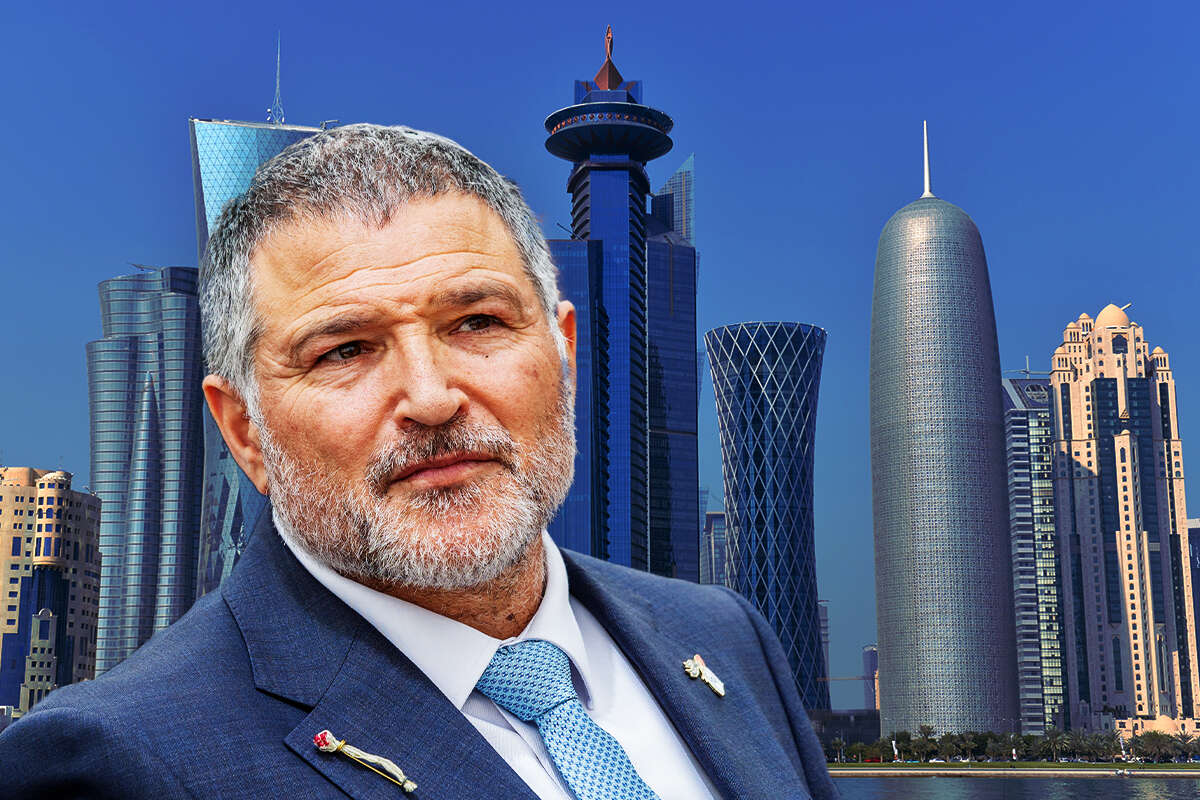
The starting point should be obvious: The "serious suspicions," as Central Elections Committee Chairman Justice Noam Sohlberg described them, concerning alleged Qatari attempts to influence the outcome of Israel's elections, demand a thorough investigation that produces clear conclusions. Did such interference take place? If so, what exactly happened, on what scale, on whose behalf and with what intended effect?
It is reasonable to assume that Sohlberg would not have ordered such an investigation unless he believed the information presented to him warranted it. With the justice due to certify the final election results next week, he wanted to be certain beyond any doubt that they were legitimate. His instruction to conduct a swift investigation was intended to provide that assurance, while also containing the political frenzy that has already erupted around the affair.
That frenzy has nothing to do with the gravity of the affair itself, although the suspicions, as noted, are serious. It has everything to do with the elections and the political developments that may follow. That is the only way to understand it.
Likud and the coalition parties, which maintained complete silence during the Qatargate affair, in which the same Qatar employed and paid associates of Prime Minister Benjamin Netanyahu, including during the war, are now launching furious attacks in an effort to undermine any public legitimacy for a government dependent on the support of the Arab parties.
The opposition's change bloc is maintaining a relatively cautious silence as it awaits developments, while the Arab parties are denouncing the affair as a blood libel.
All of this was entirely predictable, and the details hardly matter. Suspicions become facts, which in turn become convictions and sentences. And all of this happens before investigators have reached any conclusions. Because in Israel in 2026, the truth no longer matters.
Lessons not learned
Back to the facts. The suspicions, according to Sohlberg, are serious. That raises an obvious question: Is the Shin Bet security agency really the appropriate body to investigate this affair, given that the same agency was responsible for safeguarding the integrity of the elections?
If Qatar succeeded in influencing the election results through illegal foreign funding, that would constitute a failure by the Shin Bet, whose job was to prevent precisely such interference. This is the same Shin Bet whose director, David Zini, stood in the Knesset on Election Day and personally declared that the elections were proceeding as planned and that their integrity was being preserved.
If Zini was unaware of what was happening when he addressed the Knesset, that is a problem. If he knew and failed to tell the truth, or worse, concealed it from Justice Sohlberg, that is a far more serious problem, one that would raise suspicions that Zini himself was acting out of political self-interest.
The Shin Bet should have learned the lessons of the Oct. 7, 2023, Hamas attack and subjected Qatar's activities in Israel to closer scrutiny than those of any other country. If Qatar was indeed involved, the Shin Bet failed to detect and prevent that involvement when it mattered.
We need to understand why, and what else may have happened during that period without the agency noticing. More broadly, who in Qatar was involved in such an operation, and at what level of authority? How did the funds allegedly transferred reach their destination? Through bank accounts? Money changers? Cash payments?
All of this should fall under Shin Bet oversight. If no money changed hands, there is no story. But if funds were transferred, there are two stories: foreign interference in Israel's elections and a deeply troubling failure by the Shin Bet.
These are profoundly disturbing questions that demand answers. As noted, it would be wise to wait for the facts before drawing conclusions. Until then, there is plenty of hypocrisy to marvel at: among those who saw nothing wrong with Qatar during the Qatargate affair but are now attacking it with fury, and among those who regarded Qatar as a terrible threat then but are now waiting to see how events unfold.
Both camps would do well to remember one thing: Qatar is a malign state that seeks to meddle wherever it can, in whatever it can, to advance its own interests. It is time for the State of Israel to treat it accordingly.