


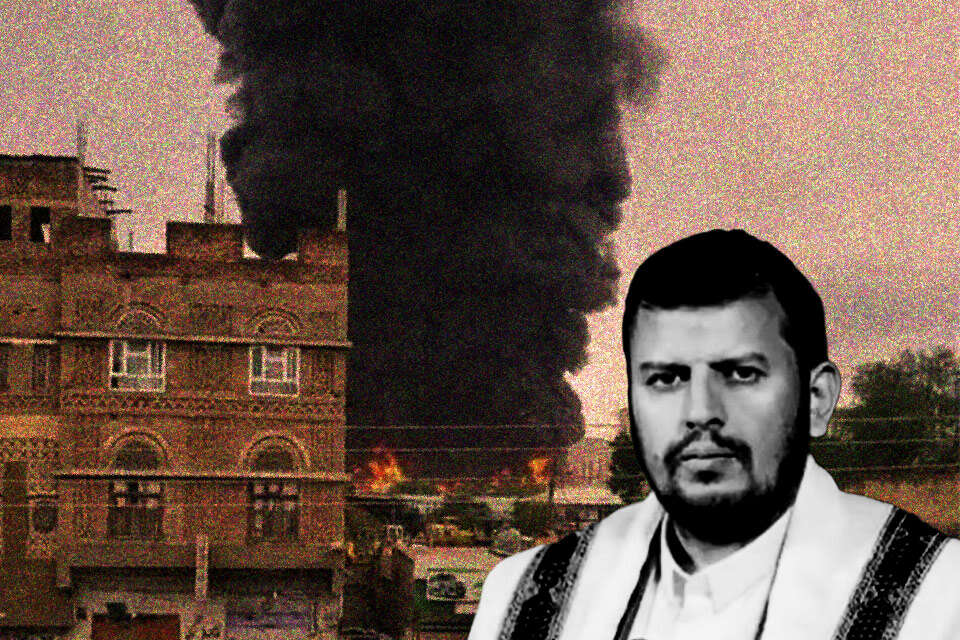
Israel's strike earlier this week, which eliminated senior figures in the Houthi leadership, was highly significant. Until now, Israel had never succeeded in a single offensive operation in neutralizing such a large portion of an enemy government or organization's senior command.
And yet, anyone who thought that this successful operation would cause the Houthis to stop launching attacks on Israel was mistaken.
The significance of the Israeli operation
The successful strike carried two major messages, perhaps even more important than the direct outcome.
First, after nearly two years of activity, the new operational theater in Yemen established by the Israel Defense Forces (intelligence, operations, air force and more) has proven itself. Building and collecting intelligence, including in real time, and closing a targeting loop 2,000 kilometers (1,240 miles) from Israel's borders, not in Gaza or Lebanon, is a major achievement. These capabilities must continue to develop and expand, to include targeting ground-to-ground missile threats, production sites, supply chains, and launch infrastructure. Only then will Israel begin to see a more significant impact on enemy activity.
Second, if the Houthi leadership allowed itself to gather in an exposed apartment without adequate protection, the strike will now force them to change behavior. They will be more suspicious, more paranoid, constantly on the move. That will undermine their ability to govern and manage operations.

From threats to constant action
If Israel's decision makers thought the Houthis would reconsider their steps after losing most of their civilian leadership, recent days proved otherwise. In the past 24 hours, the Houthis attempted to fire four missiles in three separate launches, alongside unmanned aerial vehicles. The threat from the distant south remains.
The Houthis' capabilities are limited, but real. Their motivation is growing, not necessarily out of solidarity with Palestinians in Gaza, but out of their own ambition for international recognition of their rule, to strengthen their domestic and regional status, and to become a major player in the regional balance. From their perspective, they fought Saudi Arabia for seven years and endured, withstood a month and a half of American airstrikes and endured, and have been clashing with Israel for nearly two years, something no other organization or state has done successfully. These experiences embolden them to continue.
The way to confront the Houthi threat is not through fiery rhetoric or biblical metaphors, as Defense Minister Israel Katz suggested, but through a sustained, aggressive campaign of several days, based on precise intelligence, focused on intercepting launch capabilities (similar to what was done in Iran) and targeting leaders. Such a campaign requires significant resources. Given the ongoing war in Gaza and the need to keep a constant eye on developments in Iran, this raises the question of timing. But ultimately, Israel will have no choice. Otherwise, it will face yet another round of launches from Yemen, the 17th already on the planners' table, or be forced into immediate retaliation after an exceptional Houthi strike.
The military campaign must be wrapped in diplomatic moves, including efforts to rebuild an international coalition with the US and Arab states that share the same interests and threat perception – Egypt, Saudi Arabia, the Gulf states – while strengthening local opposition forces in Yemen.
But the diplomatic front is complicated by international trends unfavorable to Israel: France's push for recognition of a Palestinian state, the expansion of the war in Gaza, and statements by some members of the Israeli government about annexation steps in Judea and Samaria or the Jordan Valley as retaliation for France's initiative. Israel must choose its path, prioritize, and define a strategy in line with the regional reality, the threat map, and its national interests, with national security at the top of the list.
Less talk, fewer threats, more action. Deeds will speak louder than words.
A dangerous normalization
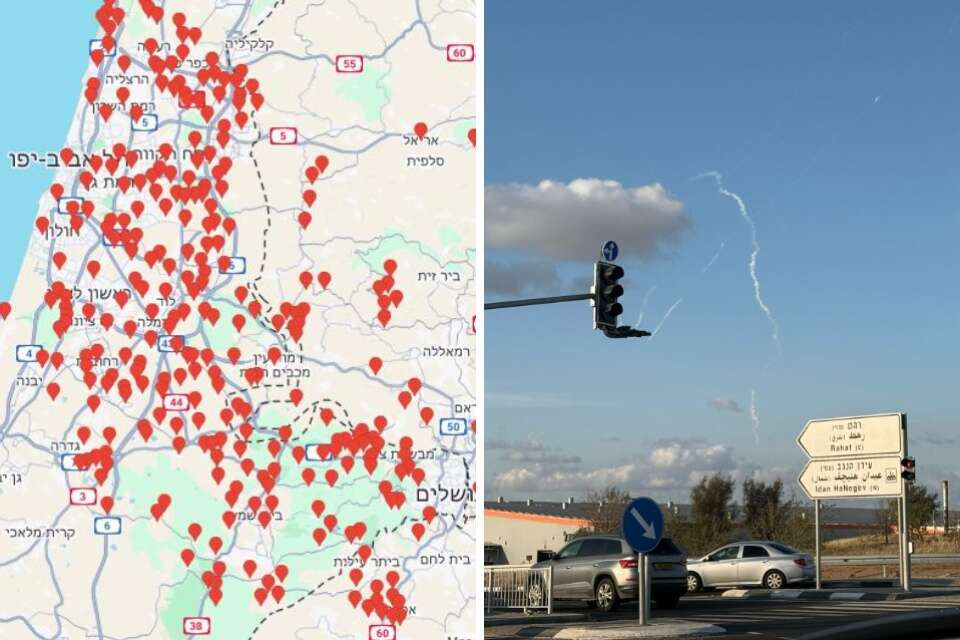
These exchanges of blows must be stopped. Israel cannot allow normalization of a reality in which, every few days, or even several times a day, millions of Israelis are forced to seek shelter while hundreds of kilograms of explosives are launched at city centers. Even if the missiles are aimed at Ben-Gurion Airport, the Kirya in Tel Aviv, or the Knesset in Jerusalem, the potential damage of a single strike was demonstrated in the "12-Day War" with Iran.
The public, which has grown complacent about the threats from Yemen, must instead tighten discipline and personal responsibility. Israel must not allow the other side to achieve the success it is seeking.


