

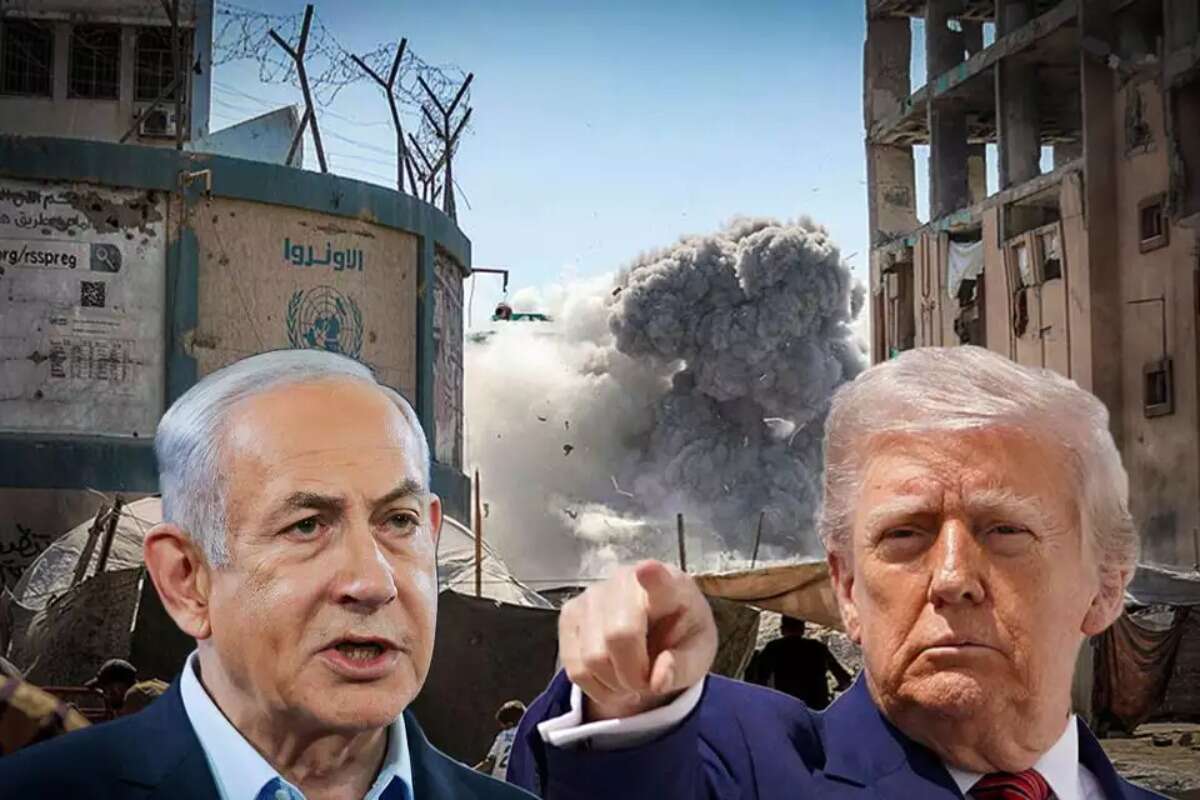
It is doubtful whether Israel has ever needed the most basic wish – a good year – more than it does now. The country begins it in unprecedented strategic distress, surrounded by worrying clouds on all fronts.
The immediate concern is Gaza City. The IDF plan is advancing slowly, with only half of the city's civilians, around half a million people, responding to calls to evacuate south.
The Diplomatic-Security Cabinet instructed the IDF to complete the evacuation by October 6, but it is questionable whether even that will provide the image of victory sought as the war enters its second year. Concern for the fate of the hostages and the rising casualty count, which grows heavier week by week, cast a long shadow over the achievements of a war that is deeply divisive to begin with.
Over the weekend, fresh concern for the hostages arose after US President Donald Trump mentioned a different number of living captives than the one known in Israel.
The Israeli security establishment rushed to update the hostages families that no new information is available, but with public trust in the government already running low while anxiety runs high, the families nerves are wearing thin. The fact that the prime minister and ministers are not providing them with even minimal support and empathy only adds to the gloom surrounding the holiday.

Gaza also serves as the magnet pulling in Israel's other troubles. Its international isolation will peak this week in two main arenas. The first is the UN General Assembly, where the familiar competition of "bash Israel as much as you can" will play out, with a record number of states taking part and most of them granting unprecedented recognition to a Palestinian state. Israel would be wrong to think the event meaningless: it signals growing isolation, and many of its adversaries are already seeking ways to translate it into concrete measures.
A dangerous example of this could appear in the second front. The executive committee of the Union of European Football Associations (UEFA) is expected to meet to discuss expelling Israel's national team and its clubs from official competitions.
Adi Rubinstein, who revealed the move on Israel Hayom's website, reported that Qatar is behind the initiative, seeking revenge for the attempted assassination of senior Hamas operatives on its soil. This provides further proof of the damaging short-sightedness of that operation, which was carried out despite explicit warnings from most of Israel's top security officials.
Israel competes in Europe despite not belonging geographically, after years of competing in Oceania once it was expelled from Asia under Arab pressure. It was accepted into UEFA as a country perceived to be peace-seeking. It may now be expelled because it is increasingly seen as a warmonger.

If that effort succeeds, boycotts in other fields are likely to follow – not just in sports, but also in culture, academia and the economy. This poses an immediate and real threat to defense and civilian deals, as well as to foreign investment in Israel.
Prime Minister Benjamin Netanyahu, who will fly to New York after the holiday, is mistaken in thinking Trump will rescue him from all this. Flowery speeches at the UN will not change the trend either. When Ambassador Chaim Herzog tore up the UN resolution equating Zionism with racism in 1975, most of the "respectable" world stood with Israel. Today it stands against it. History may judge that act differently, but the present judges Israel harshly.
Unfortunately, ministers are only adding to the damage through their words and deeds. Finance Minister Bezalel Smotrich, who spoke of a "real estate bonanza" in Gaza, was widely quoted abroad as signaling that his hidden agenda is not defeating Hamas but seizing control of the Strip's territory.
Defense Minister Israel Katz announced in another childish tweet two days ago that Israel's flag would soon fly in Yemen, raising questions about whether Israel intends to conquer that country as well. Netanyahu was expected to restrain his ministers, or at least silence them. His failure to do so only reinforces Henry Kissinger's old observation that Israel has no foreign policy, only a domestic one – and in this case, one of small-time internal politics.
On the eve of the Jewish new year, Israel needs all its wisdom, capabilities and a fair amount of luck if it truly hopes for a good year. As things look now, it may discover that the Days of Awe will last long after Yom Kippur.


